


Last-Minute Legal Battle: How the ACLU Stopped Deportations to El Salvador’s Notorious Prison
A Race Against Time in the Federal Courts
In what can only be described as a dramatic legal sprint against the clock, the American Civil Liberties Union (ACLU) mounted an unprecedented overnight effort to prevent Venezuelan migrants from being deported to one of the world’s most feared detention facilities. Lee Gelernt, the ACLU’s lead attorney on the case, shared with ABC News the intense behind-the-scenes work that culminated in the Supreme Court issuing an extraordinary ruling at 1 a.m. on Saturday morning. The emergency order blocked the Trump administration from proceeding with plans to deport Venezuelan nationals to El Salvador’s mega-prison facility. According to Gelernt, the organization first received alarming information late Thursday night that migrants detained at a Texas facility could be moved within hours. With virtually no time to spare, ACLU lawyers worked through the night, filing legal papers in multiple courts simultaneously, pushing their way up the judicial ladder until they finally reached the nation’s highest court in the early hours of Saturday morning. “It was touch and go for a long time,” Gelernt recalled, describing the nail-biting uncertainty that hung over the case as lawyers raced against deportation orders that could be executed at any moment.
A Notice That Raised Serious Constitutional Concerns
The urgency of the ACLU’s legal action became clear when details emerged about the notices migrants were receiving at the Texas detention center. According to documents filed in court by the ACLU, detainees were handed paperwork informing them they would be removed from the United States within just 12 to 24 hours. The notice invoked the Alien Enemies Act, a centuries-old law that allows for the detention and removal of foreign nationals from enemy countries during wartime. “Under the Alien Enemies Act, you have been determined to be an alien enemy subject to apprehension, restraint and removal from the United States,” the document read in stark, bureaucratic language. What particularly troubled civil liberties advocates was the format and content of these notices. The documents were written entirely in English, despite being served to Spanish-speaking Venezuelan migrants. While the notice claimed it would be read to individuals in a language they understand, there was no clear procedure outlined for how this would happen. Even more concerning to legal experts was what the notice didn’t contain—any information about the right to contest the order, how to challenge it, or what timeframe existed for mounting a defense. For people facing potential lifetime imprisonment in a foreign mega-prison, the absence of such basic procedural protections struck many as fundamentally unjust.
The Human Face of an Immigration Crisis
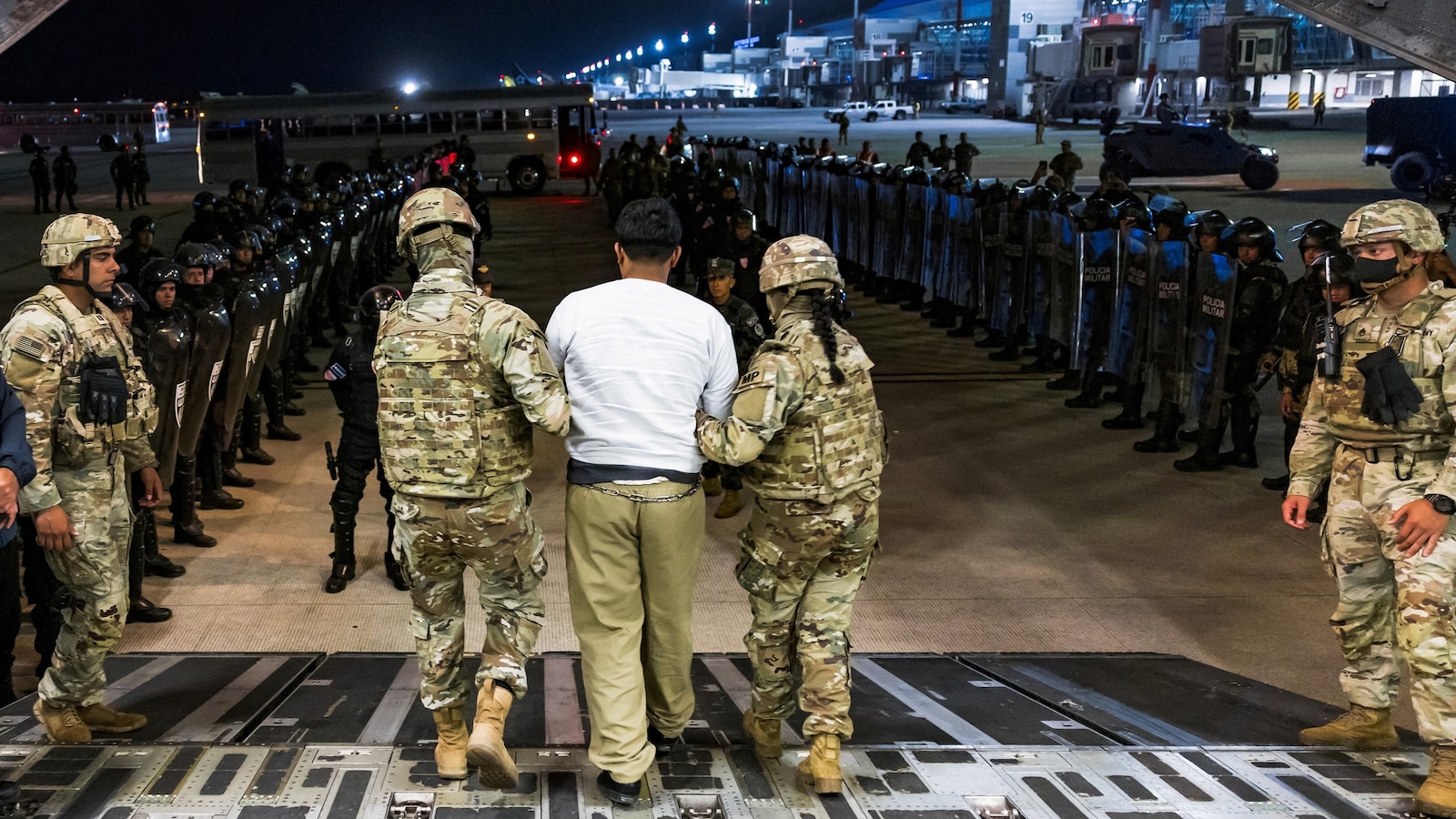
The real-world impact of these deportation orders became painfully clear through the testimony of family members watching helplessly from the outside. The girlfriend of one detained migrant spoke to ABC News, describing how her partner had received what appeared to be the same notice the ACLU had filed in court. She said he found the document difficult to understand, highlighting the communication barriers that could lead to people being deported without fully comprehending what was happening to them or what rights they might have. Her account provided a chilling glimpse into the chaos and fear inside the detention center on Friday. According to what her boyfriend told her, he and a group of fellow detainees were actually transported to an airport near the facility, believing they were about to be put on a plane to El Salvador. The group waited, preparing for what could be a one-way journey to indefinite imprisonment in the notorious CECOT mega-prison. Then, in a moment that must have brought both confusion and relief, an officer informed them they were being sent back to the detention center and would not be boarding the plane after all. This reversal came as a direct result of the ACLU’s legal intervention working its way through the courts, demonstrating how court orders can literally pull people back from the brink of deportation at the last possible moment.
The Shadow of El Salvador’s CECOT Mega-Prison
Central to the ACLU’s argument is the extreme nature of the destination to which these Venezuelan migrants were being sent. The CECOT facility in El Salvador has gained international attention as one of the harshest detention centers in the Western Hemisphere. Under President Nayib Bukele’s aggressive anti-gang policies, thousands of suspected gang members have been imprisoned there in conditions that human rights organizations have widely criticized. The facility operates with minimal oversight, limited access to legal representation, and virtually no prospect of release for those sent there. Gelernt emphasized that the stakes of getting these cases wrong could not be higher, citing the example of Kilmar Abrego Garcia, a Salvadoran native who had been living in Maryland before being deported in March to the CECOT mega-prison. According to the ACLU, Abrego Garcia was “erroneously” identified as a gang member and sent to the facility, where he now faces the possibility of spending the rest of his life. The attorney stressed that Abrego Garcia isn’t an isolated case—multiple people have been wrongly tagged as members of the Tren de Aragua gang, a Venezuelan criminal organization that the Trump administration has made a priority target for removal.
The Fundamental Question of Due Process
At the heart of this legal battle lies a fundamental question about American justice: Does the government have the right to unilaterally declare someone a gang member and deport them to a foreign prison without giving them a meaningful opportunity to contest that designation? Gelernt argued forcefully that the answer must be no. “They’re unilaterally claiming that people are members of a gang, but not giving them the opportunity to go into court and show they’re not,” he explained to ABC News. The consequences of this approach are devastating and potentially irreversible. Once someone is transferred to the CECOT facility in El Salvador, their chances of ever proving their innocence or securing release become vanishingly small. The ACLU attorney painted a grim picture: “Once they get to the El Salvadoran prison, they may never get out for the rest of their life.” This reality transforms what might seem like an administrative immigration matter into a question of fundamental liberty and human rights. Gelernt insisted that basic fairness requires a different approach: “It’s critical that we give them hearings before we take such an extraordinary action.” The government’s own procedures, he argued, fall woefully short of meeting Supreme Court standards for due process, particularly given that the Court had previously issued directives on proper notice requirements.
What Happens Next in This Unfolding Legal Drama
The Supreme Court’s early Saturday morning order represents a temporary victory for the migrants and their advocates, but it’s far from the final word on this issue. The ruling blocks the deportations while the legal case proceeds, giving detainees and their attorneys time to mount a proper defense and challenge their gang member designations in court. The case raises broader questions about the Trump administration’s use of the Alien Enemies Act, a law that hasn’t been widely invoked since World War II and whose application to peacetime immigration enforcement remains legally controversial. As this case continues to unfold, it will test fundamental principles about the balance between national security concerns and individual rights, the limits of executive power in immigration matters, and America’s obligations to ensure fair proceedings before taking actions that could result in lifetime imprisonment. For the Venezuelan migrants still held in the Texas detention center, the Supreme Court’s intervention means they’ll have their day in court—a chance to prove they’re not who the government claims they are, and to avoid being sent to a prison from which they might never return. Their fate, and potentially that of many others in similar situations, now rests with the federal courts as this extraordinary legal battle continues.