
United States and Venezuela Restore Diplomatic Ties After Years of Hostility
A Historic Shift in Relations
In a dramatic turn of events that marks a significant departure from years of tension and conflict, the United States and Venezuela have agreed to reestablish diplomatic relations, the State Department announced on Thursday. This groundbreaking development represents a major pivot in what has been one of the most contentious bilateral relationships in the Western Hemisphere. “The United States and Venezuela’s interim authorities have agreed to re-establish diplomatic and consular relations,” the State Department confirmed in an official statement, adding that “this step will facilitate our joint efforts to promote stability, support economic recovery, and advance political reconciliation in Venezuela.” The announcement signals a new chapter for both nations and comes at a critical juncture for Venezuela, a country that has been struggling with political turmoil, economic collapse, and international isolation for years. The restoration of diplomatic ties is expected to open channels for cooperation on multiple fronts, including economic development, political stability, and humanitarian concerns that have plagued the South American nation.
The Road to Reconciliation
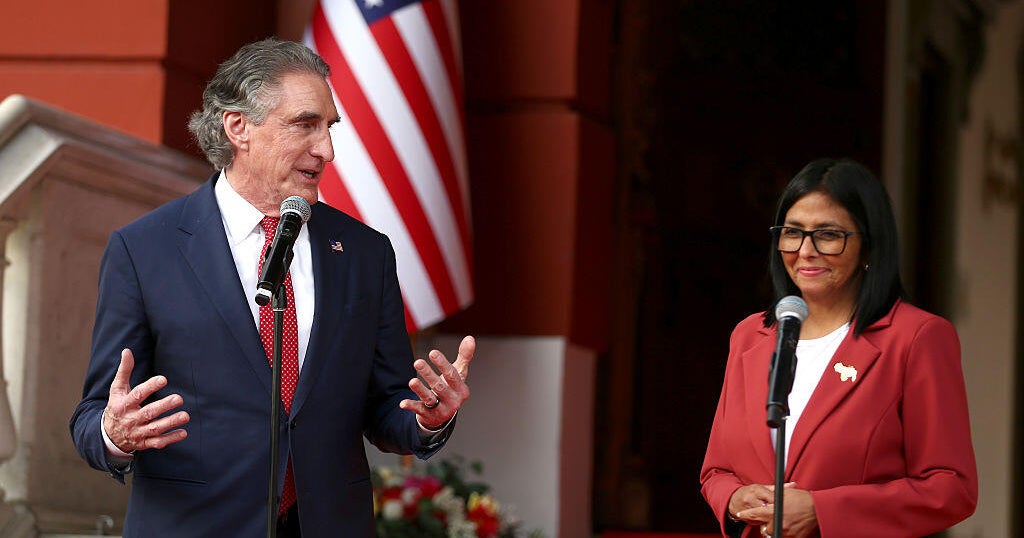
This diplomatic breakthrough follows a series of high-level visits by Trump administration officials to the oil-rich South American nation in recent months. The engagement intensified after a U.S. military operation that resulted in the removal of former President Nicolás Maduro from power in January. Most recently, Interior Secretary Doug Burgum visited Venezuela this week, conducting a two-day trip that focused primarily on the country’s vast mining sector and economic potential. Before Burgum’s visit, Energy Secretary Chris Wright traveled to Venezuela in February, with discussions centered on the nation’s considerable oil reserves and energy capabilities. These visits demonstrate the Trump administration’s sustained interest in shaping Venezuela’s future and leveraging its natural resources. The administration has been applying considerable pressure on officials who were loyal to Maduro and currently hold positions of power, urging them to embrace Washington’s vision for rebuilding and restructuring the crisis-stricken nation. The focus has been on encouraging sweeping reforms, particularly in opening Venezuela’s valuable oil sector to foreign investment and international companies.
Breaking Years of Isolation
The diplomatic freeze between the United States and Venezuela began in 2019 during the first Trump administration when then-President Maduro severed relations with Washington. Both countries closed their embassies after President Trump publicly endorsed Venezuelan opposition lawmaker Juan Guaidó, who had declared himself the nation’s interim president in January 2019. That declaration came amid widespread political unrest, street protests, and violence throughout Venezuela as citizens demanded change from Maduro’s increasingly authoritarian government. In response to the deteriorating security situation, the Trump administration ordered all non-essential American diplomatic staff and government personnel to evacuate Venezuela that same month. For the past several years, the United States has operated its consular services for Venezuelan matters out of Bogota, Colombia, requiring citizens from both countries to travel there for diplomatic assistance. Following Maduro’s capture in January, the Trump administration notified Congress that it would begin taking steps toward eventually reopening its embassy in Caracas, setting the stage for this week’s announcement of fully restored diplomatic relations.
Economic Opportunities and Foreign Investment
According to the State Department, the ongoing talks between the two nations have been “focused on helping the Venezuelan people move forward through a phased process that creates the conditions for a peaceful transition to a democratically elected government.” This framework suggests a gradual approach to political reform rather than an immediate overhaul of Venezuela’s governance structures. Interior Secretary Burgum emphasized the administration’s eagerness to facilitate foreign investment during his visit, telling reporters on Thursday: “We told all the companies that we met with the last two days, if they were having any issues with getting material or people through visas or capital into the country, talk to us because we want to help those that want to come here to do constructive work with high integrity. We want to clear the path for them to get here and start working.” This statement reveals the Trump administration’s strategy of using economic incentives and reconstruction opportunities as leverage to encourage political transformation in Venezuela. Both Burgum and Wright, in their respective visits, have been working to attract foreign investment as part of the administration’s phased plan to rescue Venezuela from its prolonged economic crisis, which has seen hyperinflation, shortages of basic goods, and the exodus of millions of Venezuelans seeking better lives elsewhere.
Venezuela’s Response and Political Developments
Acting President Delcy Rodríguez, who previously served as vice president under Maduro, welcomed the announcement on state television, stating that these steps “will strengthen relations between our two countries.” In a subsequent government statement, Rodríguez’s administration expressed confidence that reestablishing diplomatic relations “will contribute to strengthening understanding and opening opportunities for a positive and mutually beneficial relationship,” adding that “these relations ought to result in the social and economic happiness of the Venezuelan people.” The interim government has already taken some significant steps that align with international pressure for reform, including approving an amnesty law that has enabled the release of politicians, activists, lawyers, and many others who were imprisoned. This move effectively acknowledges that the previous government held hundreds of people behind bars for political reasons rather than legitimate criminal offenses. The amnesty represents a significant concession and signals a potential willingness to address human rights concerns that have long been criticized by the international community.
Looking Forward: Elections and Opposition Leadership
The Trump administration’s decision to work with Rodríguez rather than exclusively with the political opposition following Maduro’s removal surprised many Venezuelans both within the country and in the diaspora. However, developments suggest that democratic processes may still be on the horizon. On Sunday, María Corina Machado, Venezuela’s leading opposition figure and winner of the 2025 Nobel Peace Prize, announced that she plans to return to Venezuela in the coming weeks and that elections will be held in the country. This announcement offers hope to millions of Venezuelans who have longed for genuine democratic representation and the opportunity to choose their leaders through free and fair elections. The path forward appears to involve a delicate balance between working with current interim authorities to stabilize the country while simultaneously preparing for eventual democratic elections that would give Venezuelans the chance to determine their own future. The restoration of U.S.-Venezuelan diplomatic relations represents a crucial step in this process, potentially providing the framework for international oversight, economic assistance, and political support that could help ensure a successful transition. As both nations move forward with this renewed relationship, the world will be watching to see whether this diplomatic breakthrough can translate into meaningful improvements in the lives of ordinary Venezuelans who have suffered through years of economic hardship, political repression, and social upheaval.