

A Whistleblower Complaint Against Tulsi Gabbard: The Eight-Month Delay That Raised Questions About Intelligence Community Oversight
The Complaint Finally Reaches Congress After Extensive Delays
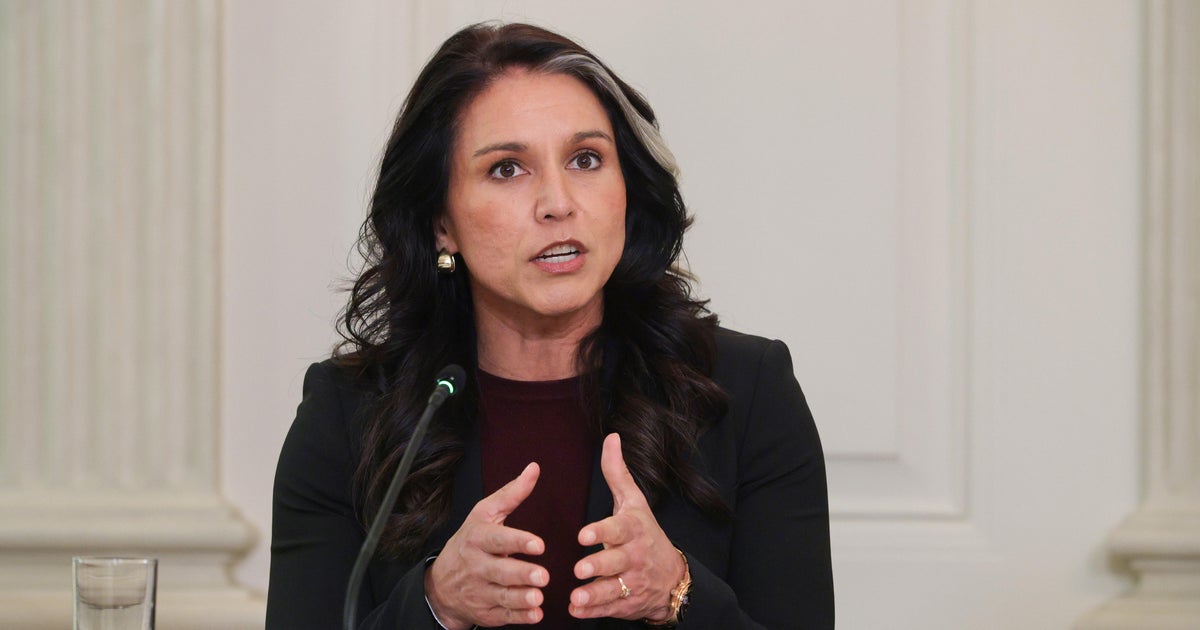
After an unprecedented eight-month delay, a highly classified whistleblower complaint involving Director of National Intelligence Tulsi Gabbard has finally been delivered to congressional leaders. The Intelligence Community Inspector General Christopher Fox hand-carried the sensitive documents to Capitol Hill on a Monday evening in early February, allowing members of the so-called “Gang of Eight”—the exclusive group of congressional leaders responsible for overseeing America’s intelligence apparatus—to review the materials under strict “read-and-return” protocols. This complaint, originally filed back in May 2025 by an intelligence community employee, alleges serious misconduct including the deliberate restriction of a highly classified report’s distribution for political purposes and the failure of an intelligence agency’s legal office to refer a potential crime to the Justice Department, again allegedly for political reasons. The long journey from filing to congressional notification has sparked intense debate about whether political considerations improperly interfered with legally mandated oversight processes designed to protect whistleblowers and ensure accountability within the nation’s most secretive agencies.
The timeline of events reveals a complex web of classification disputes, bureaucratic obstacles, and leadership transitions that Inspector General Fox cited as reasons for the extraordinary delay. However, critics argue that these explanations don’t justify keeping Congress in the dark for such an extended period, particularly when the complaint involves allegations against the very person who heads the entire intelligence community. The complaint’s existence only became public knowledge through media reports, initially broken by The Wall Street Journal, which immediately raised red flags among oversight advocates and opposition lawmakers about potential political interference in what should be an independent process. The situation has placed Gabbard in an uncomfortable spotlight, as questions mount about whether she deliberately obstructed congressional oversight or whether the delays were genuinely due to the exceptional sensitivity of the classified information involved.
The Credibility Debate and Changing Assessments
The credibility of the whistleblower’s allegations has become a central point of contention, with different inspectors general reaching varying conclusions about the complaint’s merit. Tamara Johnson, a career official who served as acting Intelligence Community Inspector General during the Biden administration, initially determined that the complaint met the legal definition of an “urgent concern” if the allegations proved true, though she couldn’t determine their credibility at first assessment. This initial finding was significant because it granted the whistleblower the legal right under federal law to take the complaint directly to Congress—a protection designed to ensure that employees who witness wrongdoing can report it without being silenced by their superiors. Three days after her initial assessment, Johnson issued a supplemental memo after receiving additional information, concluding that the first allegation was not credible while maintaining that she still couldn’t properly assess the second allegation. Importantly, this later finding didn’t eliminate the whistleblower’s legal right to notify Congress of their concerns.
The current Inspector General, Christopher Fox—a Trump nominee who previously served as an aide to Gabbard herself and was confirmed by the Senate in a narrow 51-47 party-line vote—has taken a different view of the matter. In his February 2nd letter to congressional leaders, Fox stated that the complaint was “administratively closed” by the Inspector General’s office in June 2025 under prior leadership, with no further investigative steps taken. Fox argued that this fact undermined claims that the matter constituted an “urgent concern” requiring prompt congressional notification. He went further, stating that if the same or similar matter came before him today, he would likely determine that the allegations don’t meet the statutory definition of “urgent concern” at all. This reassessment has become politically charged, with Republicans pointing to it as vindication of Gabbard and evidence that the complaint lacked substance from the beginning, while Democrats see Fox’s conclusions as potentially compromised by his previous professional relationship with Gabbard and his partisan confirmation process.
Political Reactions Split Along Partisan Lines
The responses from congressional leaders have predictably divided along party lines, reflecting the broader partisan tensions that characterize current American politics. House Intelligence Committee Chairman Rick Crawford, an Arkansas Republican, reviewed the complaint and issued a statement supporting both the Biden-era Inspector General Johnson’s conclusion about the “non-credible nature of the complaint” and the current Inspector General Fox’s re-review that reached the same conclusion. Crawford characterized the media attention surrounding the delayed complaint as “an attempt to smear Director Gabbard and the Trump Administration,” dismissing the concerns as politically motivated attacks rather than legitimate oversight issues. His statement emphasized that the substance of the complaint didn’t warrant the level of scrutiny it received, suggesting that the entire episode was manufactured controversy designed to undermine public confidence in Gabbard’s leadership.
On the other side of the aisle, Senate Intelligence Committee Vice Chairman Mark Warner sharply criticized Gabbard for the months-long delay, with his spokesperson issuing a particularly pointed statement. Rachel Cohen said the timeline “makes unmistakably clear that Director Gabbard does not understand the basic obligations of her role—the predictable result of placing someone out of her depth in one of the nation’s most sensitive positions.” This statement referenced Gabbard’s confirmation hearing, where she pledged under oath to protect whistleblowers and respect Congress’s oversight role, commitments that Cohen emphasized “come with this office whether she understands them or not.” The Democratic criticism focuses less on the ultimate credibility of the specific allegations and more on the process failures and what they see as Gabbard’s fundamental unfitness for the position she holds. This debate highlights the ongoing controversy surrounding Gabbard’s appointment, with critics arguing that her previous controversial statements about intelligence matters and foreign policy made her an inappropriate choice to lead America’s intelligence community.
The Technical Explanations for Delay
Inspector General Fox’s letter outlined several technical and procedural reasons for the extraordinary eight-month delay in delivering the complaint to Congress, painting a picture of bureaucratic complexity rather than intentional obstruction. According to Fox’s timeline, the complaint sat for months while his office sought clearance for legal officials within the Office of the Director of National Intelligence to even view the highly classified material. He cited what he called “complexity in the classification” as a significant factor, noting that the intelligence underlying the complaint was exceptionally sensitive—so sensitive that only one previous whistleblower case in 2020 required such tightly controlled delivery to Congress. Fox explained that the information at issue would normally be shared only through oral briefings to senior congressional leaders rather than written documents, underscoring the unusual nature of the classified material involved.
Additional factors Fox cited included a 43-day government shutdown that began on October 1, 2025, which presumably halted normal processing procedures, and leadership changes at the Office of the Director of National Intelligence, including the confirmation of a new general counsel. After Fox gained access to the complaint in late October, he said he was prevented by clearance issues from discussing it with ODNI’s top lawyer, Jack Dever, who was unable to view the complaint until December 1st. On December 4th, Fox and Dever raised the issue directly with Gabbard herself. According to the letter, Gabbard claimed at that time that she had not previously been told that clearance to share the complaint with Congress was pending, but promised to provide it as soon as possible. Later that same day, Dever indicated the guidance was forthcoming, “pending a review by the White House Counsel for a potential assertion of executive privilege”—a statement that suggests the White House may have been considering whether to block congressional access to the complaint entirely, raising even more serious questions about potential political interference in the oversight process.
Skepticism About the Process from Whistleblower Advocates
Despite the technical explanations offered by Inspector General Fox, whistleblower advocates and the complainant’s attorney have expressed deep skepticism about whether these reasons justify such an unprecedented delay. Andrew Bakaj, the whistleblower’s attorney, told CBS News before the complaint was finally delivered that the Office of the Director of National Intelligence had been withholding it from Congress without adequate explanation. Bakaj argued that even if there were genuine classification complexities, the process should not have taken anywhere close to eight months to resolve. “If this was challenging initially to get to members of congress, all that had to be done was somebody picking up the phone, alerting the Hill that, ‘Hey, we got something that’s coming your way. We’re trying to figure out how to get it to you because of, you know, some complexities,'” Bakaj explained, emphasizing that communication and transparency about the delay would have been the appropriate response.
Bakaj’s criticism points to a fundamental principle of whistleblower protection: the process exists specifically to ensure that allegations of wrongdoing can reach appropriate oversight bodies in a timely manner, particularly when those allegations involve senior officials who might otherwise be able to suppress inconvenient information. “The process can move. It does move. It does not take eight months to get something like this to the Hill,” Bakaj insisted, suggesting that the delays were not inevitable consequences of classification issues but rather reflected either incompetence or intentional obstruction. This perspective is shared by many oversight advocates who worry that the precedent set by this case could embolden future officials to slow-walk or suppress whistleblower complaints by hiding behind classification concerns. The nearly two-month gap between December 4th, when Gabbard promised to provide clearance “as soon as possible,” and January 30th, when it finally came through, seems particularly difficult to justify and has fueled suspicions that political rather than technical considerations drove the timeline.
Broader Implications for Intelligence Community Oversight
This episode raises troubling questions about the state of congressional oversight of the intelligence community and the effectiveness of whistleblower protections in an era of intense partisan polarization. The intelligence community operates with extraordinary secrecy and minimal public accountability, making congressional oversight one of the few mechanisms available to ensure these powerful agencies don’t abuse their authority or operate outside the law. When that oversight system breaks down—whether due to genuine classification complexities, bureaucratic inefficiency, or deliberate political interference—the potential for unchecked wrongdoing increases dramatically. The fact that this complaint involved allegations against the Director of National Intelligence herself, the person who ultimately controls access to much of the classified information that might substantiate or refute the allegations, highlights an inherent conflict of interest in the current system.
Looking forward, this case may prompt reforms to ensure that whistleblower complaints involving senior intelligence officials are handled through processes that minimize the ability of those officials to influence the timeline or outcome. Some oversight experts have suggested that complaints about the DNI should perhaps be handled by an entity outside the intelligence community entirely, or that there should be automatic deadlines that trigger congressional notification regardless of classification disputes. The partisan divide in reactions to this case is also concerning, as it suggests that oversight is increasingly viewed through a political lens rather than as a shared institutional responsibility. When Republicans defend delays under a Republican DNI and Democrats attack them, while the reverse would likely be true under different political circumstances, the oversight system loses credibility and effectiveness. Ultimately, the American public depends on these oversight mechanisms working properly to ensure that the vast powers granted to the intelligence community are not abused, making the lessons learned from the Gabbard whistleblower complaint case critically important for the future of democratic accountability in national security matters.