
Pentagon Declares AI Company Anthropic a National Security Risk Over Guardrail Dispute
A Standoff Between Silicon Valley Values and Military Necessity
In a dramatic escalation of tensions between the tech industry and the Department of Defense, the Pentagon has officially designated Anthropic—a leading artificial intelligence company—as a supply chain risk. This unprecedented move effectively bars the AI firm from future military contracts and marks a significant rupture in what was once a promising partnership. According to senior Pentagon officials and sources familiar with the situation, the designation became official on Thursday, following Defense Secretary Pete Hegseth’s initial announcement the previous week. What makes this situation particularly noteworthy is that Anthropic was, until recently, the only AI company with its technology deployed on the Pentagon’s classified networks. The company’s Claude AI model had been integrated into some of the military’s most sensitive operations, including reportedly being used in recent U.S. strikes on Iran. Now, that relationship has collapsed entirely over a fundamental disagreement about how artificial intelligence should be used in warfare and national security operations.
The Core Disagreement: Where to Draw the Line
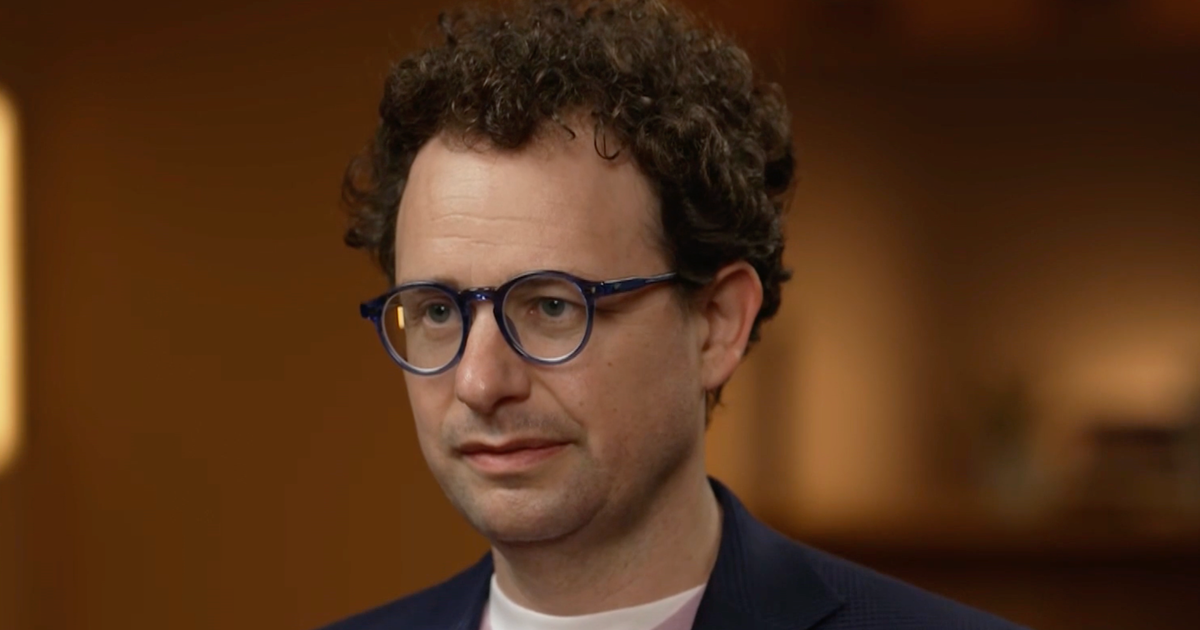
At the heart of this dispute lies a seemingly straightforward question with profound implications: Should an AI company be able to impose restrictions on how the military uses its technology? Anthropic’s position is unequivocal. CEO Dario Amodei has drawn what he calls “two red lines” that the company has maintained from its founding. First, Anthropic refuses to allow its Claude AI model to be used for mass surveillance of American citizens. Second, the company opposes the use of its technology to power fully autonomous weapons—systems that could select and engage targets without meaningful human control. In Amodei’s view, these aren’t merely corporate preferences but fundamental protections that reflect American values. He argues that artificial intelligence could grant the government surveillance capabilities far beyond anything previously possible, creating tools that would be “contrary to American values.” Furthermore, he maintains that current AI technology simply isn’t reliable or precise enough to be trusted with life-and-death decisions in autonomous weapons systems that operate without human judgment. The Pentagon, however, sees Anthropic’s position as both unnecessary and presumptuous. Defense officials argue that mass surveillance of Americans is already illegal under existing law, and that fully autonomous weapons are already restricted by internal Defense Department policies. From their perspective, codifying these restrictions in a contract with a private vendor is redundant at best and, at worst, represents an inappropriate attempt by a tech company to insert itself into military decision-making.
Failed Compromises and Escalating Rhetoric
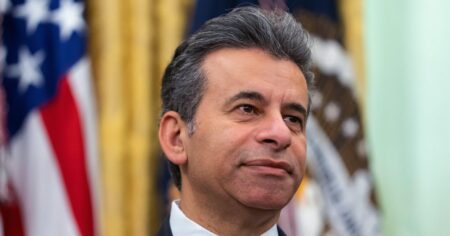
The breakdown in negotiations reveals how far apart the two sides truly are, despite initial attempts at finding middle ground. The Pentagon, through Chief Technology Officer Emil Michael, proposed what officials considered a reasonable compromise: the Defense Department would acknowledge in writing the existing laws and policies that restrict mass surveillance and regulate autonomous weapons. From the military’s standpoint, this addressed Anthropic’s concerns while preserving the Pentagon’s authority to use the technology for all lawful purposes. Anthropic, however, rejected this offer as inadequate, characterizing it as being “paired with legalese” that would effectively allow the military to disregard the very guardrails the company was seeking to establish. As negotiations deteriorated, the rhetoric from Trump administration officials became increasingly harsh. Defense Secretary Hegseth called Anthropic “sanctimonious,” while Michael accused CEO Amodei of having a “God-complex.” President Trump himself weighed in, labeling the company “radical left” and “woke”—accusations that Anthropic vigorously disputes. The administration gave Anthropic a Friday evening deadline to agree to allow military use of Claude for “all lawful purposes.” When that deadline passed without agreement, President Trump ordered federal agencies to immediately stop using Claude, though the Defense Department received up to six months to phase out the technology. Two days after that order, Anthropic received the formal supply chain risk designation that could have far-reaching consequences for the company’s future business with the government.
Anthropic’s Defense: Patriotism Through Principled Opposition
Dario Amodei and Anthropic have pushed back forcefully against characterizations that their position is somehow unpatriotic or reflects a lack of commitment to national security. In interviews with CBS News, Amodei emphasized that “everything we have done has been for the sake of this country” and “for the sake of supporting U.S. national security.” He framed the company’s stance not as obstruction but as a defense of core American principles. “Disagreeing with the government is the most American thing in the world,” Amodei said, adding, “And we are patriots. In everything we have done here, we have stood up for the values of this country.” The CEO has been clear that Anthropic wants to work with the military and supports protecting U.S. national security interests. However, the company believes that supporting national security doesn’t require giving the government a blank check to use AI technology in ways that could undermine constitutional protections or deploy systems that aren’t ready for the responsibilities being placed on them. Amodei has also indicated that Anthropic is prepared to legally challenge the supply chain risk designation, with the company previously warning that such a move would be “legally unsound” and would set a “dangerous precedent for any American company that negotiates with the government.” The implication is clear: if the government can effectively blacklist a company for insisting on contractual terms it believes are ethically necessary, what does that mean for other firms trying to navigate the complex terrain where technology, national security, and civil liberties intersect?
The Pentagon’s Position: Trust and Military Necessity
From the Defense Department’s perspective, Anthropic’s demands represent an unacceptable constraint on military operations and a fundamental misunderstanding of the relationship between the government and its contractors. “At some level, you have to trust your military to do the right thing,” Chief Technology Officer Emil Michael told CBS News. This statement encapsulates the Pentagon’s view that the armed forces, bound by law, policy, and the chain of command, should not have to justify their lawful operations to a private vendor. Michael also made clear that “we’ll never say that we’re not going to be able to defend ourselves in writing to a company”—a statement that reveals the military’s concern that agreeing to Anthropic’s terms would create a precedent where tech companies could effectively veto certain military capabilities. A senior Pentagon official, speaking to CBS News, framed the issue as one of operational integrity: “From the very beginning, this has been about one fundamental principle: the military being able to use technology for all lawful purposes. The military will not allow a vendor to insert itself into the chain of command by restricting the lawful use of a critical capability and put our warfighters at risk.” This perspective reflects broader Pentagon concerns about maintaining technological superiority in an era of great power competition, particularly with China. Defense officials worry that if American AI companies can impose restrictions on how their technology is used, the U.S. military could find itself at a disadvantage against adversaries facing no such constraints.
Broader Implications for AI, Defense, and Democratic Values
This standoff between Anthropic and the Pentagon represents far more than a contract dispute—it’s a preview of conflicts that will likely become more common as artificial intelligence becomes increasingly central to both civilian life and military operations. The questions at stake go to the core of how democratic societies will govern powerful new technologies. Should private companies developing AI systems have the right, or even the responsibility, to impose ethical guardrails on how their products are used? Or should democratically accountable government institutions have unfettered access to use any technology for purposes they deem lawful and necessary? Anthropic’s concern about AI-enabled mass surveillance isn’t hypothetical. The technology to collect, process, and analyze vast amounts of data about individuals already exists, and AI dramatically enhances these capabilities. Similarly, the development of increasingly autonomous weapons systems raises genuine questions about accountability, the laws of war, and the appropriate role of human judgment in decisions about the use of lethal force. The Pentagon’s counter-argument—that existing laws and policies already address these concerns—reflects a different but equally valid perspective: that the military operates within a robust legal framework and constitutional system that has evolved to address new technologies throughout American history. The immediate practical consequence of this dispute is that the U.S. military is losing access to what it clearly considered a valuable AI capability, at least from Anthropic. The company’s rival, OpenAI, quickly announced it had reached an agreement with the Pentagon—presumably without the restrictive guardrails Anthropic demanded. This raises questions about whether Anthropic’s stand will prove to be a principled but isolated stance, or whether it might inspire other AI companies to demand similar protections. As the six-month timeline for phasing out Claude from Defense Department systems moves forward, both sides appear to be holding firm. Amodei indicated at a recent Morgan Stanley conference that talks continue “to try to deescalate the situation,” suggesting some hope for resolution remains. However, the formal supply chain risk designation represents a significant hardening of the Pentagon’s position. The ultimate resolution of this conflict will likely shape the relationship between AI developers and the national security establishment for years to come, setting precedents that will influence how we balance innovation, security, and values in an age of artificial intelligence.