

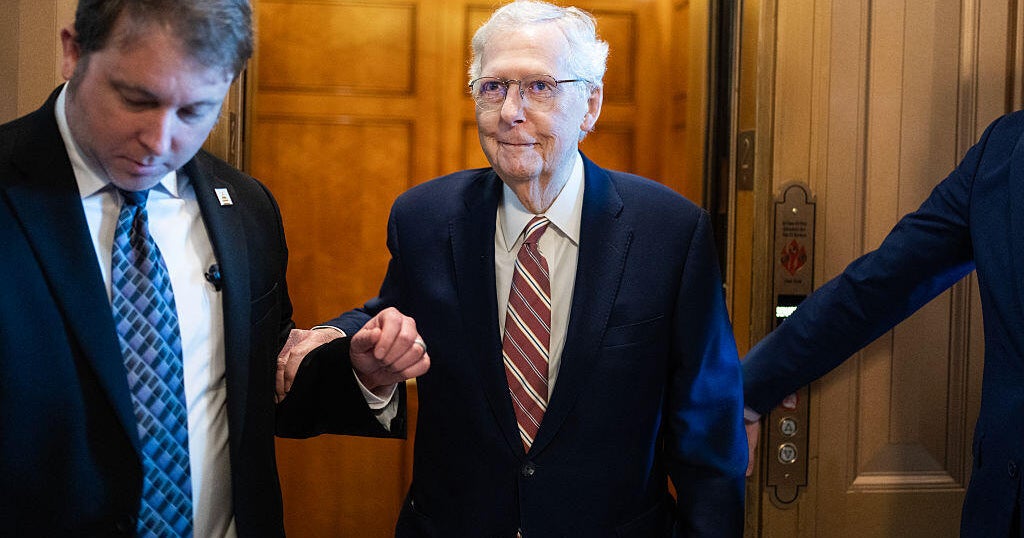

Senator Mitch McConnell Hospitalized: What We Know About His Condition
A Precautionary Hospital Visit
On Monday night, Senate Minority Leader Mitch McConnell made the decision to check himself into a hospital after experiencing symptoms similar to the flu, according to his spokesman David Popp. The 83-year-old Kentucky Republican’s hospitalization was described as a precautionary measure rather than an emergency situation. In a statement released Tuesday, Popp emphasized that McConnell’s medical team remains optimistic about his recovery, noting that “his prognosis is positive.” The senator is reportedly receiving excellent medical care and maintaining regular communication with his staff while he remains under observation. Despite being unable to participate in Senate votes earlier this week, McConnell expressed his eagerness to return to his legislative duties as soon as possible. This latest health concern comes at a critical time in the Senate’s legislative calendar, though his office has sought to reassure colleagues and constituents that the situation is being managed appropriately and that the senator remains engaged with his responsibilities from his hospital room.
Recent Senate Activity Before Hospitalization
Just days before his hospitalization, McConnell was actively participating in Senate business, demonstrating no apparent signs of serious illness. On Friday, he cast his vote on a significant government funding package that would finance the remainder of the government’s operations for the fiscal year. Beyond simply voting, McConnell took to the Senate floor for several minutes to deliver remarks about the full-year defense appropriations bill, one of his longstanding areas of policy focus throughout his decades-long career. His ability to speak at length on the Senate floor just three days before feeling unwell enough to seek hospital care suggests that whatever symptoms he’s experiencing came on relatively quickly. The timing of his illness is particularly noteworthy given the busy legislative schedule the Senate has been navigating, with critical funding bills and other important matters requiring attention and votes from all members. McConnell’s absence from voting this week has been noticed, though the Senate has mechanisms to function even when members are temporarily unable to participate due to health or other reasons.
A History of Health Challenges
McConnell’s latest hospitalization adds another chapter to what has been an increasingly concerning pattern of health issues for the veteran lawmaker in recent years. His health challenges actually date back to his childhood when he survived polio, a disease that once threatened the lives of countless children before vaccines became widely available. That early health battle shaped much of his character and determination, but recent years have brought new medical concerns that have raised questions about his ability to continue serving in one of the most demanding jobs in American politics. In 2023, McConnell suffered a concussion after taking a fall, requiring hospitalization and a period of recovery that kept him away from the Senate for several weeks. That same year, he experienced two separate incidents where he appeared to freeze while speaking publicly, episodes that were captured on camera and sparked widespread concern about his neurological health. Then in 2024, he experienced yet another fall that resulted in minor injuries, though thankfully nothing as serious as the concussion from the previous year. These recurring health scares have understandably led to increased scrutiny of his fitness to serve and have factored into his future plans.
The Decision Not to Seek Reelection
Perhaps recognizing the toll that age and health challenges have taken, McConnell announced last year that he would not seek reelection in 2026, bringing an end to what will have been more than four decades of service in the United States Senate. This decision marked a significant moment in American political history, as McConnell has been one of the most influential and consequential figures in the Senate for generations. First elected to the Senate in 1984, he has served through multiple presidential administrations, economic crises, wars, and profound changes in American society and politics. He served as Senate Majority Leader from 2015 to 2021 and has been the Senate Republican Leader since 2007, making him the longest-serving Senate party leader in American history. His announcement that he would not run again was met with mixed reactions—some saw it as a graceful acknowledgment of physical limitations, while others viewed it as the end of an era in Republican politics. McConnell’s decision means that 2026 will mark a transition point for Kentucky’s Senate representation and for Republican leadership in the upper chamber, though he has given no indication that he plans to resign before his current term expires in January 2027.
McConnell’s Legacy and Current Role
Even as he approaches the end of his Senate career, McConnell remains a powerful force in American politics and continues to play a crucial role in shaping Republican policy and strategy. Throughout his career, he has been known as a master tactician, someone who understands the Senate’s arcane rules better than perhaps anyone else and who has used that knowledge to advance conservative causes and block progressive initiatives. He was instrumental in reshaping the federal judiciary, most notably by blocking President Obama’s Supreme Court nominee Merrick Garland in 2016 and then fast-tracking the confirmation of three conservative justices during the Trump administration. His relationships with various Republican presidents have been complex—at times supportive, at times contentious—but always focused on what he believed would best serve conservative principles and his party’s interests. Despite stepping back from the top leadership position after Republicans lost the Senate majority, he continues to be respected and, in many cases, feared for his political acumen. His current hospitalization, while hopefully temporary and minor, serves as a reminder that even the most powerful political figures are subject to the limitations of human health and the passage of time.
Looking Ahead: Concerns and Continuity
As McConnell receives treatment and his staff works to keep things running smoothly in his absence, questions naturally arise about contingency plans and the continuity of Senate operations. While his office has maintained that his prognosis is positive and that he expects to return to Senate business soon, the reality is that at 83 years old with a recent history of health scares, each new medical incident carries additional weight and concern. His colleagues, regardless of party affiliation, have generally expressed well-wishes and hopes for his speedy recovery, recognizing that even political opponents can respect someone’s service and wish them good health. The Senate has procedures in place to manage when members are temporarily unable to fulfill their duties, and McConnell’s staff has emphasized that he remains in contact and engaged even from his hospital room. For Kentucky constituents, there may be concerns about whether their state is being fully represented during this time, though the Senate’s structure allows for some flexibility in such situations. The coming days will reveal more about the severity of McConnell’s current condition and whether this is indeed a minor setback or something more serious. Regardless, this incident once again highlights the advanced age of many American political leaders and sparks ongoing discussions about term limits, succession planning, and whether the country’s most important institutions are being led by individuals whose health may compromise their ability to serve effectively. For now, supporters and colleagues alike are hoping for McConnell’s quick recovery and return to the Senate floor.