
Senator Alleges Salvadoran Officials Staged Meeting with Deported American Citizen
Controversial Encounter Raises Questions About Government Interference
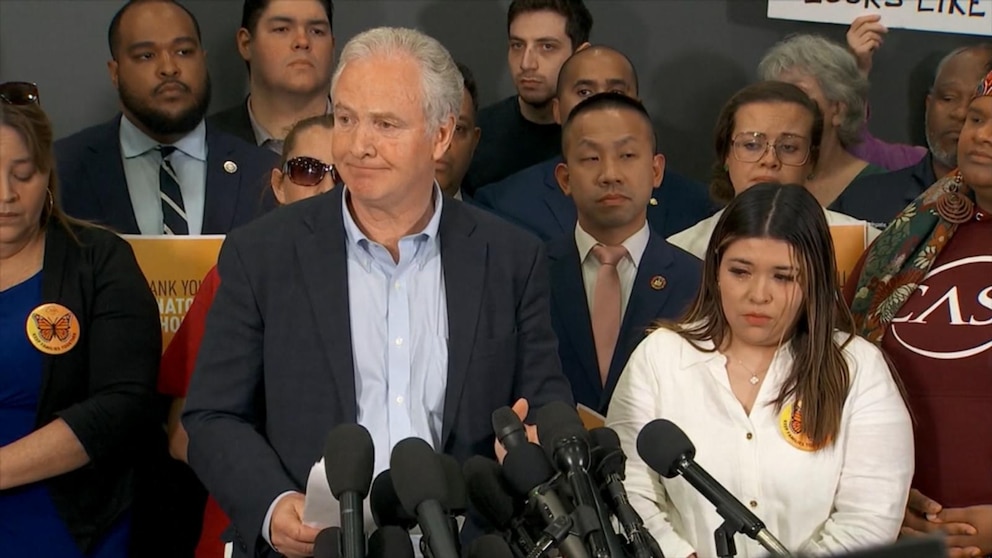
Senator Chris Van Hollen has come forward with disturbing allegations following what was supposed to be a straightforward meeting during his visit to El Salvador. The Maryland Democrat claims that Salvadoran government officials deliberately orchestrated the circumstances of his encounter with Kilmar Abrego Garcia, an individual whom the United States government has acknowledged was wrongfully deported to El Salvador. According to Senator Van Hollen, the meeting appeared to be carefully stage-managed, with officials going so far as to plant drinks at the table where the discussion took place. This revelation has sparked concerns about transparency, government manipulation, and the treatment of individuals caught in the complicated web of immigration enforcement errors between the United States and El Salvador.
The allegations center on what Van Hollen describes as questionable circumstances surrounding the entire meeting arrangement. Rather than facilitating an open and honest conversation between the senator and Abrego Garcia, Van Hollen suggests that Salvadoran authorities attempted to control the narrative and environment of their discussion. The placement of drinks at the table, which might seem like a minor detail to outside observers, represents something more significant to the senator—evidence of a coordinated effort to create a particular atmosphere or perhaps even to monitor or influence the conversation in some way. Such tactics, if confirmed, would represent a troubling interference in what should have been a private meeting between an American elected official and a person affected by deportation policies. The incident highlights the delicate nature of diplomatic relations and the challenges that arise when investigating cases of wrongful deportation, particularly when the receiving country may have political motivations for shaping how such cases are perceived.
The case of Kilmar Abrego Garcia sits at the heart of this controversy, representing one of countless stories of individuals caught in the machinery of immigration enforcement who shouldn’t have been removed from the United States in the first place. When the U.S. government acknowledges that someone has been “erroneously deported,” it’s an admission that carries significant weight—it means that systems designed to protect due process and verify immigration status failed, resulting in someone being forcibly removed from the country when they had legal standing to remain. For Abrego Garcia, this bureaucratic error has had life-altering consequences, separating him from his life in America and forcing him to build an existence in El Salvador, a country that may be unfamiliar despite his legal connection to it. Senator Van Hollen’s visit and attempt to meet with Abrego Garcia represents congressional oversight in action, with elected officials trying to understand how these errors occur and what can be done to remedy them. However, the alleged interference from Salvadoran officials complicates this oversight function and raises questions about what information is being concealed and why authorities would feel the need to control such an encounter.
These allegations arrive at a particularly sensitive time in U.S.-El Salvador relations and amid broader debates about immigration enforcement, deportation practices, and the rights of individuals in immigration proceedings. Wrongful deportations are not isolated incidents but rather symptoms of systemic issues within immigration enforcement systems that process thousands of cases with varying levels of scrutiny and accuracy. Each erroneous deportation represents not just a statistical error but a human tragedy—families separated, careers destroyed, lives uprooted based on mistaken identity, paperwork errors, or failures to properly verify citizenship or legal status. When Senator Van Hollen travels to meet with someone like Abrego Garcia, he’s not just investigating an individual case but examining the broader patterns and practices that allow such mistakes to happen. The apparent attempt by Salvadoran officials to stage-manage this meeting suggests that there may be diplomatic sensitivities or political considerations that complicate straightforward fact-finding. Perhaps Salvadoran authorities are concerned about how deportation cases are portrayed, or maybe there are bilateral agreements or understandings that they feel need protection. Whatever the motivation, the alleged interference undermines the transparency necessary for genuine accountability and reform.
The specific detail about planted drinks at the table, while seemingly minor, carries symbolic and practical significance that shouldn’t be overlooked. In diplomatic and investigative contexts, the physical setup of a meeting space can reveal much about power dynamics and intentions. Who controls the environment controls aspects of the conversation. The placement of drinks could serve multiple purposes—creating the appearance of hospitality while potentially containing surveillance devices, establishing a barrier or distraction during conversation, or simply demonstrating that the Salvadoran government was orchestrating every aspect of the encounter down to the smallest details. Senator Van Hollen’s decision to publicly highlight this detail suggests he viewed it as part of a larger pattern of control and manipulation rather than innocent hospitality. It indicates his concern that the meeting was not conducted in good faith and that the Salvadoran officials involved had an agenda beyond facilitating a conversation between the senator and a wrongfully deported individual. For those familiar with diplomatic protocols and intelligence gathering, such details matter enormously. They can indicate whether a meeting is occurring under conditions of trust and openness or whether one party is attempting to monitor, influence, or undermine the other’s objectives.
The broader implications of Senator Van Hollen’s allegations extend beyond this single meeting to questions about sovereignty, diplomatic relations, accountability in immigration enforcement, and the rights of individuals caught between nations. When the United States deports someone erroneously, it creates obligations—moral if not always legal—to remedy the situation. But remedying wrongful deportations is complicated when the receiving country becomes involved in ways that obstruct rather than facilitate resolution. El Salvador, like many countries that receive deportees from the United States, has complex interests in how these situations are handled. Deportees return with various needs for reintegration, sometimes bringing skills and connections but also sometimes facing stigma or challenges in countries they may barely remember. Governments may want to control narratives around deportation to manage public perception, maintain diplomatic relationships, or protect particular policy positions. Senator Van Hollen’s public statement about the questionable circumstances of his meeting serves as both a complaint about this specific incident and a broader warning about interference in congressional oversight. It sends a message that American elected officials expect cooperation and transparency when investigating cases involving U.S. citizens or individuals with claims to American legal status, and that attempts to manipulate these investigations will be called out publicly. As immigration policy continues to be a contentious issue in American politics, cases like Kilmar Abrego Garcia’s will likely receive increased attention, making the conditions under which oversight occurs all the more important for ensuring that errors are identified, acknowledged, and corrected rather than obscured by diplomatic maneuvering.