


Trump Appoints Interim U.S. Attorney in Manhattan Amid Ongoing Leadership Turmoil
A New Face Takes Charge in Manhattan’s Federal Prosecutor’s Office
In another significant development at one of America’s most powerful legal institutions, President Donald Trump has successfully positioned his chosen candidate to lead the U.S. Attorney’s Office for the Southern District of New York. Matthew Podolsky, who briefly held the position, has agreed to step down, paving the way for Jay Clayton to assume the role on an interim basis. This marks yet another chapter in what has been a tumultuous period for the prestigious Manhattan federal prosecutor’s office, which has seen a revolving door of leadership changes in recent months. The Southern District of New York, often referred to as the “Sovereign District” due to its independence and high-profile cases, handles some of the nation’s most significant federal prosecutions, including cases involving terrorism, corruption, financial crimes, and organized crime. The constant leadership changes have raised concerns among legal observers about the stability and independence of this crucial law enforcement institution.
The Departure That Started It All: Sassoon’s Principled Stand
The current situation stems from a chain of events that began with Danielle Sassoon’s dramatic resignation in February. Sassoon, who had been serving as interim U.S. Attorney, chose to step down in protest over the Justice Department’s controversial decision to drop corruption charges against New York City Mayor Eric Adams. Her resignation was seen as a principled stand against what many viewed as political interference in an ongoing criminal prosecution. Sassoon herself had been appointed to the interim position by President Trump after he fired Edward Kim, who had been temporarily overseeing the office during the presidential transition period. The rapid succession of leaders—from Kim to Sassoon to Podolsky, and now to Clayton—has been unprecedented in the office’s modern history, creating uncertainty about ongoing investigations and prosecutions. Legal experts and former prosecutors have expressed concern that this instability could affect the office’s ability to pursue complex, long-term investigations that require consistent leadership and strategic direction.
Jay Clayton: From Wall Street to Washington and Back
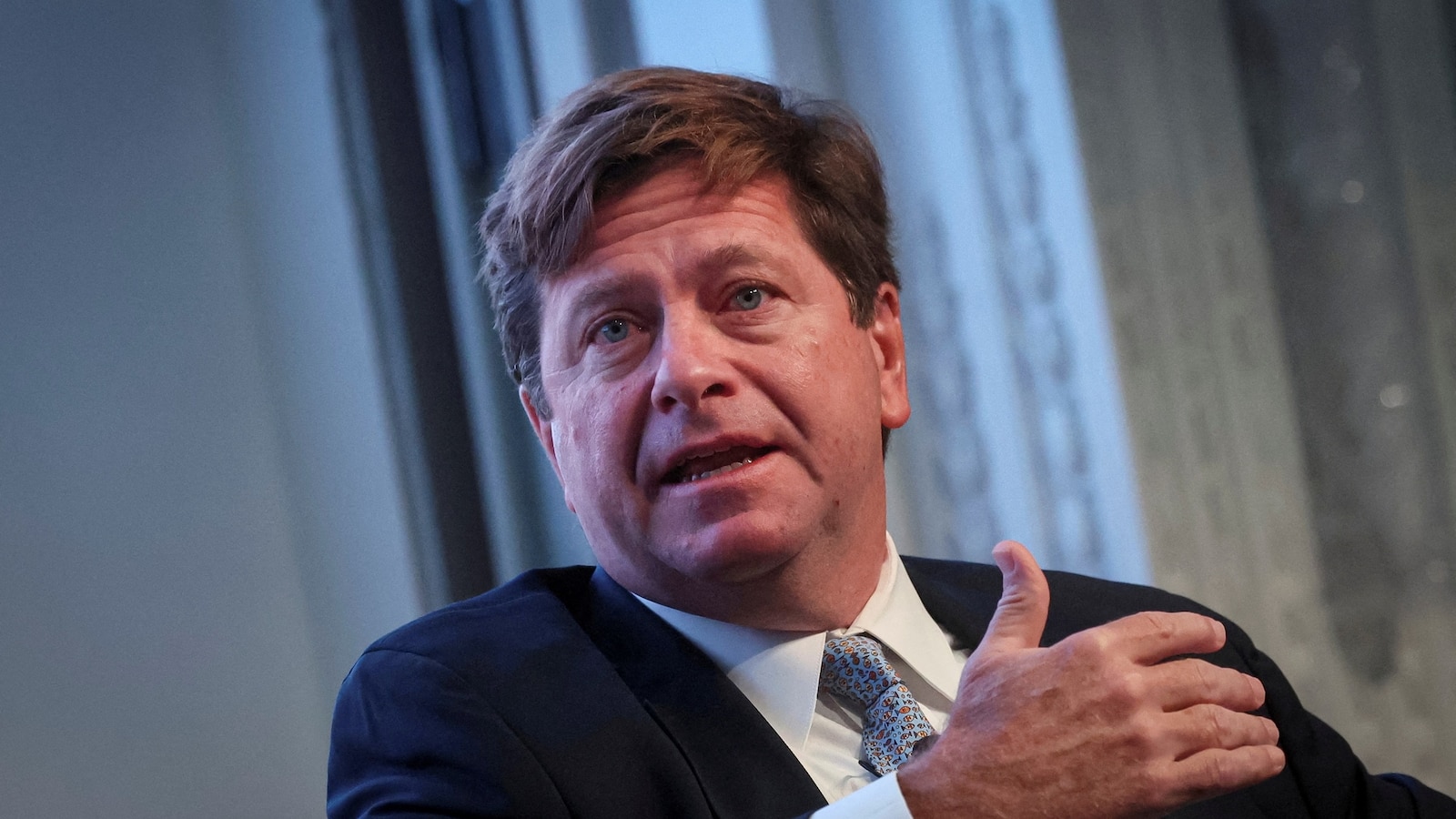
Jay Clayton brings a distinctly corporate-focused background to the position. During President Trump’s first term, Clayton served as chairman of the Securities and Exchange Commission, where he oversaw the federal agency responsible for regulating the securities industry and protecting investors. Before his government service, Clayton was a prominent partner at Sullivan & Cromwell, one of New York’s most prestigious law firms, where he specialized in helping Wall Street firms and major corporations navigate the complex landscape of federal regulations. This experience has made him familiar with the financial sector that the Southern District of New York frequently investigates and prosecutes. His appointment signals a potential shift in priorities or approach for the office, given his deep ties to the corporate world. Critics have questioned whether someone with such extensive connections to Wall Street can effectively prosecute financial crimes involving the very institutions and sectors where he previously worked. Supporters, however, argue that his insider knowledge of how major financial institutions operate could make him more effective at identifying and prosecuting sophisticated financial crimes.
Senate Opposition and the Blue Slip Controversy
Senate Democratic leader Chuck Schumer has taken a strong stance against Clayton’s nomination, expressing deep skepticism about President Trump’s intentions for the Justice Department and federal prosecutor positions. In a pointed statement last week, Schumer accused Trump of having “no fidelity to the law” and intending to weaponize the Justice Department and U.S. Attorney offices against his political adversaries. Schumer announced his intention to withhold the traditional “blue slip” for Clayton’s nomination, as well as for the nominee to lead the Eastern District of New York. The blue slip is a Senate tradition that allows home-state senators to effectively veto judicial and certain executive nominations in their states. However, Trump appears to have found a workaround to this potential roadblock by appointing Clayton in an interim capacity. Under current law, Clayton can serve as interim U.S. Attorney for up to 120 days without Senate confirmation. After that four-month period, the federal judges in the Southern District of New York have the authority to appoint Clayton to continue in the role until a nominee is confirmed by the Senate—and Trump could simply choose never to nominate anyone else for formal confirmation, effectively making Clayton’s “interim” appointment indefinite.
Historical Precedent: The Failed First-Term Attempt
This isn’t Trump’s first attempt to install Clayton in this powerful position. During his first presidency, Trump tried to appoint Clayton as U.S. Attorney for the Southern District of New York, but that effort was thwarted by Geoffrey Berman, who was serving as U.S. Attorney at the time. Berman refused to resign from his position, creating a standoff with the Trump administration. The conflict was eventually resolved when then-Attorney General Bill Barr agreed to replace Berman with his trusted deputy rather than with Clayton. That episode highlighted the traditional independence of the Southern District and the resistance within the Justice Department to political interference in prosecutorial decisions. The successful installation of Clayton this time around suggests that Trump has learned from his previous failed attempt and has found a more effective strategy for placing his preferred candidates in key Justice Department positions. The contrast between the two attempts also reflects the different political dynamics of Trump’s second term, where he appears to be moving more aggressively to reshape federal law enforcement agencies according to his preferences.
Implications for Justice and the Rule of Law
The rapid succession of leadership changes at the Southern District of New York raises profound questions about the independence of federal law enforcement and the rule of law in America. The office has historically prided itself on its independence from political pressure and has pursued high-profile cases against powerful figures regardless of their political connections. Current and former prosecutors have expressed concern that the constant turnover could disrupt ongoing investigations, demoralize career prosecutors, and send a chilling message about the consequences of pursuing cases that might displease political leaders. The fact that Sassoon resigned specifically to protest the dropping of charges against a mayor—a decision that many viewed as politically motivated—has intensified these concerns. As Clayton assumes his new role, all eyes will be on how he manages the office and whether he maintains its tradition of independence or steers it in a direction more aligned with the administration’s political interests. The coming months will be crucial in determining whether the Southern District can maintain its reputation as one of the nation’s premier law enforcement institutions or whether it will become another casualty of the increasing politicization of the Justice Department. The stakes extend far beyond New York, as the Southern District’s handling of cases often sets precedents for federal prosecutions nationwide and serves as a barometer for the overall health of the American justice system.