


Minnesota Officials Seek Answers and De-escalation After Fatal ICE Shooting
Tensions Rise Following Deadly Encounters
The situation in Minnesota has become increasingly tense in the days following a fatal shooting by federal immigration agents. On January 24th, 37-year-old Alex Pretti lost his life after being shot by a Border Patrol agent and a Customs and Border Protection officer. This incident came just weeks after another shooting involving ICE agents claimed the life of Renee Nicole Good in Minneapolis. These tragic events have brought to the forefront serious questions about federal immigration enforcement tactics and sparked urgent conversations between state and federal officials. Paul Schnell, Minnesota’s Department of Corrections Commissioner, has been vocal about the state’s concerns, revealing that while there have been discussions with federal authorities—including people who work under White House border czar Tom Homan—the details about what comes next remain frustratingly unclear. Despite Homan’s public statements about planning to reduce the thousands of ICE and Border Patrol agents currently deployed in the Minneapolis area, state officials say they’ve seen no concrete plans and no actual reduction in federal presence on the ground.
Concerns About Enforcement Tactics and Constitutional Rights
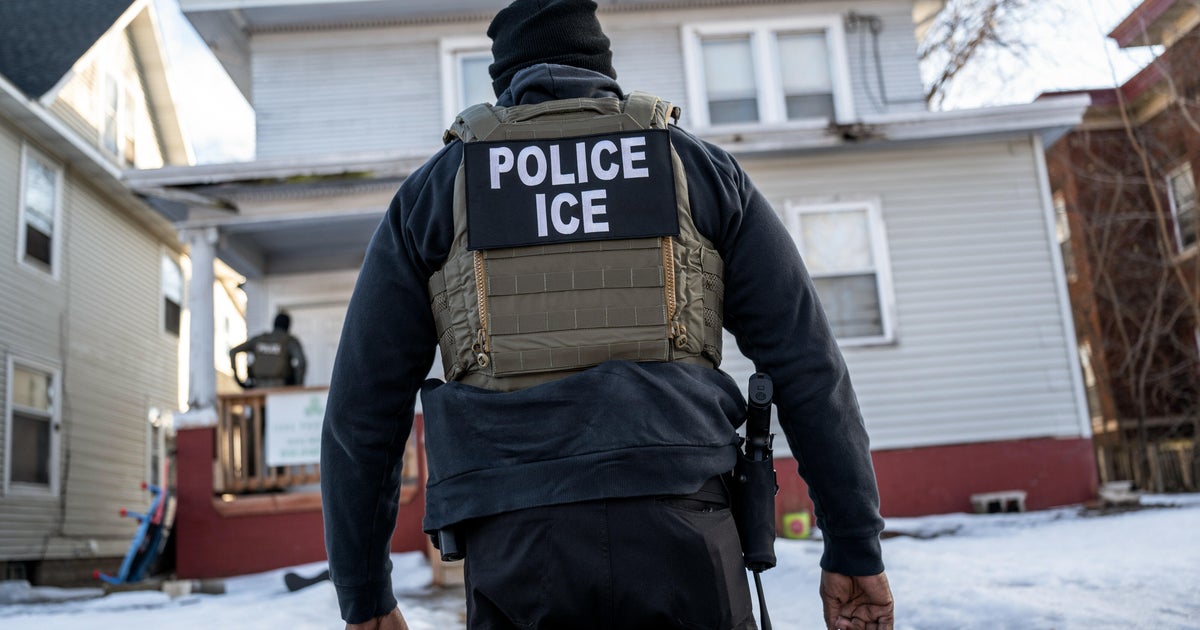
What troubles Minnesota officials most isn’t just the scale of the federal operation, but how it’s being carried out. Commissioner Schnell expressed deep concern about reports of immigration agents showing up at bus stops and entering apartment buildings without what appears to be a clear, targeted approach. The image he painted is troubling: federal agents conducting what looks like indiscriminate sweeps rather than focused operations targeting specific individuals who pose genuine threats to public safety. “We don’t want roving bands of agents going into apartment buildings and asking people for their papers,” Schnell said plainly, articulating a vision of immigration enforcement that prioritizes precision over blanket tactics. The concern is both practical and constitutional—these kinds of operations can sweep up innocent people, create fear in communities, and potentially violate constitutional protections against unreasonable searches. The operation, known as Operation Metro Surge, began in early December and has resulted in more than 3,000 arrests. But the human cost and community impact of these numbers has state and local officials questioning whether the approach matches the actual public safety needs of Minnesota.
The Detainer Dispute: Separating Fact from Political Narrative
At the heart of the federal-state conflict is a fundamental disagreement about immigration detainers and what Minnesota is legally and constitutionally obligated to do. The Trump administration, through Tom Homan and other officials, has repeatedly demanded that Minnesota give federal agents access to state prisons and jails, suggesting that the state is deliberately blocking cooperation. The reality, according to Commissioner Schnell, is far more nuanced. Immigration detainers are administrative requests—not criminal warrants signed by a judge—that ICE sends to local facilities asking them to hold someone beyond their scheduled release so federal agents can take custody. Because these detainers lack judicial oversight, Minnesota treats them carefully, concerned about both constitutional rights and legal liability. The state’s practice has been to notify ICE when a non-citizen is being released from custody and coordinate the transfer, but not to extend someone’s detention without proper legal authority. Schnell conducted a comprehensive review that revealed something striking: of 380 non-U.S. citizens currently in Minnesota custody, 270 had active ICE detainers. But that means 110 people—individuals the federal government was notified about—never received detainers at all, even though ICE could have requested them. “We notified them. They did not issue detainers,” Schnell emphasized, pointing out that this undercuts the federal narrative that Minnesota is blocking access. The state’s position is straightforward: they’re willing to coordinate and cooperate, but federal officials need to actually follow through on their end.
Why Minnesota Won’t Release Prisoners Early to Federal Custody
The federal refrain of “let us into your prisons, let us into your jails” misses a crucial legal and ethical boundary that Minnesota refuses to cross, according to Schnell. When asked if the state would release people early from their sentences to hand them over to ICE, his answer was unequivocal: “The answer to that is no. We can’t. We won’t.” This isn’t about being obstinate or politically opposed to immigration enforcement—it’s about respecting the state’s own justice system and the rights of crime victims. When someone is sentenced in Minnesota state court, that sentence represents a compact between the state, the victim, and society. Minnesota has obligations to ensure that sentence is served and that victims’ rights are honored. “Minnesota has a justice interest; victims have a justice interest,” Schnell explained. The state’s position is that federal immigration authorities are welcome to take custody of individuals after their state sentence is completed, but they cannot override or interrupt a judgment made by a state court. This represents a fundamental principle of federalism and judicial integrity that goes beyond immigration politics. What Minnesota is asking for isn’t resistance to federal law—it’s a request for a coordinated, lawful approach that respects both federal immigration authority and state judicial processes.
Two Clear Demands: Transparency and Drawdown
Commissioner Schnell outlined two specific, reasonable demands that Minnesota is making of the federal government. First, Governor Tim Walz has formally requested a “dramatic and sizable” reduction in federal personnel, arguing that the massive deployment of agents is not justified by the actual number of people in Minnesota who could legitimately be subject to removal. It’s been a week since that request was made, and the state still hasn’t received concrete details. “We have no idea what the drawdown looks like,” Schnell said, noting that while federal officials claim plans are being developed, “the details remain sketchy.” Homan, who traveled to Minneapolis after Pretti’s death, told reporters that a drawdown is in the works but tied it to Minnesota giving federal authorities jail access—essentially making it conditional on the state capitulating to federal demands. His comment that he’s “staying till the problem is gone” suggests an indefinite presence that does little to reassure concerned Minnesota residents and officials. The second demand is perhaps even more fundamental: a credible, transparent joint investigation into the deaths of Alex Pretti and Renee Nicole Good, with state authorities having full access to evidence. Minnesota officials have alleged that the federal government has been blocking them from accessing crucial evidence in both fatal shooting cases. “A credible investigation means a full review of evidence,” Schnell stated, including interviews with everyone involved, coordination between federal and state investigators, and consideration of both criminal law and civil rights law. When asked directly if he’s confident in the current investigations, Schnell’s answer was stark: “Where it sits today? No. I think there is good reason for us to be concerned.”
Rebuilding Trust in a Climate of Fear
Beyond the immediate tactical concerns, Commissioner Schnell identified something deeper at stake: public trust in government and law enforcement. The fear and chaos that has accompanied the federal surge isn’t just a public relations problem—it’s a genuine threat to public safety and community cohesion. When immigrant communities fear law enforcement, they stop reporting crimes, stop cooperating with investigations, and retreat into the shadows where criminals can more easily exploit them. Local sheriffs and police chiefs throughout Minnesota have raised concerns that criminals could take advantage of this atmosphere of fear and distrust. But Schnell sees the risk as even broader: a fundamental erosion of the relationship between government and the governed. “Governmental trust is fundamental,” he said simply. “When we don’t have it, we have a problem.” He commended Minnesota law enforcement officers who have been trying to navigate an impossible situation—protecting public safety while preventing confrontations from escalating—but acknowledged that rebuilding the trust that has been damaged will take considerable time. Recent conversations with federal officials have begun to shift the focus back toward “professional, constitutional policing” and accountability, according to Schnell. But he emphasized that accountability cannot be a one-way street. “Accountability has to be on the government as well as the public,” he said. “Misinformation fuels mistrust—and mistrust is our biggest problem right now.” As Minnesota continues to navigate this difficult moment, the path forward requires what has been missing: genuine dialogue, constitutional policing, transparency about what happened in two fatal shootings, and a scaled-down federal presence that targets actual threats rather than conducting broad sweeps that frighten communities and undermine the very public safety both state and federal officials claim to prioritize.