

U.S. Navy Fires on Iranian Vessel Near Aircraft Carrier in Arabian Sea
Close Encounter Leads to Military Response
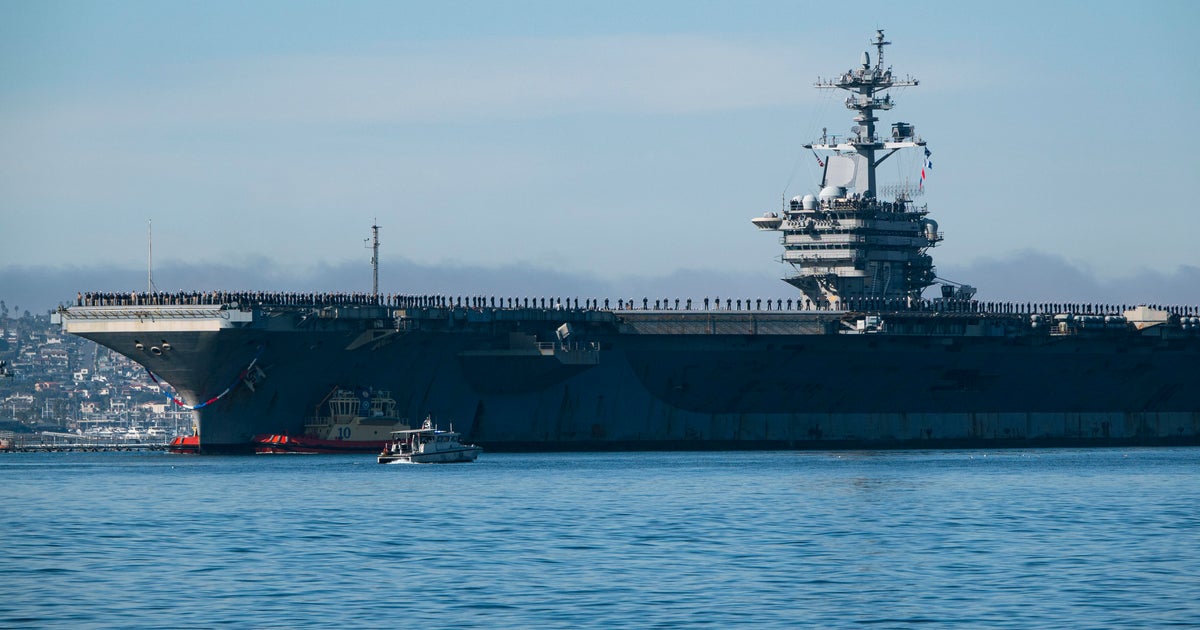
In a significant escalation of tensions in the Arabian Sea, the United States military engaged an Iranian vessel that came dangerously close to the USS Abraham Lincoln aircraft carrier earlier this week. According to two U.S. officials who spoke confidentially to CBS News, the incident began when the Iranian ship violated safe maritime protocols by sailing into the protective zone around the carrier. What started as a standard defensive response quickly evolved into a more serious military engagement when initial warning shots failed to hit their target. The encounter underscores the razor-thin margin for error in an already volatile region where American and Iranian forces operate in close proximity, and where any miscalculation could trigger a broader conflict with devastating consequences.
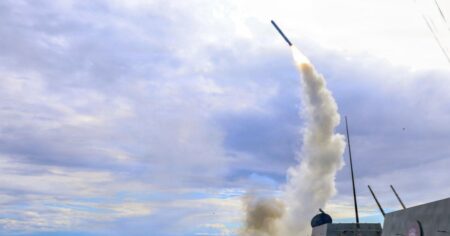
The incident unfolded when U.S. Navy personnel first detected the Iranian vessel approaching the USS Abraham Lincoln at what military officials deemed an unsafe distance. In response to this potential threat, a U.S. Navy vessel—though officials have not specified which ship—attempted to fire warning shots using its 5-inch, 54-caliber Mark-45 gun. This weapon system is a fully automated naval cannon that has been a standard fixture on American destroyers and cruisers since the early 1970s, mounted prominently on the forward deck of these vessels. Despite the sophisticated targeting systems associated with modern naval weaponry, the officials revealed that the initial shots missed the Iranian vessel multiple times, a detail that raises questions about the circumstances of the engagement, including factors such as sea conditions, distance, and the evasive maneuvers the Iranian ship may have taken.
Escalation to Air-Launched Weapons
When the deck-mounted cannon failed to achieve its objective—whether that was to warn off the vessel or disable it—the situation escalated to involve airborne assets. Military commanders made the decision to launch a helicopter equipped with Hellfire missiles, precision-guided weapons that have become synonymous with targeted strikes in modern warfare. The helicopter crew fired two Hellfire missiles at the Iranian vessel, and unlike the earlier cannon fire, both missiles found their mark. The current status of the Iranian ship following the missile strikes remains unknown, as does the fate of its crew members. U.S. officials have not provided information about whether the vessel was disabled, destroyed, or managed to limp away from the engagement area, nor have they disclosed whether there were casualties among the Iranian sailors aboard.
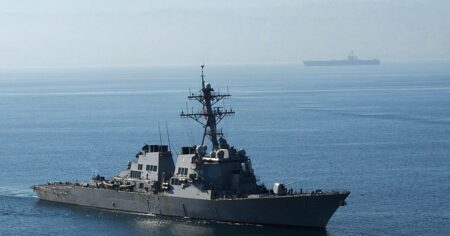
The type of helicopter deployed in this operation has not been officially confirmed, but military experts note that two primary candidates exist within the U.S. naval aviation arsenal operating in the region. The Navy’s MH-60R Seahawk helicopters, which serve in a multi-mission capacity including both anti-submarine and anti-surface warfare roles, are certainly capable of carrying and deploying Hellfire missiles. Additionally, Marine Corps AH-1Z Viper attack helicopters, which are specifically designed for offensive operations, also possess this capability. Both aircraft types would have been available for rapid deployment from the USS Abraham Lincoln or its accompanying vessels, which include the USS Spruance and USS Michael Murphy—both Arleigh Burke-class destroyers that routinely accompany carrier strike groups to provide defensive screening and additional firepower.
Regional Military Presence and Strategic Context
The USS Abraham Lincoln represents a significant component of America’s military presence in the Middle East, operating alongside another aircraft carrier as part of what President Trump has characterized as an “armada” in the region. The Lincoln carrier strike group arrived in the Arabian Sea in late January, positioning itself to support ongoing U.S. military operations against Iran. Beyond the two destroyers specifically mentioned as part of the Abraham Lincoln’s immediate escort, at least six additional guided-missile destroyers were operating in the Arabian Sea as of last week, according to military officials. This substantial naval presence reflects the seriousness with which the United States views the current conflict and its determination to maintain overwhelming force superiority in waters that Iran considers part of its strategic sphere of influence.
This latest incident is far from the first dangerous encounter between American and Iranian forces in recent weeks. In early February, an Iranian Shahed-139 drone approached the USS Abraham Lincoln in what U.S. Central Command described as an “aggressive” manner, with the unmanned aircraft “unnecessarily maneuvering” toward the carrier in a way that violated established protocols for safe military operations. That drone was ultimately shot down by an American fighter jet in what proved to be a harbinger of the broader conflict that would soon erupt between the two nations. Since the beginning of formal hostilities, U.S. forces have inflicted substantial damage on Iranian naval capabilities, with Central Command reporting that American military operations have damaged or destroyed over 90 Iranian vessels. This staggering number suggests a sustained campaign against Iran’s maritime forces, though it remains unclear how many of these vessels were military combatants versus civilian or commercial craft that may have been caught in the crossfire or targeted for supporting military operations.
Official Silence and Strategic Implications
When CBS News reached out to U.S. Central Command—the unified combatant command responsible for overseeing American military operations in the Middle East, including those directed against Iran—seeking official comment on the incident, a defense official provided a terse response: “We have nothing for you on this.” This wall of silence is characteristic of military operations involving direct combat engagements, particularly when such incidents might have diplomatic ramifications or could reveal sensitive information about tactics, capabilities, or rules of engagement. The refusal to provide details also suggests that military and political leadership may still be assessing the full implications of the encounter and determining the appropriate narrative framework for discussing it publicly.
The broader implications of this incident extend well beyond the immediate tactical engagement between one Iranian vessel and American forces. Each such encounter tests the boundaries of what both sides will tolerate and risks crossing invisible red lines that could trigger a wider escalation. The Arabian Sea and Persian Gulf region represent some of the world’s most strategically important waterways, through which a substantial portion of global oil supplies must transit. Any disruption to shipping in these waters reverberates through international energy markets and carries profound economic consequences worldwide. Furthermore, the incident raises questions about Iran’s strategic calculus—whether the vessel’s approach to the USS Abraham Lincoln represented a deliberate provocation designed to test American responses, an intelligence-gathering mission that went wrong, or perhaps even a miscommunication or navigational error that spiraled into violence. Similarly, the decision-making process on the American side warrants examination: under what rules of engagement did commanders operate, what criteria determined that lethal force was necessary, and what efforts, if any, were made to de-escalate the situation before missiles were fired? As tensions continue to simmer in the region with substantial military forces from both nations operating in proximity, the international community watches with concern, hoping that cooler heads will ultimately prevail and that incidents like this week’s engagement don’t inadvertently spark a conflict that neither side may truly want but from which neither could easily back down once fully engaged.