
President Trump Removes Racist Video After Senator Tim Scott’s Public Condemnation
A Phone Call That Made a Difference
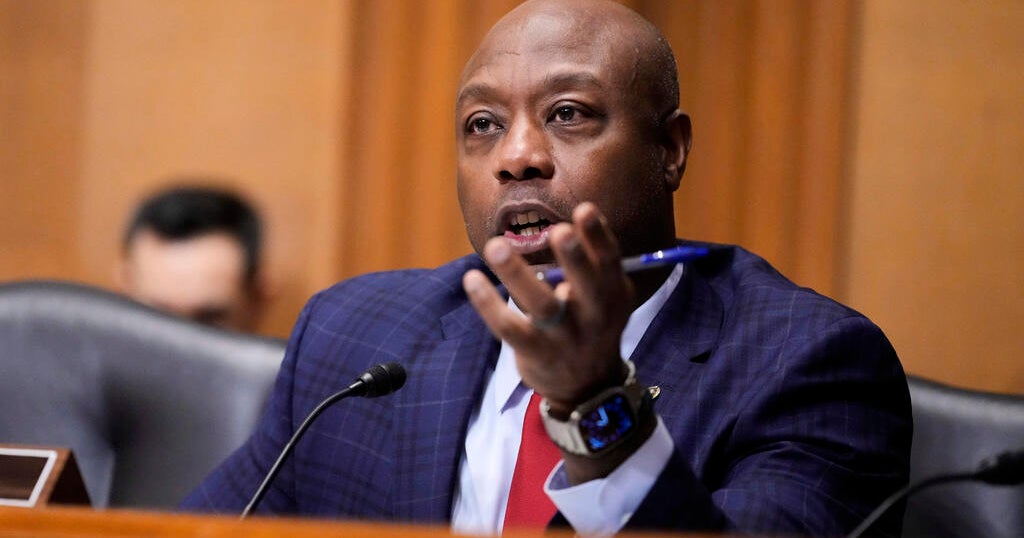
In what became one of the more uncomfortable moments for the Trump administration, President Trump personally reached out to Senator Tim Scott on Friday following a growing controversy over a deeply offensive video posted to the president’s social media account. The South Carolina Republican, who serves as chairman of the National Republican Senatorial Committee, had publicly called out the president earlier in the day, expressing his horror at what he’d seen. The video in question depicted former President Barack Obama and former First Lady Michelle Obama with their faces superimposed on the bodies of apes—imagery widely recognized as one of the most dehumanizing and racist tropes in American history. During their conversation, Trump told Scott that the offensive repost was simply a staffer’s mistake and assured him it would be taken down immediately. True to his word, the post disappeared from Trump’s account shortly after they hung up.
What made this situation particularly significant was Scott’s willingness to speak up despite being one of Trump’s most consistent allies. As the only Black Republican in the Senate, Scott found himself in a position where remaining silent simply wasn’t an option. His initial reaction on social media platform X captured the shock many felt: “I’m praying it was fake because it’s the most racist thing I’ve seen out of this White House.” He didn’t mince words, directly calling on the president to remove the offensive content. Scott wasn’t alone in his concerns—CBS News confirmed that other Republican lawmakers also contacted the president to urge him to take down the post. However, the fact that Trump personally called Scott speaks volumes about the senator’s standing within the party and the seriousness of the situation. It showed that even in an administration often criticized for doubling down on controversial statements, there were still lines that, once crossed, demanded immediate correction.
The White House’s Shifting Response
The initial response from the White House only added fuel to the fire. Press Secretary Karoline Leavitt attempted to downplay the controversy by describing the offensive imagery as part of an “internet meme video” that supposedly parodied the Disney classic “The Lion King.” Her dismissive tone struck many as tone-deaf, as she urged the media to “stop the fake outrage and report on something today that actually matters to the American public.” This defensive posture suggested the administration didn’t initially grasp the severity of what had been posted, or perhaps hoped the controversy would simply blow over if they refused to acknowledge its seriousness. The offensive images of the Obamas appeared only in the final two seconds of what was otherwise an unrelated video, but those two seconds were enough to spark outrage across the political spectrum.
However, as pressure mounted and more voices—including those from within the president’s own party—expressed their dismay, the White House changed course. A White House official later offered a different explanation, stating that a staffer had “erroneously made the post.” This shift from defending the post as harmless internet humor to acknowledging it as an error represented a significant about-face. When speaking to reporters aboard Air Force One Friday night, President Trump himself confirmed his conversation with Scott and offered his own explanation for how the offensive content ended up on his account. He claimed he had only looked at the first part of the video and hadn’t seen the portion featuring the former president and first lady depicted as apes. Whether one accepts this explanation or not, the fact remains that content posted to a president’s official social media account carries weight and consequences, regardless of who physically pushed the “post” button.
Senator Scott’s History of Principled Stands
Senator Tim Scott’s willingness to criticize President Trump over this incident wasn’t entirely unprecedented. While he’s generally known as a vocal Trump supporter and has aligned himself with the president on most policy matters, Scott has demonstrated a willingness to speak out when he believes the president has crossed important moral lines. This isn’t the first time he’s found himself at odds with Trump over issues of race and extremism. Back in 2017, following the violent clash in Charlottesville, Virginia, between white supremacist groups and counter-protesters, Scott publicly criticized Trump’s infamous comment that there were “very fine people on both sides.” In an appearance on CBS News’ “Face the Nation” shortly after those remarks, Scott didn’t hold back, telling the nation that he believed Trump’s moral authority had been “compromised” by his response to the Charlottesville violence.
These moments of public disagreement reveal something important about Scott’s character and his approach to politics. Despite being in a party where loyalty to Trump has often been treated as a litmus test, Scott has maintained that certain principles—particularly those related to racial justice and human dignity—cannot be compromised for political expediency. As the Senate’s only Black Republican, Scott occupies a unique and sometimes challenging position. He serves as a bridge between the Republican Party and communities of color, and incidents like this one put him in an especially difficult spot. Remaining silent would have damaged his credibility and betrayed the communities he represents, but speaking out risked his relationship with a president whose support is considered essential for Republican electoral success. That Scott chose to speak out anyway, knowing the potential consequences, demonstrates a commitment to principle over politics.
The Broader Context of Race and Politics
This incident didn’t happen in a vacuum—it occurred against a backdrop of ongoing tensions around race, representation, and respect in American politics. The depiction of Black people as apes or monkeys has an especially ugly history in America, used for centuries to dehumanize African Americans and justify discrimination, violence, and denial of basic rights. This imagery was a staple of racist propaganda during slavery, segregation, and the civil rights era, and it continues to appear in hate speech today. That such imagery could appear, even for two seconds, on the sitting president’s social media account represents a shocking lapse in judgment at best, and something far more sinister at worst. The Obama family, as the first Black first family in American history, has been subjected to this particular brand of racism more than most, making the choice to repost such content especially hurtful and inflammatory.
The incident also highlighted the ongoing challenges Republicans face in building a more racially diverse coalition. The party has made efforts in recent years to reach out to minority communities, with figures like Tim Scott playing a prominent role in those outreach efforts. However, incidents like this one undermine those efforts and reinforce perceptions among many minority voters that the Republican Party doesn’t take issues of racism seriously enough. The initial defensive response from the White House—dismissing legitimate concerns as “fake outrage”—particularly damaged the party’s credibility on these issues. It suggested that what many saw as a clear-cut case of offensive, racist imagery was somehow a matter of political perspective rather than basic human decency. The fact that it took pressure from within the party, including from one of Trump’s most reliable allies, to get the post removed only reinforced concerns about the administration’s judgment on matters of race.
Moving Forward: Lessons and Implications
The resolution of this incident—with Trump personally calling Scott and removing the post—represents a better outcome than many similar controversies have achieved. It showed that there are still limits to what even Trump’s most loyal supporters will defend, and that voices like Scott’s carry weight when they speak up. However, the episode also raised troubling questions about the vetting processes for content posted to the president’s social media accounts. In an era where a president’s tweets and posts carry enormous weight—sometimes moving markets, influencing foreign policy, or sparking international incidents—the claim that a staffer “erroneously” posted something so offensive suggests serious problems with oversight and accountability. Who was this staffer? What were they thinking? What consequences did they face? These questions remain unanswered.
The incident also serves as a reminder of the power and responsibility that comes with political leadership in the social media age. Every post, retweet, or share from a president’s account is analyzed, dissected, and interpreted by millions of people around the world. What might be dismissed as a simple mistake or oversight can have profound implications for racial healing, political discourse, and America’s standing in the world. Senator Scott’s willingness to speak truth to power, even when that power belongs to someone from his own party, offers a model for principled political leadership. His actions reminded us that party loyalty should never require us to defend the indefensible, and that some principles—like basic human dignity and respect—must transcend political considerations. As America continues to grapple with its complicated history and ongoing challenges around race, we need more leaders willing to make those kinds of principled stands, regardless of the political cost.