


A Young Migrant’s Fight Against Deportation: The Story of Alessandro Paredes
Detained Without Warning in the Early Morning Hours
Alessandro Paredes, a 19-year-old Venezuelan migrant, never expected to wake up at 4 a.m. in a detention center and be hurried into a van heading toward an airport for immediate deportation. Speaking to ABC News from Immigration and Customs Enforcement’s Bluebonnet Detention Center in Anson, Texas, the teenager described a chaotic and frightening experience that he believes violated his legal rights. “This is not being done by law, this is totally illegal and it’s out of the blue,” Paredes explained, his voice reflecting the confusion and fear shared by many detainees at the facility. According to his account, he and other migrants were abruptly taken from their cells in the early morning darkness, loaded into a van, and driven toward what they believed would be a plane waiting to deport them. However, in an unexpected turn of events, the van suddenly reversed course and returned them to Bluebonnet. This sudden change came after the Supreme Court issued an order temporarily blocking their deportations, providing Paredes and others a momentary reprieve from what seemed like an inevitable removal from the United States.
Forced Signatures and Gang Allegations
What troubles Paredes most about his detention isn’t just the threat of deportation—it’s the allegations being made against him and his fellow detainees. According to Paredes, immigration officials forced him and others to sign documents stating they are members of Tren de Aragua (TdA), a violent Venezuelan gang that has gained notoriety across South America and increasingly in the United States. The American Civil Liberties Union (ACLU) has submitted documentation they say their clients received from immigration officials, titled “Notice and Warrant of Apprehension and Removal under the Alien Enemies Act.” This document explicitly states that the recipients “have been determined to be… a member of Tren de Aragua.” Paredes vehemently denies this allegation and insists that he and many others were coerced into signing these papers. “We have been forced to sign a paper, right here, basically saying that we are part of a gang, that we are part of it, and they’re forcing us to sign it,” he told ABC News. The use of the Alien Enemies Act—a law dating back to 1798 that gives the president authority to detain and deport foreign nationals from hostile countries during wartime—has raised serious constitutional questions about due process and the rights of migrants in detention.
The Administration’s Defense and Public Accusations
The Trump administration has stood firmly behind its deportation efforts, framing them as necessary actions to protect American citizens from dangerous criminals. White House press secretary Karoline Leavitt issued a forceful statement defending the administration’s use of the Alien Enemies Act and criticizing those who challenged the deportations in court. “President Trump promised the American people to use all lawful measures to remove the threat of terrorist illegal aliens, like members of TdA, from the United States,” Leavitt stated, adding that the administration is confident in the legality of its actions and expects to prevail against what she called “meritless litigation brought by radical activists who care more about the rights of terrorist aliens than those of the American people.” Stephen Miller, Trump’s homeland security adviser, escalated the rhetoric by responding to a social media post that included a list allegedly provided by a Department of Homeland Security official. This list named “suspected Venezuelan TdA gang members” detained in Texas whom the administration had planned to deport before the Supreme Court intervention. Paredes’ name, photo, and images of his tattoos—including a cross and a clock—were included on this list, which described him as a “confirmed TdA member” facing criminal charges for “aggravated assault with a weapon, pointing, and presenting firearms at a person.” Miller’s response to the post was blunt: “This is who the Democrats are fighting to keep in your neighborhood.”
The Reality Behind the Criminal Charges
A closer examination of Paredes’ criminal record presents a more nuanced picture than the administration’s characterization suggests. Court records confirm that Paredes does face one charge in South Carolina for “pointing and presenting firearms at a person,” an incident that occurred in February. However, this case is still pending, and Paredes has not been convicted of any crime. He is scheduled for his second court appearance in August, meaning he remains legally innocent until proven guilty—a fundamental principle of American justice. According to WCIV, an ABC News affiliate station, Paredes voluntarily turned himself in on the gun charge and was booked into Al Cannon Detention Center in Charleston County, South Carolina, before being transferred to ICE custody. The fact that he turned himself in suggests someone who was cooperating with law enforcement rather than evading it. The ICE detainee locator confirms his current location at Bluebonnet Detention Center. While the charge against him is serious, it is a far cry from the violent gang activity and terrorism that administration officials have suggested. His tattoos, which include religious imagery like a large cross, have been presented as evidence of gang affiliation, though his family insists these are expressions of his Catholic faith rather than symbols of criminal enterprise.
A Mother’s Plea and Fear of the Unknown
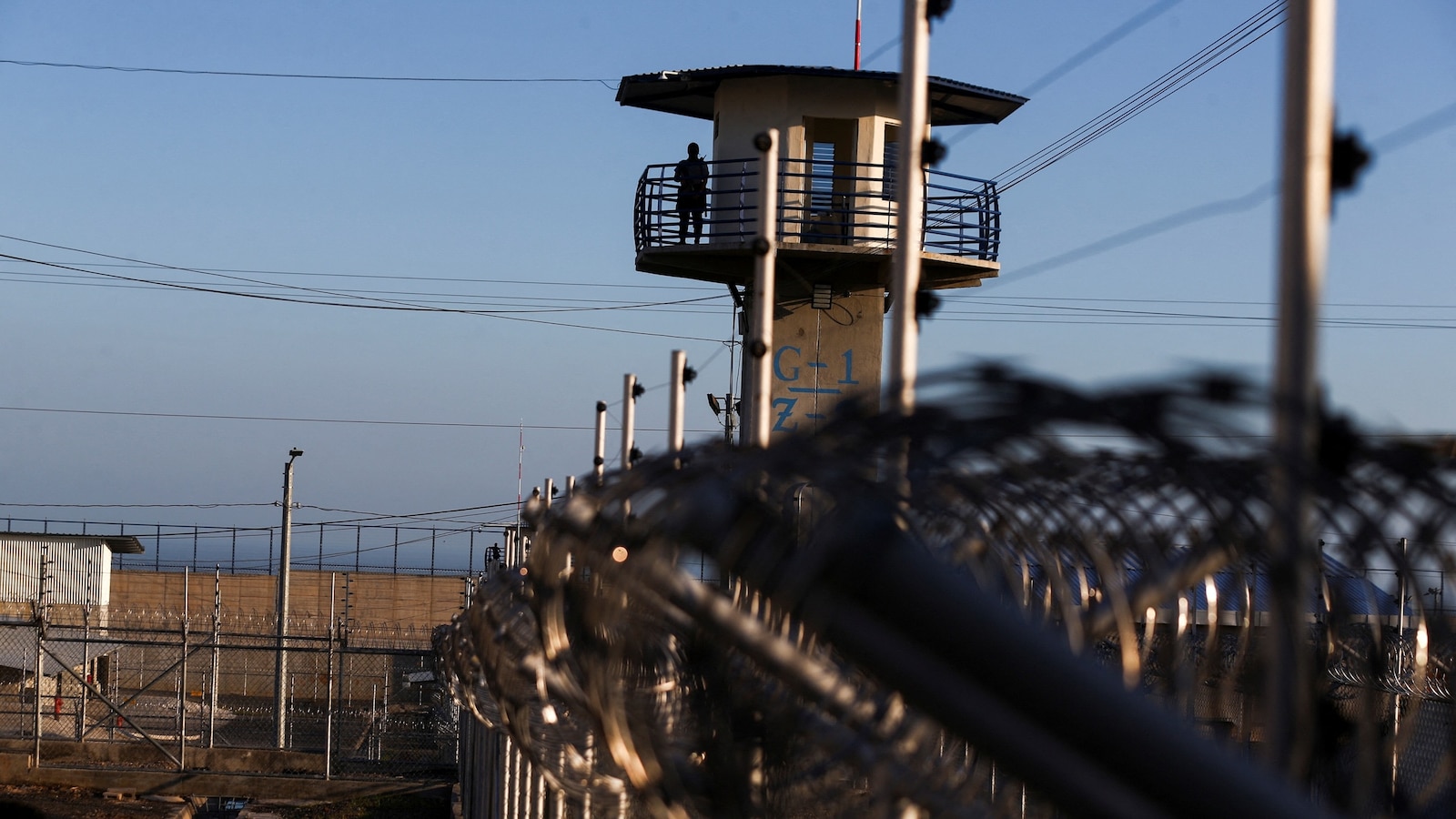
Paredes’ mother, who chose to remain anonymous for safety reasons, spoke through their attorney to defend her son’s character and plead for his fair treatment. Her statement painted a picture of a young man very different from the dangerous gang member described by government officials. “My son is only 19 years old,” she said. “He was a good student, a talented football player, and a loving son. He is a devout Catholic. He carries his faith on his body and in his heart—he even had a large cross tattooed on his body to mark his lifelong commitment to God.” She acknowledged the situation her family faces and expressed a surprising willingness to accept her son’s return to Venezuela, their home country, despite the economic and political crisis there. However, she drew a firm line at the possibility of him being sent to El Salvador—a country neither she nor her son has any connection to. “He’s not a terrorist,” she insisted. “Please do not send him to El Salvador—a country he has never known, where he faces grave danger and has no support.” Her fear is not unfounded; El Salvador has become known internationally for its controversial approach to gang violence, including mass incarcerations at facilities like the CECOT prison, where suspected gang members are held in harsh conditions with minimal legal protections.
The Human Cost of Immigration Enforcement
Paredes’ fear about being sent to El Salvador reflects a broader concern among the detainees at Bluebonnet. He told ABC News that he is “very scared” because neither he nor most of the others detained with him have any connection to that Central American nation. “We are very scared [that] everybody here will get deported to El Salvador,” he explained. “Because, first of all, we are not from there. Most people in here got no criminal records. Not even a ticket, nothing.” His description of his fellow detainees challenges the administration’s characterization of them as dangerous criminals and terrorists. According to Paredes, the detention center holds people of various ages and conditions, including minors and individuals with disabilities. “There’s underage people,” he noted. “We even got disabled people right here next to me.” When asked about communication with detention officers, Paredes described a frustrating information vacuum. “They just tell us that they don’t know anything, and they don’t give us any kind of information,” he said, highlighting the confusion and helplessness that many detainees experience. His final words to ABC News were a simple plea for recognition of his humanity: “We just want justice, we are humans, we have human rights. We just want to go back to our country.” This statement encapsulates the central tension in the current immigration debate—the balance between national security concerns and the fundamental rights that belong to all people, regardless of their immigration status. The Supreme Court’s earlier ruling this month lifted an injunction barring deportations under the Alien Enemies Act but maintained that anyone the administration seeks to deport must be given due process. The ACLU has argued that the Venezuelan migrants at Bluebonnet have not had adequate notice or sufficient time to challenge their removals, violating the court’s requirement for “reasonable time” to exercise their due process rights. As this legal battle continues, Alessandro Paredes remains in detention, uncertain of his future and whether he’ll be given the opportunity to defend himself against the allegations that could determine where—and whether—he can live.