

Pope Leo XIV Delivers Message of Peace and Hope in Historic Easter Address
A New Pope’s First Easter Blessing
Pope Leo XIV, making history as the first American-born leader of the Catholic Church, celebrated his inaugural Easter Mass on Sunday with an impassioned plea for global peace and an end to armed conflicts. Speaking to thousands gathered in St. Peter’s Square and millions watching worldwide, the pontiff delivered a powerful message centered on hope, dialogue, and the transformative power of love that Easter represents for Christians around the globe. In a notable departure from recent papal tradition, Leo chose not to specifically name the world’s conflict zones during his “Urbi et Orbi” (to the city and the world) blessing, instead offering a more general call for those in power to choose peace over war. His words came at a time of significant global tension, with multiple conflicts causing immense human suffering and death across different continents.
The 70-year-old pontiff emphasized Easter’s fundamental message of resurrection and renewal, urging world leaders and all people to allow their hearts to be transformed by love. “Let those who have weapons lay them down! Let those who have the power to unleash wars choose peace! Not a peace imposed by force, but through dialogue! Not with the desire to dominate others, but to encounter them!” he implored from the iconic loggia of St. Peter’s Basilica. His message resonated with particular urgency given the ongoing U.S.-Israeli war on Iran entering its second month and Russia’s continued military campaign in Ukraine. Pope Leo expressed deep concern about the growing sense of indifference worldwide to the thousands of deaths occurring daily, the spread of hatred and division, and the devastating economic and social consequences that wars produce across affected regions and beyond.
Honoring His Predecessor’s Legacy
In a touching tribute to his predecessor, Pope Leo quoted Pope Francis, who had stood in the same spot just one year earlier for what would be his final public appearance. Francis had spoken then about humanity’s “great thirst for death, for killing, we witness each day,” words that proved to be among his last public messages to the faithful. Weakened by prolonged illness, Pope Francis died the following day, Easter Monday, leaving behind a legacy of compassion, inclusivity, and tireless advocacy for the marginalized. The new pope’s decision to invoke Francis’s words demonstrated both respect for his predecessor’s mission and continuity in the Church’s commitment to peace. However, Pope Leo’s approach also marked a subtle but significant shift in style—while the traditional “Urbi et Orbi” blessing has historically included a detailed litany of the world’s specific trouble spots and conflicts by name, Leo chose a more universal approach this Easter, though he had followed the traditional formula during his Christmas blessing just months earlier. Vatican officials offered no immediate explanation for this change in approach.
Earlier in the day, Pope Leo had addressed approximately 50,000 faithful gathered in St. Peter’s Square, where an open-air altar flanked with white roses provided a striking visual backdrop. The steps leading down to the piazza were adorned with spring perennial flowers, creating a living symbol of renewal and rebirth that perfectly complemented the Easter message. In his homily, the pope challenged the faithful to maintain hope even in the face of death, which he described as lurking “in the abuses that crush the weakest among us, because of the idolatry of profit that plunders the earth’s resources, because of the violence of war that kills and destroys.” This powerful language connected spiritual themes with very concrete social and political realities, reminding Catholics that their faith calls them to confront injustice in all its forms. The pope’s words acknowledged the sense of powerlessness many feel when confronted with the magnitude of global suffering, while simultaneously calling them to resist despair.
Revival of Traditional Practices and New Initiatives
In announcing his plans for the days ahead, Pope Leo revealed that a special prayer vigil for peace would be held on April 11 in St. Peter’s Basilica, inviting all people of goodwill to join in supplication for an end to violence. “On this day of celebration, let us abandon every desire for conflict, domination, and power, and implore the Lord to grant his peace to a world ravaged by wars and marked by a hatred and indifference that makes us feel powerless in the face of evil,” he declared. In another notable gesture that signaled both continuity and change, Leo greeted the global faithful in ten different languages—including Arabic, Chinese, and Latin—reviving a multilingual tradition that his predecessor Pope Francis had allowed to lapse during his papacy. This linguistic inclusivity seemed designed to emphasize the universal nature of the Church’s message and its relevance to people of all cultures and nations.
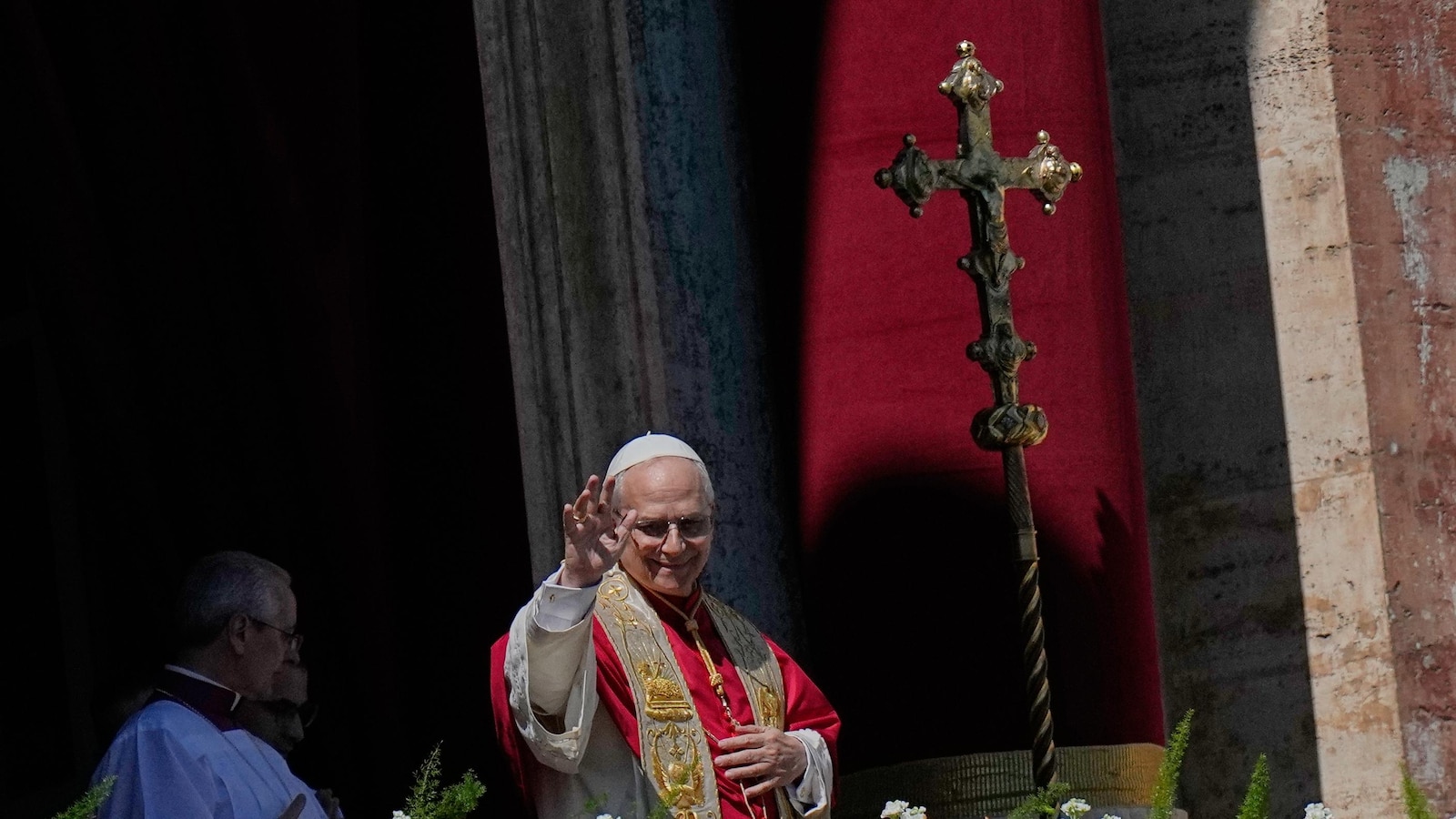
The new pope has also made clear his intention to restore certain traditional papal practices during his tenure. After delivering his blessing, Leo stepped forward out of the loggia’s shadow and enthusiastically waved to the cheering crowds below, then descended to greet people more personally from the popemobile, traveling the full length of Via della Conciliazione toward the Tiber River and back. During the demanding Holy Week observances, Leo had already demonstrated his commitment to some traditional forms by reclaiming the practice of washing priests’ feet on Holy Thursday—a gesture of encouragement and support for the clergy—after Francis had chosen a more inclusive approach that involved traveling to prisons and homes for people with disabilities to wash the feet of women, non-Christians, and prisoners. Additionally, Pope Leo became the first pontiff in decades to personally carry the light wooden cross for all fourteen stations during the Way of the Cross procession on Good Friday, a physically demanding act that conveyed both humility and dedication.
Challenges in the Holy Land and Beyond
The Easter celebrations in Jerusalem, traditionally one of the most significant sites for Christian observances, were severely curtailed this year due to ongoing security concerns. Traditional ceremonies at the Church of the Holy Sepulchre—revered by Christians worldwide as the site where Jesus was crucified and resurrected—were scaled back under an agreement with Israeli police, who have imposed strict limits on public gatherings due to ongoing missile attacks. These restrictions have affected not only Christian celebrations but also the recent Muslim holy month of Ramadan and Eid al-Fitr holiday, as well as the current weeklong Jewish festival of Passover. At the Western Wall, the Jewish priestly blessing that normally attracts tens of thousands of worshippers was limited to just fifty people. The security situation has significantly strained relations between Israeli authorities and Christian leaders in the region. Police prevented two of the church’s highest-ranking religious leaders, including Latin Patriarch Pierbattista Pizzaballa, from celebrating Palm Sunday services at the Church of the Holy Sepulchre the previous week—an incident that sparked considerable controversy and disappointment among the Christian community.
On Tuesday before Easter, Pope Leo had expressed his fervent hope that the war could be concluded before the holy day, though that wish went unfulfilled. Meanwhile, in Tehran, Iran’s capital, Armenian Christians celebrated Easter at St. Sarkis Cathedral, striving to maintain a sense of normalcy amid the chaos of war that had entered its fifth week. Families embraced, children exchanged painted eggs, and the community came together in an act of faith and resilience. “Whether we like it or not, we have young children who do not understand what’s going on,” explained Juanita Arakel, a 40-year-old English language teacher. “They just need to feel normal.” Iran, with its population of approximately 90 million, is home to some 300,000 Christians, predominantly Armenians, and the government reserves three parliamentary seats specifically for Christian representatives—a recognition of this minority community’s presence and rights. Archbishop Sepuh Sargsyan of the Armenian Diocese of Tehran offered his own Easter message: “My appeal first is to those who started the war to look up to the sky where love and mutual respect was given to us, whether through the birth of Jesus or his rising from the dead. Our calls and prayers are that we will be able to end this war.” These words from different corners of the Christian world echoed Pope Leo’s central message that Easter’s promise of resurrection and new life should inspire humanity to choose peace, dialogue, and understanding over violence, domination, and death.