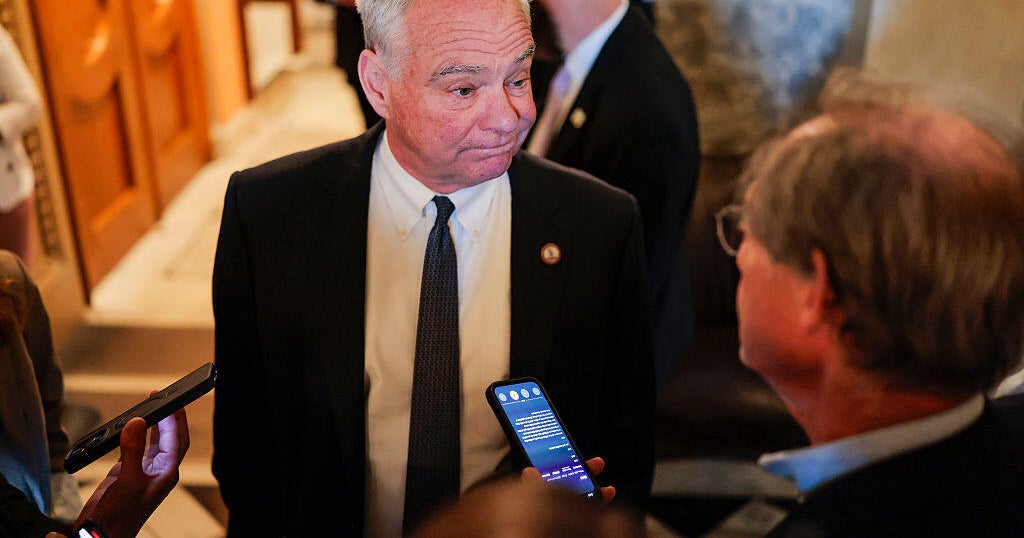

Senate Battle Over Cuba: Democrats Push Back Against Trump’s Military Threats
The political tension in Washington reached a boiling point this week as Senate Democrats made a bold attempt to restrain President Trump from potential military action against Cuba. In a procedural vote that exposed deep partisan divisions, Republicans blocked the Democratic effort, setting the stage for yet another showdown over presidential war powers. This latest confrontation comes as Trump continues to make increasingly aggressive statements about the island nation, leaving many wondering whether his rhetoric will translate into actual military intervention.
The Failed Vote and Republican Resistance
On Tuesday, Senate Democrats tried to advance a resolution that would require congressional approval before any military strike against Cuba could take place. The measure, championed by Virginia Senator Tim Kaine, aimed to prevent the president from unilaterally deciding to attack America’s island neighbor without proper legislative oversight. However, Republicans successfully blocked even the procedural vote needed to debate the resolution, with Florida Senator Rick Scott dismissing the entire concern as “moot.” Scott and his Republican colleagues argued that since the United States isn’t currently engaged in active hostilities with Cuba, there’s no urgent need for such restrictions. This reasoning, however, rings hollow to Democrats who watched Trump take sudden, unilateral military action against both Venezuela and Iran earlier this year without significant congressional input.
Senator Kaine, who has emerged as the Senate’s leading voice on restraining presidential war powers, expressed his frustration on the Senate floor before the vote. “I’ve never heard the suggestion that Cuba poses an imminent security threat to the United States,” he stated plainly, highlighting what Democrats see as the absurdity of treating Cuba as a military target. This isn’t Kaine’s first rodeo with this issue—he’s already led more than half a dozen similar efforts to restrict Trump’s military authority regarding Venezuela and Iran, all of which met the same fate. Each time, Republicans have voted down the restrictions, standing firm in their defense of broad presidential power to deploy military force. The pattern has become frustratingly predictable for Democrats who believe the constitutional balance of power is being eroded.
Trump’s Escalating Threats Against Cuba
The president’s rhetoric toward Cuba has grown increasingly menacing since his administration captured Venezuelan President Nicolás Maduro in January. Trump hasn’t been subtle about his intentions, publicly stating that he believes he will have “the honor of taking Cuba” and declaring that “Cuba’s going to be next.” These aren’t offhand comments made in passing—they represent a consistent thread in Trump’s foreign policy messaging over recent months. Earlier this month, even as the United States became embroiled in military conflict with Iran, Trump casually mentioned that military action against Cuba remains a live option. “We may stop by Cuba after we’re finished with this,” he said, referring to the ongoing Iran war as if discussing a simple detour on a road trip rather than a potential military invasion of a sovereign nation.
Secretary of State Marco Rubio, who has personal and political ties to the anti-Castro Cuban exile community in Florida, has been even more explicit about the administration’s goals. During congressional testimony in January, Rubio openly stated that “we would love to see the regime there change,” arguing that such a change would be of “great benefit” to the United States. While Rubio has also called for economic reforms in Cuba and the administration officially maintains that it seeks to resolve concerns through diplomacy, the refusal to rule out military action keeps the threat hanging in the air. This ambiguity appears deliberate—a way to maintain pressure on the Cuban government while keeping all options on the table.
The Humanitarian Crisis and Acts of War
Senator Kaine made a compelling argument that the United States is already engaged in hostile actions against Cuba, even if bombs aren’t falling. He pointed specifically to the Trump administration’s comprehensive oil blockade of the island, which has had catastrophic effects on ordinary Cuban civilians. The blockade has strangled Cuba’s energy supply, creating widespread hardship and suffering among a population that has no say in their government’s policies. Kaine posed a thought-provoking hypothetical: if another country imposed a similar blockade on the United States, cutting off our energy supplies and causing massive civilian hardship, would we not consider that an act of war? “The U.S. is using force to block energy from going to Cuba,” Kaine stated, arguing that this constitutes a form of warfare that deserves congressional oversight and approval.
This perspective challenges the Republican argument that no hostilities currently exist between the two nations. If an energy blockade causing humanitarian suffering doesn’t count as hostile action, what does? The question goes to the heart of how we define warfare in the 21st century. Military action no longer consists solely of troops crossing borders and bombs dropping from planes. Economic warfare, cyber attacks, and blockades can be equally devastating and can certainly provoke military responses. By this standard, the United States has already crossed a line with Cuba, making the Democratic push for congressional restraint all the more urgent and relevant.
Cuba’s Response and Diplomatic Efforts
The Cuban government hasn’t remained passive in the face of these threats. Cuban leadership has made clear that the country stands ready to defend itself against any U.S. aggression, echoing the defiant stance the island nation has maintained throughout decades of tension with its powerful northern neighbor. Despite this tough talk, both sides have recognized the need for dialogue. In a significant development, a delegation of senior State Department representatives traveled to Cuba earlier this month for diplomatic talks. The visit was historic—it marked the first time a U.S. government plane had landed in Cuba since President Barack Obama’s groundbreaking visit to the island in 2016, a trip that symbolized the brief thaw in relations during Obama’s second term.
A State Department official, speaking to CBS News, indicated that President Trump remains open to resolving American concerns through diplomatic channels rather than military action. However, the official added a significant caveat that reveals the administration’s thinking: Trump “will not let the island collapse into a major national security threat if Cuba’s leaders are unwilling or unable to act.” This statement raises more questions than it answers. What specific actions does the administration expect from Cuba? What would constitute a “major national security threat” sufficient to trigger military intervention? And who gets to make those determinations? The ambiguity seems intentional, preserving maximum flexibility for the administration while providing minimal clarity to Congress, the American people, or Cuba itself about what might trigger a military response.
The Broader Constitutional Question
This latest showdown over Cuba is really about something much larger than one island nation in the Caribbean. It’s about the fundamental constitutional question of who has the power to take America to war. The founders gave Congress, not the president, the power to declare war. They did this deliberately, believing that such a momentous decision should require broad consensus rather than the judgment of a single individual. Over the decades, however, that constitutional authority has been steadily eroded. Presidents of both parties have claimed ever-broader powers to use military force without explicit congressional authorization, citing the need for speed and flexibility in responding to threats.
The repeated failure of Senator Kaine’s resolutions—on Venezuela, Iran, and now Cuba—demonstrates how far the balance has shifted toward executive power. Most Republicans in the current Senate appear comfortable with giving the president enormous latitude to use military force, trusting in his judgment and viewing congressional restrictions as potentially dangerous constraints that could prevent necessary action. Democrats, having watched Trump’s impulsive decision-making on the world stage, are far less trusting. They worry that without meaningful congressional oversight, the United States could stumble into unnecessary wars with devastating consequences. The Cuba vote may have failed, but it represents an important marker in this ongoing constitutional struggle, one that will likely continue long after Trump leaves office, regardless of when that might be.
The situation remains tense and unresolved. Trump’s threats continue, Cuba remains defiant but willing to talk, and Congress remains divided over how much power the president should have to take military action. For ordinary Cubans and Americans alike, the uncertainty is unsettling. Will diplomacy prevail, or will Trump’s bellicose rhetoric eventually translate into military action? The answer may depend less on the strategic merits of intervention and more on the domestic political calculations of a president who has shown himself willing to take dramatic military action when it serves his perceived interests.