
King Charles Addresses Congress: A Historic Call for Unity and Partnership
Carrying the Weight of History
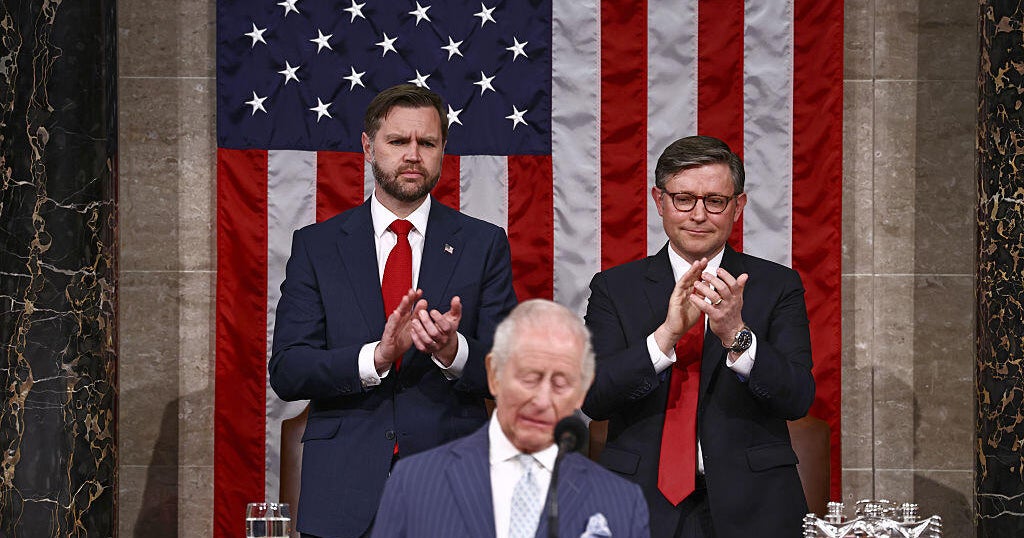
In a momentous occasion that bridged centuries of diplomatic relations, King Charles III stood before the United States Congress on Tuesday, becoming only the second British monarch ever to address the legislative body. Speaking with evident emotion, Charles acknowledged feeling the “weight of history” upon him as he delivered his nearly 30-minute address to a packed House chamber. This historic speech came on the second day of his state visit to America, accompanied by Queen Camilla, and marked the first time in 35 years that a British sovereign had spoken to Congress. The king followed in the footsteps of his late mother, Queen Elizabeth II, who had been the first to receive this honor back in 1991. As Charles stood beneath the watchful gaze of the Statue of Freedom, he seemed acutely aware that his words would echo through the halls of democracy at a time when the world desperately needed reminders of enduring alliances and shared values. The setting itself was symbolic—a British king addressing American lawmakers in a building that represents the very ideals of independence and self-governance that once separated these two nations.
Renewing Bonds at America’s 250th Birthday
Charles’s address carried special significance as it came ahead of America’s upcoming 250th birthday celebration. The king used this milestone as an opportunity to call for a renewal of commitment between the two nations, urging a rededication to their historic partnership. In a particularly moving moment, Charles invoked President Abraham Lincoln’s immortal Gettysburg Address, reminding lawmakers that “the world may little note what we say, but will never forget what we do.” This wasn’t just historical reference—it was a challenge to action, a call for both nations to demonstrate their commitment through deeds rather than mere words. The king emphasized that the relationship between Britain and America spans not just 250 years, but over four centuries, creating a tapestry of shared history that is “extraordinary” in its depth and continuity. He noted that he is the nineteenth British sovereign to study American affairs “with daily attention,” highlighting the sustained focus that the British monarchy has maintained on its relationship with its former colony. This long view of history seemed designed to put contemporary disagreements into perspective and remind both nations of the resilience of their partnership.
Facing Contemporary Challenges Together
The timing of Charles’s visit was particularly delicate, coming amid visible strains between President Trump and British Prime Minister Keir Starmer over the war in Iran and other policy matters. Rather than shying away from these tensions, Charles acknowledged them directly, noting that “our two countries do not always agree” while emphasizing that they have “always found ways to come together.” The king spoke candidly about living in “times of great uncertainty” and “times of conflict from Europe to the Middle East” that pose “immense challenges for the international community.” His message was clear: disagreements between allies are natural, but the alliance itself remains “truly unique” and “more important today than it has ever been.” Charles warned against “clarion calls to become ever more inward-looking,” a subtle but pointed reference to growing isolationist tendencies in both countries. He stressed that “the challenges we face are too great for any one nation to bear alone,” making a compelling case for continued cooperation. His words seemed carefully crafted to appeal to both sides of the American political aisle, acknowledging legitimate concerns while arguing forcefully that abandoning international partnerships would be a historic mistake.
Standing United Against Violence and Extremism
In one of the most emotionally powerful moments of his speech, King Charles addressed the recent shooting at the White House Correspondents’ Dinner, an incident that had occurred just days earlier and in which President Trump and several members of Congress had been present. With gravity in his voice, the king declared that “such acts of violence will never succeed,” receiving a standing ovation from lawmakers on both sides of the aisle. This moment transcended the usual diplomatic pleasantries, touching on something deeper—the shared vulnerability of democratic leaders and the courage required to continue serving despite very real threats. Charles emphasized that “whatever our differences, whatever disagreements we may have, we stand united in our commitment to uphold democracy, to protect all our people from harm, and to salute the courage of those who daily risk their lives in the service of our countries.” This wasn’t just about solidarity in the face of violence; it was a reminder that democratic governance itself requires bravery, and that leaders in both countries share the burden of serving despite personal risk. The king’s willingness to address this traumatic event head-on, rather than ignoring it in favor of safer diplomatic topics, demonstrated both courage and genuine concern for his American hosts.
Defense, Security, and the NATO Question
Perhaps the most politically significant portions of Charles’s speech dealt with defense and security cooperation, particularly his references to NATO—an alliance that President Trump has openly questioned and threatened to leave. The king chose his words carefully, noting that “our defense, intelligence and security ties are hardwired together through relationships measured not in years, but in decades.” He highlighted specific examples of military cooperation, including the joint production of F-35 fighter jets and the trilateral submarine partnership between the United States, United Kingdom, and Australia. Charles emphasized that these partnerships weren’t born from mere sentiment but were practical investments in “greater shared resilience for the future, so making our citizens safer for generations to come.” In what many observers saw as the most direct political appeal of his speech, the king called for the same “unyielding resolve” shown by the U.S. and U.K. during World War II, the Cold War, and after 9/11 to now be directed toward “the defense of Ukraine and her most courageous people, in order to secure a truly just and lasting peace.” This line received bipartisan applause, one of several standing ovations during the address, suggesting that support for Ukraine continues to command broad support in Congress even as debates continue about the specific form that support should take.
A Story of Reconciliation and Renewal
Throughout his address, King Charles returned repeatedly to a central theme: the relationship between the United States and United Kingdom is fundamentally “a story of reconciliation, renewal and remarkable partnership.” This framing was deliberate and meaningful, acknowledging that these two nations, which once fought a bitter war of independence, have become each other’s closest allies. The king spoke of their partnership as “one of the most consequential alliances in human history,” a bold claim but one supported by two centuries of cooperation through world wars, economic crises, and global challenges. Charles concluded his remarks by noting that “our alliance cannot rest on past achievements, or assume that foundational principles simply endure,” echoing recent comments by Prime Minister Starmer about the need to actively maintain and strengthen the “indispensable partnership” rather than taking it for granted. Before delivering his speech, Charles met with top congressional leaders from both parties, including Senate Majority Leader John Thune, House Speaker Mike Johnson, Senate Minority Leader Chuck Schumer, and House Minority Leader Hakeem Jeffries, demonstrating the bipartisan nature of U.S.-U.K. relations. The king’s visit, which began with a formal White House arrival ceremony where President Trump referenced the “special relationship” between the nations, served as a reminder that some bonds transcend partisan politics and temporary policy disagreements. In an era of increasing international fragmentation and rising nationalism, Charles’s message was both a celebration of what the U.S.-U.K. alliance has achieved and a urgent plea not to abandon the principles and partnerships that have underwritten peace and prosperity for generations.