
Britain’s Ambassador Admits Israel, Not UK, Has the True “Special Relationship” with America
A Diplomatic Bombshell Rocks Transatlantic Relations
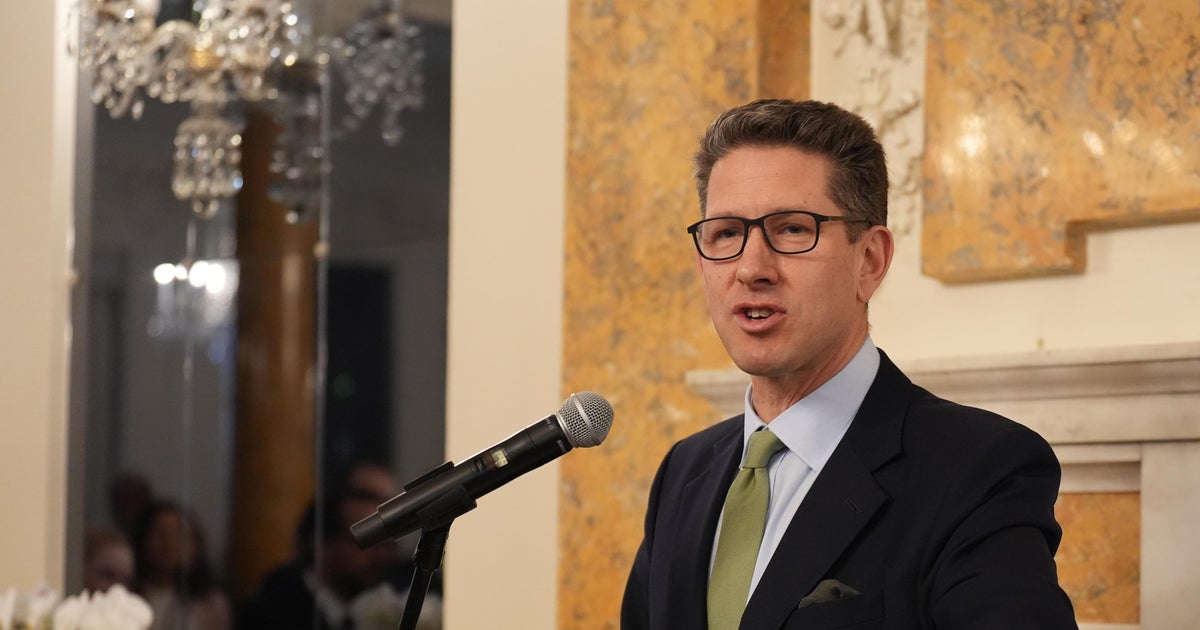
In what can only be described as a stunning diplomatic confession, Britain’s Ambassador to the United States, Sir Christian Turner, made waves in February when he candidly told a group of British high school students that Israel—not the United Kingdom—appears to be the only country with a genuine “special relationship” with America. The comments, which were recorded and later obtained by the Financial Times, have sparked considerable controversy on both sides of the Atlantic. What makes this revelation particularly striking is that it came from Britain’s top diplomat in Washington, speaking just before the U.S. and Israel launched their joint military operations with Iran. Turner’s remarks represent a rare moment of diplomatic honesty that pulls back the curtain on how Britain’s own representatives view the much-celebrated U.S.-UK partnership that has been a cornerstone of British foreign policy for nearly eight decades.
The ambassador didn’t stop there. During this informal chat with visiting students—most of whom would have been around 16 or 17 years old—Turner expressed his dissatisfaction with the very concept of the “special relationship,” a term famously coined by Prime Minister Winston Churchill in the aftermath of World War II. He described the phrase as “quite nostalgic” and “backwards-looking,” suggesting that Britain has been clinging to an outdated view of its place in American foreign policy priorities. While Turner did acknowledge that U.S.-UK ties remain “so strong” and that the two nations share “a deep history and affinity,” particularly in defense and security matters where they are “intertwined,” his broader message was clear: the unique privileged partnership that Britain has long claimed with Washington may be more myth than reality in today’s geopolitical landscape. Though CBS News has not independently verified the audio recording, the British government has notably not denied the authenticity of Turner’s remarks, instead characterizing them as “private, informal comments” that don’t reflect official government policy.
The Epstein Scandal’s Transatlantic Impact
Turner also made another explosive observation during his conversation with the students, pointing out what he found to be an “extraordinary” difference in how the Jeffrey Epstein scandal has affected British versus American public figures. The late sex offender’s connections have proven devastating to prominent figures in Britain, while barely touching those in the United States. Turner noted that the Epstein affair “brought down a senior member of the royal family”—referring to Prince Andrew, who has been effectively exiled from public royal duties—as well as “a British ambassador to Washington,” Peter Mandelson, and has potentially threatened even Prime Minister Keir Starmer’s position. Yet in America, Turner observed, “it really hasn’t touched anybody” with comparable consequences.
This observation highlights a stark contrast in accountability between the two nations. In Britain, the Epstein connections have forced multiple high-profile resignations and withdrawals from public life, creating genuine political crises. Prince Andrew’s association with Epstein led to his stepping back from royal duties and a damaging settlement with one of Epstein’s accusers. Peter Mandelson, who had been appointed as Britain’s ambassador to the U.S., was ultimately removed from the position in September after details of his friendship with Epstein surfaced in files released in Washington. Prime Minister Starmer has faced fierce domestic pressure and calls for resignation from political opponents over his decision to appoint Mandelson—a longtime figure in Starmer’s own Labour Party since the 1990s—to the ambassadorship in the first place. The scandal has become a persistent thorn in Starmer’s side, undermining his authority and providing ammunition to his critics. Meanwhile, in the United States, despite Epstein’s extensive connections to American business, political, and social elites, few have faced comparable career-ending consequences.
A Royal Visit Amid Diplomatic Tensions
The timing of Turner’s remarks becoming public could hardly have been more awkward for the British government. The comments emerged just as King Charles III and Queen Camilla were paying a formal state visit to the United States, complete with a ceremonial welcome at the White House by President Trump and an address by the King to a joint session of Congress. This royal visit has been widely interpreted as an attempt by the U.K. government to smooth over increasingly strained transatlantic relations and shore up the very “special relationship” that Turner privately questioned.
The diplomatic tensions have been building for months, largely due to President Trump’s repeated and public criticisms of Prime Minister Starmer. The American leader has accused Starmer of failing to adequately support the Iran war effort, creating an uncomfortable rift between the two nations’ leaders. In this context, the royal visit was meant to serve as a reminder of the deep historical and cultural bonds between Britain and America—bonds that transcend any particular political leaders or temporary policy disagreements. The British government hoped that the pomp and ceremony surrounding King Charles’s visit, along with the personal warmth between the royal family and American institutions, might help to reset the relationship and demonstrate that the partnership remains as vital as ever. However, Turner’s leaked comments threatened to undermine this carefully orchestrated diplomatic effort by suggesting that even Britain’s own ambassador doesn’t truly believe in the unique nature of the U.S.-UK relationship.
The Reality Behind Diplomatic Language
What makes Turner’s comments so significant is that they represent a rare break from the carefully managed language that typically characterizes diplomatic relations. For decades, British politicians and diplomats have spoken reverently about the “special relationship” with the United States, treating it as an almost sacred element of Britain’s foreign policy identity. This relationship has been presented to the British public as evidence that despite losing its empire, Britain still maintains unique influence and access in Washington that other nations can only envy. The concept has been particularly important to Britain’s self-image as it has navigated its reduced global role in the post-imperial, post-Brexit era.
Turner’s private skepticism about this narrative reflects a growing recognition among British foreign policy experts that the relationship may not be quite so special after all—at least not in the way traditionally understood. His observation that Israel appears to have displaced Britain as America’s most privileged partner reflects several realities of contemporary geopolitics. Israel receives extraordinary levels of military aid from the United States, enjoys bipartisan support in Congress that is arguably stronger than support for Britain, and maintains intelligence and security cooperation with America that rivals or exceeds the U.S.-UK partnership. Moreover, domestic political considerations in the United States—including the influence of pro-Israel advocacy groups and the importance of Israel to many American voters—give the U.S.-Israel relationship a depth and resilience that the U.S.-UK relationship cannot match. Turner’s comments suggest that Britain’s diplomatic establishment is privately coming to terms with these realities, even if they cannot publicly acknowledge them without causing a political firestorm.
Damage Control and Official Responses
The British Foreign and Commonwealth Office moved quickly to contain the damage from Turner’s leaked remarks, issuing a statement emphasizing that his comments were made in a “private, informal” setting to students and “certainly not any reflection of the UK Government’s position.” This response represents classic diplomatic damage control—acknowledging the remarks without confirming specific details, while creating distance between the ambassador’s personal views and official policy. The government’s strategy appears to be treating Turner’s comments as an unfortunate lapse in judgment rather than a firing offense, likely because forcing him out would only amplify the story and lend greater credibility to his observations.
For his part, President Trump weighed in on the related Epstein-Mandelson scandal, predicting that Prime Minister Starmer can “recover” from the controversy. This relatively generous assessment from Trump is noteworthy given his previous harsh criticisms of Starmer, and may reflect a calculation that the royal visit and other diplomatic efforts have begun to bear fruit. The Trump administration appears willing to move past recent tensions, perhaps recognizing that maintaining at least the appearance of a strong U.S.-UK relationship serves American interests as well. Meanwhile, Starmer continues to face domestic political pressure over both the Mandelson appointment and broader questions about his judgment and leadership. The confluence of these various scandals and diplomatic awkwardness has created a challenging environment for British foreign policy, with the government simultaneously trying to maintain its traditional narratives about the special relationship while dealing with the reality that this relationship may not carry the weight it once did.
Conclusion: A Relationship in Transition
Ambassador Turner’s candid remarks to a group of students have inadvertently sparked a much-needed conversation about the true nature of U.S.-UK relations in the 21st century. While both governments will continue to speak publicly about the enduring strength and unique character of their partnership, Turner’s private skepticism reflects a broader recognition that the international landscape has fundamentally changed. The “special relationship,” forged in the crucible of World War II and sustained through the Cold War, may increasingly be more about sentiment and history than current geopolitical reality. As Britain continues to define its role in the world after Brexit, and as America’s foreign policy priorities evolve, both nations may need to develop a more realistic and less romanticized understanding of their partnership—one that acknowledges its genuine strengths in areas like intelligence sharing and defense cooperation while recognizing that Britain no longer occupies the uniquely privileged position in American foreign policy that it once did.