


Saving Thuza: How Zoo Experts Helped Rescue an Endangered Rhino in Zimbabwe
An Unconventional Solution to a Critical Problem
When faced with the challenge of treating a wild rhinoceros suffering from a severe eye infection, most people would consider the task nearly impossible. The idea of corralling a massive, unpredictable animal into a confined space just to administer eyedrops sounds like something out of a comedy sketch rather than a serious conservation effort. Yet this is exactly what happened in Zimbabwe, where animal behaviorists from Florida partnered with local conservationists to save the life of Thuza, an endangered southern white rhino whose vision—and very survival—hung in the balance. Daniel Terblanche, a security manager with Imvelo Safari Lodges, admitted that the locals initially thought the plan was absurd. “Believe me, we didn’t think of it; it was a completely ridiculous idea to us,” he confessed. However, faced with the prospect of losing a critically important animal, they were willing to try anything. As the saying goes, if it’s crazy and it works, then perhaps it isn’t so crazy after all.
A Conservation Program with High Stakes
The situation unfolded in an area just outside Zimbabwe’s renowned Hwange National Park, where the Community Rhino Conservation Initiative has been working tirelessly to reintroduce southern white rhinos to communal lands. This groundbreaking program, supported by Imvelo Safari Lodges and local communities, represents the first time in Zimbabwe’s history that these magnificent creatures have been brought back to areas where people live and work alongside wildlife. The initiative carries enormous symbolic and practical importance for conservation efforts throughout Africa, serving as a potential model for similar programs across the continent. When Thuza, a male rhino central to the breeding program, developed a parasitic eye infection that caused bleeding and intense discomfort, the stakes became even higher. Mark Butcher, managing director of Imvelo Safari Lodges, recognized immediately that this wasn’t just about one animal’s health—it was about the entire future of the conservation program. “I was looking at a potential where this guy was gonna lose his eyesight,” Butcher explained. “And this is in a pilot project that’s got fantastic vision for a future for conservation throughout Africa.” The irony of a visionary conservation project being threatened by an animal losing its vision wasn’t lost on anyone involved.
Bringing Zoo Expertise to the African Wilderness
The connection between Zimbabwe and Florida came about through Margo McKnight, CEO and President of the Palm Beach Zoo & Conservation Society, who had been visiting the area the previous year. During her visit, Butcher shared his concerns about Thuza’s deteriorating condition. McKnight understood that the expertise developed at modern zoos—where animals are trained to participate voluntarily in their own medical care—might offer a solution to this wilderness challenge. She connected the Zimbabwean team with Thad and Angi Lacinak, founders of Precision Behavior, specialists who had revolutionized animal care at facilities like the Palm Beach Zoo. The Lacinaks had spent years developing training techniques that allowed zoo animals to be examined, treated, and cared for without the stress and danger of forcible restraint. Their approach was based on positive reinforcement and building trust between animals and their caregivers. When they received the call about Thuza, they didn’t hesitate. “With this few animals in this location in Africa, it was essential that we save all of them,” Angi Lacinak explained. “When they called and said, Thuza is going to lose his eye, a blind rhino is a dead rhino. So no matter what it took, we were going to go over there and try.”
Developing and Implementing an Innovative Training Plan
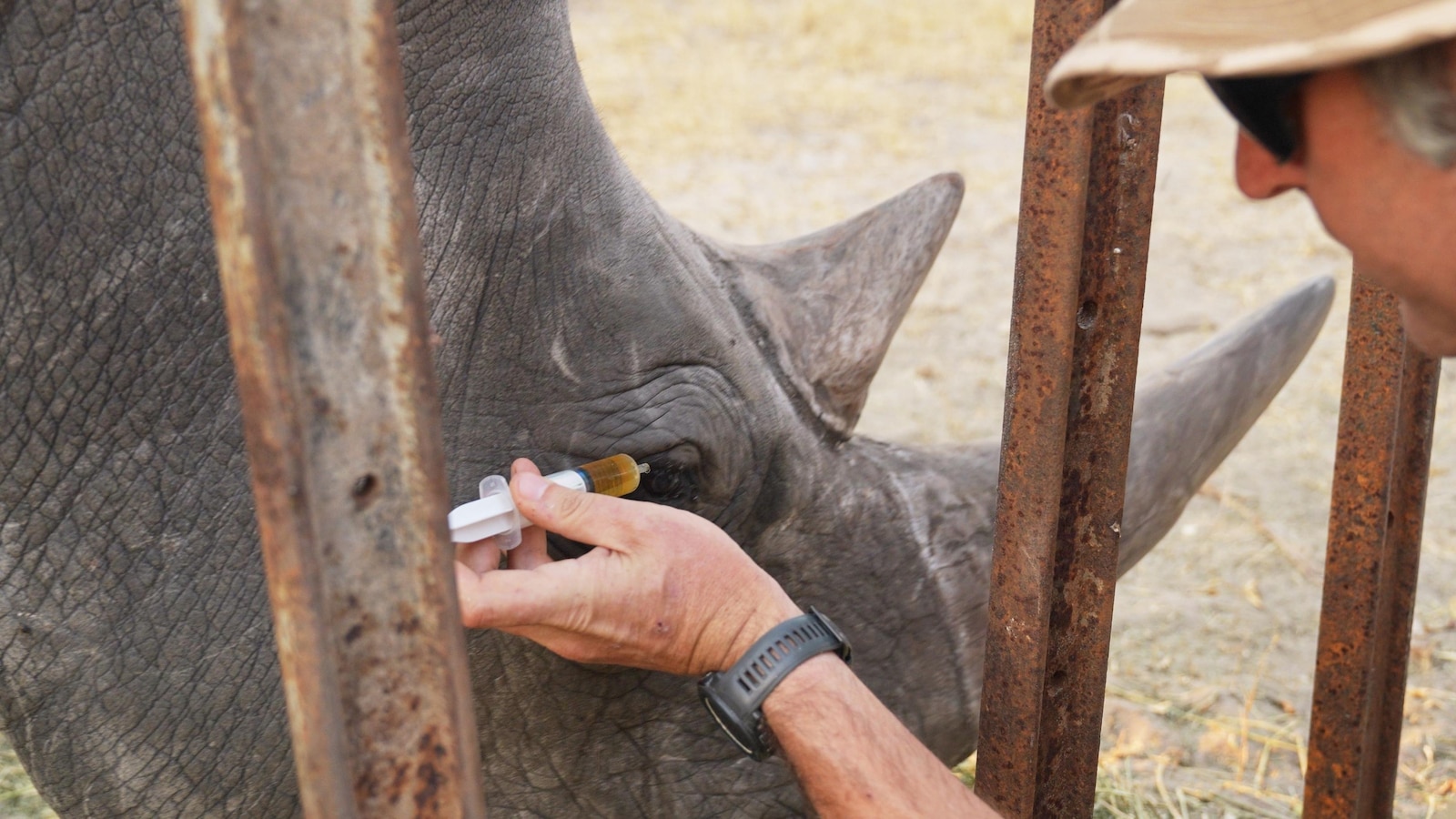
In August, the Lacinaks traveled to Zimbabwe and began working with the anti-poaching scouts who monitor and protect the rhinos daily. Their plan drew directly from techniques perfected in controlled zoo environments, but adapting these methods to work with a wild rhino in Africa presented unique challenges. The strategy was elegantly simple in concept but required patience, consistency, and courage in execution. The team would use Thuza’s favorite foods to entice him into a narrow chute—a confined space where he could be safely approached. Once they had him comfortable entering this area regularly, they would begin the gradual process of desensitization. This meant slowly getting Thuza accustomed to human presence close to his face, then to being touched around his eyes, and eventually to having water squirted near and into his eyes. Each step built upon the previous one, with the rhino always having the choice to participate or walk away. The remarkable part of this approach was its respect for the animal’s autonomy—even in the wild, even with a serious medical condition, Thuza was never forced. Instead, he was given reasons to cooperate willingly.
Remarkable Progress and Sustainable Success
The results exceeded even the most optimistic expectations. Within approximately one week of beginning the training program, the team successfully administered medication directly into Thuza’s eyes while he voluntarily held still for the treatment. This wasn’t a one-time lucky break but a repeatable behavior that demonstrated genuine learning and cooperation from the massive animal. Even more impressive was what happened in the second week: the Lacinaks successfully transferred their skills to the local team who would be responsible for Thuza’s ongoing care. Daniel Terblanche and the anti-poaching guards learned to perform the same procedures, ensuring that the treatment could continue long after the American experts returned home. This knowledge transfer was crucial because Thuza would need consistent, daily medication to fully recover from his infection and prevent future problems. The sustainability of the solution was just as important as the initial success. As Angi Lacinak reported with evident satisfaction, “They’re consistently getting the medications into his eyes every day, and the rhinos are just thriving now and they feel really, really confident that this solved their problem.”
Hope for the Future of White Rhino Conservation
The successful treatment of Thuza represents more than just a medical victory for one animal—it demonstrates the potential for innovative conservation techniques to address seemingly insurmountable challenges. Southern white rhinos, while more numerous than their critically endangered northern cousins, still face an uncertain future. With approximately 16,000 individuals remaining in the wild and their conservation status listed as near threatened, every animal counts. Poaching continues to decimate rhino populations across Africa, driven by demand for their horns in illegal wildlife markets. Habitat loss threatens the spaces where these animals can live and breed safely. In this context, programs like the Community Rhino Conservation Initiative in Zimbabwe become even more vital, creating new habitats and engaging local communities as partners in conservation rather than adversaries. The fact that zoo professionals from halfway around the world could collaborate with local Zimbabwean teams to solve a critical problem demonstrates the global nature of modern conservation work. The techniques developed at institutions like the Palm Beach Zoo, once thought applicable only in controlled environments, proved adaptable to field conditions with wild animals. This cross-pollination of ideas and methods offers hope that other seemingly intractable conservation challenges might similarly yield to creative thinking and international cooperation. Thuza’s story reminds us that sometimes the craziest ideas turn out to be exactly what’s needed, and that dedication, expertise, and a willingness to try unconventional approaches can make the difference between extinction and survival.