

The Legacy of Robert Duvall: A Hollywood Icon Who Brought Truth to Every Role
A Giant of American Cinema Has Passed
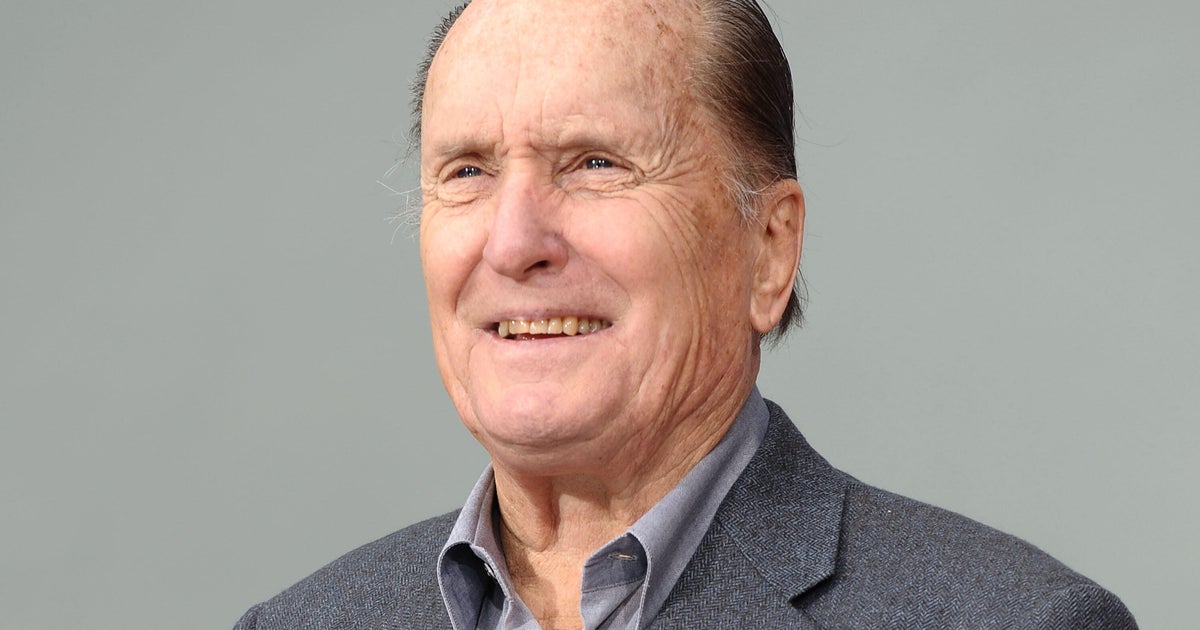
The world of cinema lost one of its most distinguished actors when Robert Duvall passed away at age 95 on Sunday at his home, surrounded by his wife and loved ones. His wife, Luciana Duvall, announced the heartbreaking news through social media on Monday, sharing an intimate tribute to a man who meant everything to her and so much to generations of film lovers. “To the world, he was an Academy Award-winning actor, a director, a storyteller,” she wrote with evident emotion. “To me, he was simply everything.” Her words captured both the public magnitude of his career and the private warmth of the man behind the performances. She spoke of his unwavering passion for his craft, his deep connection to the characters he portrayed, his love of good food and conversation, and most importantly, his dedication to representing the truth of the human spirit in every role he inhabited. Over the course of nearly seven decades in the entertainment industry, Duvall became synonymous with excellence in acting, creating a body of work that defined an era and influenced countless performers who followed in his footsteps. From his Academy Award-winning performance in “Tender Mercies” to his unforgettable roles in “The Godfather” films, “Apocalypse Now,” and “MAS*H,” Duvall demonstrated a remarkable range and consistency that few actors in history have matched.
The Master of Understated Excellence
What set Robert Duvall apart from many of his contemporaries was his extraordinary ability to disappear completely into his characters, bringing an understated realism to performances that explored the deepest moral conflicts and ethical struggles of the human condition. He had an uncanny talent for subsuming his own personality to manifest the truth of whoever he was portraying, whether that person was heroic or villainous, gentle or brutal. Among his most memorable and indelible portrayals was Tom Hagen, the Irish-American lawyer and adopted son who served as consigliere to the Corleone crime family in Francis Ford Coppola’s masterpieces “The Godfather” and “The Godfather Part II.” This role required tremendous subtlety—Hagen was neither fully inside nor outside the family, a voice of reason among passionate and violent men, and Duvall navigated that delicate balance with remarkable skill. Then there was Mac Sledge in “Tender Mercies,” a broken-down country singer battling alcoholism while seeking redemption and a second chance at life and love, a performance so authentic and moving it earned him the Academy Award for Best Actor. And who could forget his film debut as Boo Radley in the 1962 adaptation of Harper Lee’s “To Kill a Mockingbird,” where his portrayal of the shy, misunderstood recluse who befriends young Scout demonstrated the sensitivity and depth he would bring to characters throughout his career. But Duvall was equally capable of larger-than-life, explosive performances that grabbed audiences by the throat, such as his unforgettable turn as Lt. Col. Kilgore in “Apocalypse Now,” the surf-obsessed military officer who orders a helicopter attack on a Vietnamese village while blaring Wagner from loudspeakers and delivers one of cinema’s most iconic lines: “I love the smell of napalm in the morning… it smells like victory.”
A Career Built on Dedication and Range
Born on January 5, 1931, in San Diego, California, to a Navy family (his father retired as a rear admiral), Robert Duvall grew up moving between Maryland, Missouri, and Illinois, experiencing the disciplined military life that would later inform some of his most powerful performances. After taking drama classes in school and appearing in stage productions, he served briefly in the Army during the 1950s before pursuing his true passion in New York, where he studied acting alongside future legends Gene Hackman, Dustin Hoffman, and James Caan. His professional debut came in 1958 with an off-Broadway production of “Mrs. Warren’s Profession,” and from there he steadily built his reputation through television work on classic shows like “Playhouse 90,” “The Twilight Zone,” “Route 66,” and “The Untouchables.” His film career gained momentum through the 1960s and into the revolutionary 1970s, when he worked with some of the most visionary directors in American cinema—Francis Ford Coppola, Robert Altman, Sidney Lumet, George Lucas, and Dennis Hopper. This period saw him deliver one powerhouse performance after another in films like “MAS*H” (playing the hypocritical, by-the-book Major Frank Burns), “THX 1138” (George Lucas’s dystopian science fiction debut), “Network” (as the ruthless corporate television executive), and “The Great Santini” (as the domineering Marine pilot whose harsh treatment of his family earned Duvall another Oscar nomination). Whether playing criminals or lawmen, cowboys or corporate executives, Duvall brought an unwavering commitment to authenticity that anchored even the most fantastical stories in recognizable human truth.
The Philosophy Behind the Performances
In a 2004 interview with CBS’s “60 Minutes II,” Duvall explained his approach to acting with characteristic simplicity and insight: “Has to be. It’s you underneath,” he said when asked about how much of himself appeared in his characters. “You interpret somebody. You try to let it come from yourself.” This philosophy—that truthful acting comes from finding the connection between the actor’s own humanity and the character’s experience—guided Duvall throughout his career and resulted in performances that felt lived-in rather than performed. He understood intuitively that the basics of human interaction—”I talk, you listen. You talk, I listen”—were the foundation of believable drama. Even when playing larger-than-life characters like Lt. Col. Kilgore, Duvall remained grounded in specific, authentic choices. When filming the harrowing helicopter attack sequence in “Apocalypse Now,” with explosives detonating all around him, Duvall refused to flinch because, as he explained years later, “I played a guy that didn’t flinch, so I didn’t flinch… If you flinch when the script says not to flinch, you should be fired.” This dedication extended to every aspect of his performances, including his insistence on singing all the country songs himself in “Tender Mercies” rather than having his voice dubbed by a professional singer. “This has to be part of it,” he told the producers. “You cannot dub later. I have to do that.” His commitment paid off—country music legends Willie Nelson, Waylon Jennings, and Kris Kristofferson all called to tell him he’d gotten the character exactly right. This attention to detail and refusal to compromise characterized Duvall’s entire approach to his craft.
Later Career and Directorial Vision
As Duvall aged, he transitioned gracefully into mentor and supporting roles, bringing his trademark gravitas and authenticity to films like “Days of Thunder” (as Tom Cruise’s pit crew chief), “Deep Impact” (as an astronaut leading a mission to save Earth), “The Paper” (as Michael Keaton’s editor-in-chief), and “John Q.” (as a hostage negotiator opposite Denzel Washington). But he also continued to take on challenging lead roles well into his later years, appearing in films like “The Road,” “Get Low,” “Crazy Heart,” “Jack Reacher,” and “The Judge,” accumulating seven Oscar nominations throughout his career. Beyond acting, Duvall also pursued his vision as a director, beginning with a 1974 documentary about rodeo riders called “We’re Not the Jet Set” and later directing narrative features including “Angelo, My Love” (about the Roma community), “The Apostle” (which he also wrote, playing a Pentecostal preacher on the run, earning his fifth Oscar nomination), “Assassination Tango” (filmed in Buenos Aires as a tribute to his passion for tango dancing), and “Wild Horses.” Perhaps his favorite role of all was Gus McCrae, the Texas Ranger turned philosopher cowboy in the 1989 television miniseries “Lonesome Dove,” based on Larry McMurtry’s beloved novel. Though he sometimes clashed with director Simon Wincer, Duvall believed that creative tension could produce better results than total harmony, and the series became a cultural phenomenon that remains beloved decades later.
A Life of Passion and Simple Truth
In 2005, Duvall married Luciana Pedraza, an Argentine actress he’d met years earlier when she invited him to the opening of a tango shop in Buenos Aires. Despite their four-decade age difference, they bonded over their shared obsession with tango dancing, which Duvall described in passionate terms: “It gets in your blood in a quiet way, kind of a sweet thing that sits there.” Luciana appeared opposite him in “Assassination Tango” and remained his devoted partner until his death, creating a home filled with the love of art, culture, and conversation that sustained him in his final years. Looking back on his extraordinary career, which included everything from “True Confessions” and “The Stone Boy” to “Rambling Rose,” “Wrestling Ernest Hemingway,” “Sling Blade,” and “Secondhand Lions,” Duvall remained humble about the source of his success. In a conversation with “CBS Sunday Morning,” he distilled his entire approach to acting into the simplest possible terms: “What makes what I do work? It’s this, what we’re doing right now: talking and listening… That’s the beginning and the end. The beginning and the end is to be simple.” That commitment to simplicity, to truth, to finding the authentic human core of every character he played, is what made Robert Duvall one of the greatest actors of his generation and left behind a legacy of performances that will continue to move, inspire, and challenge audiences for generations to come. His wife’s words in her tribute capture what everyone who loved his work already knows—that in giving everything to his characters and to the truth of the human spirit they represented, Robert Duvall left us all something lasting and unforgettable.