


Rubio’s Munich Message: Walking the Line Between Criticism and Cooperation
A Softer Tone for a Familiar Message
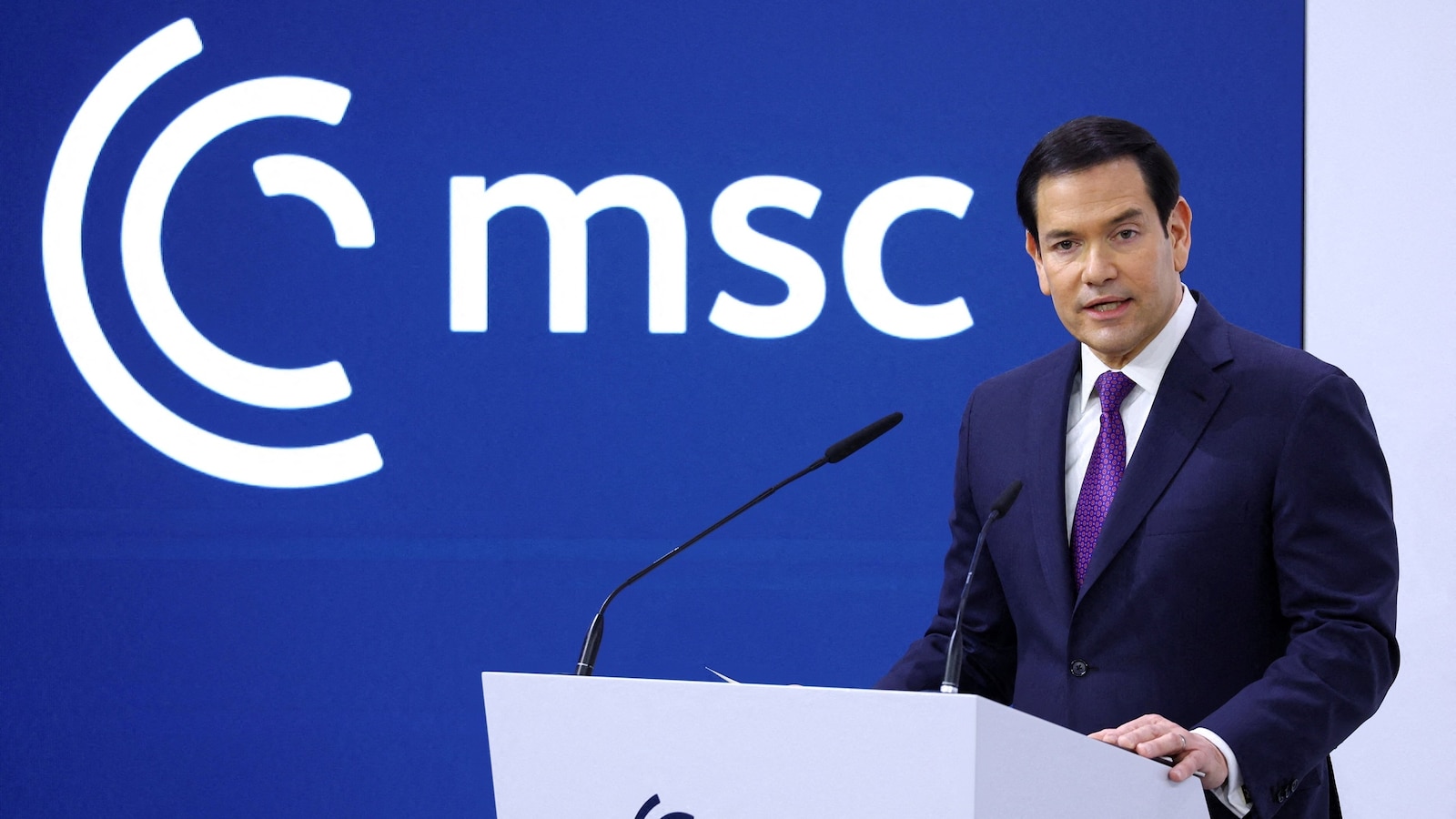
Secretary of State Marco Rubio took center stage at the Munich Security Conference on Saturday, delivering what many observers interpreted as a carefully calibrated message to America’s European allies. While his speech contained pointed criticism of European policies and political directions, Rubio ultimately extended an olive branch, emphasizing that the Trump administration has no intention of abandoning its longstanding transatlantic partnerships. “Our destiny is and always will be intertwined with you,” Rubio declared to sustained applause from the assembled leaders. “We do not seek to separate but to reinvigorate an old friendship.” This reassuring message came as a notable contrast to the more confrontational tone struck by Vice President JD Vance at the same conference the previous year, when he openly attacked European nations as oppressive. Rubio’s approach suggested a deliberate effort by the administration to repair relationships that had been strained by previous harsh rhetoric, while still pushing European allies toward policy positions more aligned with the administration’s worldview.
Tough Love on Policy: Migration, Defense, and Western Identity
Despite the conciliatory framework, Rubio didn’t shy away from delivering blunt policy prescriptions to his European audience. He called on European nations to fundamentally rethink their approaches to several key issues that the Trump administration views as existential threats to Western civilization. On migration, Rubio urged European countries to take firmer control of their borders and stem what he characterized as “mass migration.” He criticized what he called a “climate cult,” suggesting that European environmental policies have gone too far. Perhaps most provocatively, he told European leaders to stop being ashamed of their colonial histories and instead embrace a more unapologetic view of Western civilization. Rubio also reiterated the familiar Trump administration demand that European allies increase their defense spending and take greater responsibility for their own security. “We do not want our allies to be weak, because that makes us weaker,” he stated. “We do not want our allies to be shackled by guilt and shame.” This message reflected a core theme of the current administration’s foreign policy: that the post-World War II liberal international order has weakened rather than strengthened the West, and that a course correction is urgently needed.
The “Dangerous Delusion” of Liberal Consensus
Central to Rubio’s critique was the assertion that both the United States and Europe had fallen victim to what he termed a liberal “dangerous delusion.” This phrase encapsulated the administration’s view that the political consensus that has governed Western democracies for decades—emphasizing multilateralism, human rights, climate action, and managed migration—has actually undermined rather than protected Western interests and identity. Rubio spoke nostalgically of “great western empires,” a rhetorical choice that signaled a dramatic departure from the apologetic tone that has characterized much Western diplomacy in recent decades. His message was clear: the era of Western self-criticism and managed decline must end. “We have no interest in being the polite caretaker of managed decline,” Rubio declared, capturing in a single sentence the administration’s rejection of what it views as defeatist attitudes among traditional allies. He called on European nations to stop “rationalizing the broken status quo” and instead join the United States in what he framed as a necessary revival of Western confidence and power. This represented a philosophical challenge to the European political establishment, many of whom have built careers on the very liberal international framework Rubio was criticizing.
Together or Alone: The Choice Presented to Europe
Despite the critical nature of much of his speech, Rubio was careful to frame his message as an invitation rather than an ultimatum. He repeatedly emphasized that while the United States was “prepared, if necessary, to do this alone,” the administration’s preference was to pursue this reinvigoration of Western power “together with you, our friends here in Europe.” This formulation walked a delicate line—it acknowledged European sovereignty and the possibility of divergent paths while making clear that the United States would pursue its vision of a renewed West regardless of whether allies came along. The message seemed designed to apply just enough pressure to encourage policy changes while avoiding the appearance of diktat or abandonment. Rubio’s approach suggested that the administration has learned from the backlash to Vance’s more confrontational speech the previous year. Rather than attacking European allies outright, Rubio presented the administration’s policy demands as emerging from shared interests and common heritage. “What is it that binds us together?” he asked rhetorically during a Bloomberg TV interview following the speech. “Ultimately, it’s the fact that we are both heirs to the same civilization, and it’s a great civilization, and it’s one we should be proud of.”
European Relief and Cautious Reception
The immediate reaction from conference leadership suggested that Rubio’s message, despite its critical elements, was received with considerable relief. Wolfgang Ischinger, the chairman of the Munich Security Conference, publicly thanked Rubio for his “message of reassurance,” noting, “I’m not sure you heard the sigh of relief in this hall.” This response indicated that European leaders had feared something far worse—perhaps a more explicit threat to withdraw from NATO or other core security commitments. By comparison, Rubio’s speech, while demanding and ideologically pointed, at least reaffirmed America’s basic commitment to the transatlantic alliance. The prolonged applause that greeted Rubio’s statement about intertwined destinies suggested genuine appreciation for even this qualified reassurance. European capitals have spent the past year navigating considerable uncertainty about American commitments, making any positive signal from Washington welcome. However, the relief was likely tempered by the reality that Rubio was still demanding significant policy shifts on sensitive domestic issues like migration and climate policy—areas where European public opinion often diverges sharply from the positions advocated by the Trump administration.
Caring Criticism: Rubio’s Closing Frame
In his interview following the speech, Rubio worked to further soften the impact of his critical message by framing it as emerging from concern rather than contempt. “When we come off as urgent or even critical about decisions that Europe has failed to make or made, it is because we care,” he explained. This formulation attempted to recast the administration’s demands as a form of “tough love” between friends rather than pressure from a dominant power. Rubio insisted that his message was essentially the same as Vance had delivered the previous year, though observers noted the significantly different tone and emphasis. While Vance had emphasized European failings and American independence, Rubio stressed shared civilization and partnership, even while making many of the same substantive criticisms. This rhetorical evolution suggested that the administration has recognized the need to maintain working relationships with European allies, even as it pushes for dramatic policy changes. The overall effect of Rubio’s Munich appearance was to leave the door open for continued cooperation while making clear that the Trump administration expects significant movement from European partners on key issues. Whether this approach will prove more effective than Vance’s confrontational strategy remains to be seen, but it at least provided a foundation for continued dialogue at a moment when transatlantic relations face significant strain.