


Understanding STRC: The Unusually Stable Investment Offering Double-Digit Returns
A New Kind of Financial Instrument Captures Market Attention
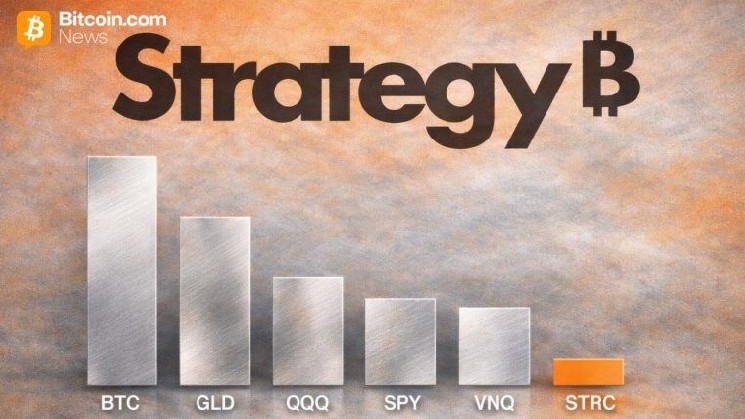
In the volatile world of modern investing, where cryptocurrency swings can make or break portfolios overnight and traditional stocks continue their unpredictable dance, a relatively new financial instrument has emerged that claims to offer something seemingly too good to be true: rock-solid stability combined with an impressive double-digit yield. Strategy Inc.’s STRC preferred stock has become the subject of intense discussion among investors and financial analysts after the company’s Executive Chairman, Michael Saylor, shared compelling data showing that this instrument delivered remarkably low volatility while paying an 11.5% annual dividend. The numbers he presented painted a striking picture: over a 30-day period, STRC exhibited just 2% volatility—lower than every single company in the S&P 500 and significantly below major asset classes that investors typically turn to for either growth or stability.
To put this in perspective, bitcoin, which has become increasingly mainstream despite its wild price swings, showed 50% volatility during the same period—twenty-five times higher than STRC. Even gold, traditionally considered a safe-haven asset that investors flock to during uncertain times, registered 37% volatility. Popular exchange-traded funds weren’t much better: QQQ, which tracks the technology-heavy Nasdaq-100, came in at 19% volatility, while SPY (following the S&P 500) and VNQ (tracking real estate) both showed 15%. Even BND, a total bond market ETF that represents one of the more conservative investment options available, recorded 6% volatility—still three times higher than STRC. For investors exhausted by market turbulence and hungry for both income and stability, these numbers naturally sparked curiosity and, in some quarters, skepticism about how such performance could be achieved.
What Exactly Is STRC and How Does It Work?
STRC, which stands for Short Duration High Yield Credit Stretch, represents a perpetual preferred stock that Strategy Inc. launched in July 2025 as part of the company’s innovative bitcoin-focused treasury strategy. Listed on the Nasdaq exchange, this instrument was designed with a specific purpose: to provide investors with high, consistent income while minimizing the price volatility that typically comes with equity investments. The mechanics are straightforward on the surface—it pays an 11.50% annual dividend distributed in monthly cash payments to shareholders. However, what makes STRC fundamentally different from traditional preferred stocks or bonds is its clever variable dividend mechanism that actively works to keep the share price stable around its $100 par value.
Think of it like a financial thermostat that automatically adjusts to maintain a constant temperature. When STRC’s share price dips below $100, the dividend rate automatically increases, making the shares more attractive to buyers and creating upward pressure on the price. Conversely, when the price rises above $100, the dividend rate decreases, reducing the incentive to buy at inflated prices and encouraging the price to drift back down. This monthly reset structure creates powerful economic incentives for the price to remain close to par value, effectively engineering stability through investor behavior rather than relying on natural market forces. For income-focused investors who simply want to collect their monthly payments without watching their principal value swing wildly, this design offers an appealing solution—assuming, of course, that the mechanism works as intended and that the company can sustain these dividend payments over time.
STRC sits within a broader capital structure at Strategy Inc. that includes multiple securities offering different risk and return profiles. There’s MSTR common stock, which directly absorbs the volatility of the company’s bitcoin holdings, and several other preferred instruments including STRF (the 10.00% Series A “Strife” Preferred), STRK (the 8.00% Series A “Strike” Preferred), and STRD (the 10.00% Series A “Stride” Preferred). Each of these securities provides fixed or convertible yields with different levels of seniority in the capital stack, but STRC stands alone as the only one explicitly engineered to suppress volatility through active dividend adjustments.
The Growing Debate: Engineered Stability vs. Market Reality
As impressive as the volatility numbers appear on paper, they’ve sparked a vigorous debate within investment communities about what those figures actually mean and whether comparing STRC to traditional assets like bitcoin, stocks, and commodities represents a fair or meaningful analysis. Critics argue that STRC’s reported stability doesn’t reflect the kind of market-tested resilience that comes from surviving genuine investor sentiment shifts, economic turbulence, or financial stress. Instead, they suggest it represents something more artificial—a stability manufactured through the instrument’s internal mechanics rather than earned through market validation.
The fundamental criticism centers on the nature of what’s being compared. Bitcoin, stocks, ETFs, commodities, and bonds all trade in open markets where prices reflect the collective judgment of millions of participants responding to new information, changing economic conditions, and shifting expectations about the future. Their volatility, for better or worse, represents genuine price discovery—the market’s real-time assessment of value. STRC, by contrast, functions more like a structured credit instrument with built-in stabilization mechanisms. Its low volatility isn’t necessarily a reflection of investor confidence or underlying value stability; rather, it’s a feature deliberately engineered into the security’s design through dividend incentives that discourage price movement away from par value.
Some financial analysts have compared this to comparing the stability of a car with active suspension systems to one navigating rough terrain naturally—the smoother ride doesn’t necessarily mean the road is any less bumpy. Additionally, questions have emerged about dividend sustainability. An 11.5% annual yield is exceptionally generous in today’s low-interest-rate environment, and maintaining such payouts requires consistent cash flow from the issuer. Investors are beginning to ask pointed questions: Where exactly does Strategy Inc. generate the funds to support these dividends? How long can such payments continue? What happens to the dividend—and to STRC’s vaunted stability—if the company faces financial stress or if its bitcoin treasury strategy encounters difficulties?
Understanding the Risks Behind the Attractive Numbers
While the combination of high yield and low volatility sounds like an investor’s dream, financial experts emphasize that STRC comes with its own unique set of risks that may not be immediately apparent from the volatility statistics. Perhaps most significant is the concentration risk inherent in holding a security tied to a single corporate entity. Unlike a diversified bond fund or a broad market ETF that spreads risk across hundreds or thousands of underlying assets, STRC’s performance and dividend payments depend entirely on Strategy Inc.’s financial health and strategic decisions.
This creates what risk managers call “idiosyncratic risk”—vulnerability to company-specific events that could dramatically affect the investment regardless of broader market conditions. If Strategy Inc.’s bitcoin holdings experience severe losses, if regulatory changes impact the company’s business model, if management makes poor strategic decisions, or if the company faces liquidity challenges, STRC holders could find themselves in a difficult position. The engineered stability mechanisms that work so well under normal conditions might prove inadequate during periods of genuine financial stress when the company’s ability to maintain dividend payments comes into question.
Furthermore, the very mechanism that creates STRC’s stability could create what’s known as “tail risk”—the possibility of severe losses that aren’t captured in short-term volatility measurements. Standard volatility metrics look at typical price fluctuations over a specific period, but they don’t necessarily account for rare but catastrophic events. The monthly dividend adjustment mechanism might effectively smooth out normal market variations, but it’s unclear how the instrument would perform during a genuine crisis. Would investors still respond to dividend incentives if fundamental concerns about the issuer emerged? Would the stability mechanism function as designed during periods of market stress when liquidity dries up and investors flee to safety? These questions remain largely theoretical because STRC, having been introduced only in July 2025, hasn’t yet been tested by a significant market downturn or issuer-specific crisis.
What This Means for Different Types of Investors
The emergence of instruments like STRC reflects a broader evolution in financial markets where traditional boundaries between debt and equity, between passive and active management, and between market-based and engineered returns continue to blur. For certain types of investors, STRC might represent an attractive option worth serious consideration. Retirees and income-focused investors who prioritize consistent monthly cash flow and want to minimize the emotional stress of watching their investment values fluctuate might find the combination of high yield and engineered stability appealing, particularly if they’re comfortable with the issuer-specific risks and understand that the low volatility is a product of design rather than market validation.
However, investors who value liquidity, who want their investments to reflect true market conditions, or who prefer the transparency of traditional securities might find STRC’s engineered nature less appealing. The instrument also may not be suitable for those who need to access their capital quickly or who might need to sell during periods of market stress, as the mechanisms that create stability during normal times might not function as effectively during crises. Additionally, more sophisticated investors might question whether the 11.5% yield adequately compensates for the unique risks involved, particularly the concentration risk of exposure to a single issuer and the uncertainty around how the instrument would perform under various stress scenarios that haven’t yet occurred.
The Bigger Picture: Innovation and Caution in Modern Finance
The attention surrounding STRC highlights a fascinating tension in contemporary finance between innovation and traditional risk principles. Financial engineering has created increasingly sophisticated instruments that can deliver specific risk-return profiles tailored to investor preferences, potentially offering solutions that didn’t exist in previous generations. The ability to design a security that pays high income while exhibiting low volatility represents genuine innovation and might serve legitimate investor needs, particularly for those who understand both the benefits and the limitations of such engineered solutions.
At the same time, financial history is filled with cautionary tales of instruments that appeared safe and attractive until they weren’t—structured products that worked beautifully under normal conditions but collapsed during stress, yielding strategies that delivered consistent returns until they didn’t, and engineered stability that proved illusory when tested by real-world events. The 2008 financial crisis, among other market disruptions, taught investors that low measured volatility doesn’t always equal safety, and that correlations and mechanisms that hold under normal conditions can break down dramatically when markets become stressed or when underlying assumptions prove incorrect.
For investors considering STRC or similar engineered instruments, the key questions aren’t simply about the attractive yield or the impressively low volatility numbers. Instead, they should focus on understanding exactly how that stability is achieved, what could cause those mechanisms to fail, whether the dividend is truly sustainable over relevant time horizons, and whether the unique risks involved are adequately compensated by the returns offered. The comparison between STRC’s 2% volatility and bitcoin’s 50% volatility might be technically accurate, but it’s also somewhat misleading—these are fundamentally different types of instruments designed for different purposes and subject to entirely different risk factors. As with any investment decision, looking beyond the headline numbers to understand the underlying mechanics, risks, and trade-offs remains essential, regardless of how attractive the initial presentation might appear.