


Tragic Fire on Swiss Postal Bus Claims Multiple Lives in Kerzers
A Quiet Town Shaken by Disaster
The peaceful Swiss town of Kerzers became the scene of an unimaginable tragedy on Tuesday afternoon, March 10, 2026, when a postal bus erupted in flames in the heart of the community. What should have been a routine journey for passengers traveling through this quiet region turned into a nightmare that would shake the entire nation. According to the Fribourg cantonal police, several people lost their lives in the blaze, while others sustained injuries in what has become one of Switzerland’s most devastating public transportation accidents in recent memory. The incident occurred late in the afternoon, a time when many residents and visitors were going about their daily routines, completely unaware of the horror that was about to unfold in their midst.
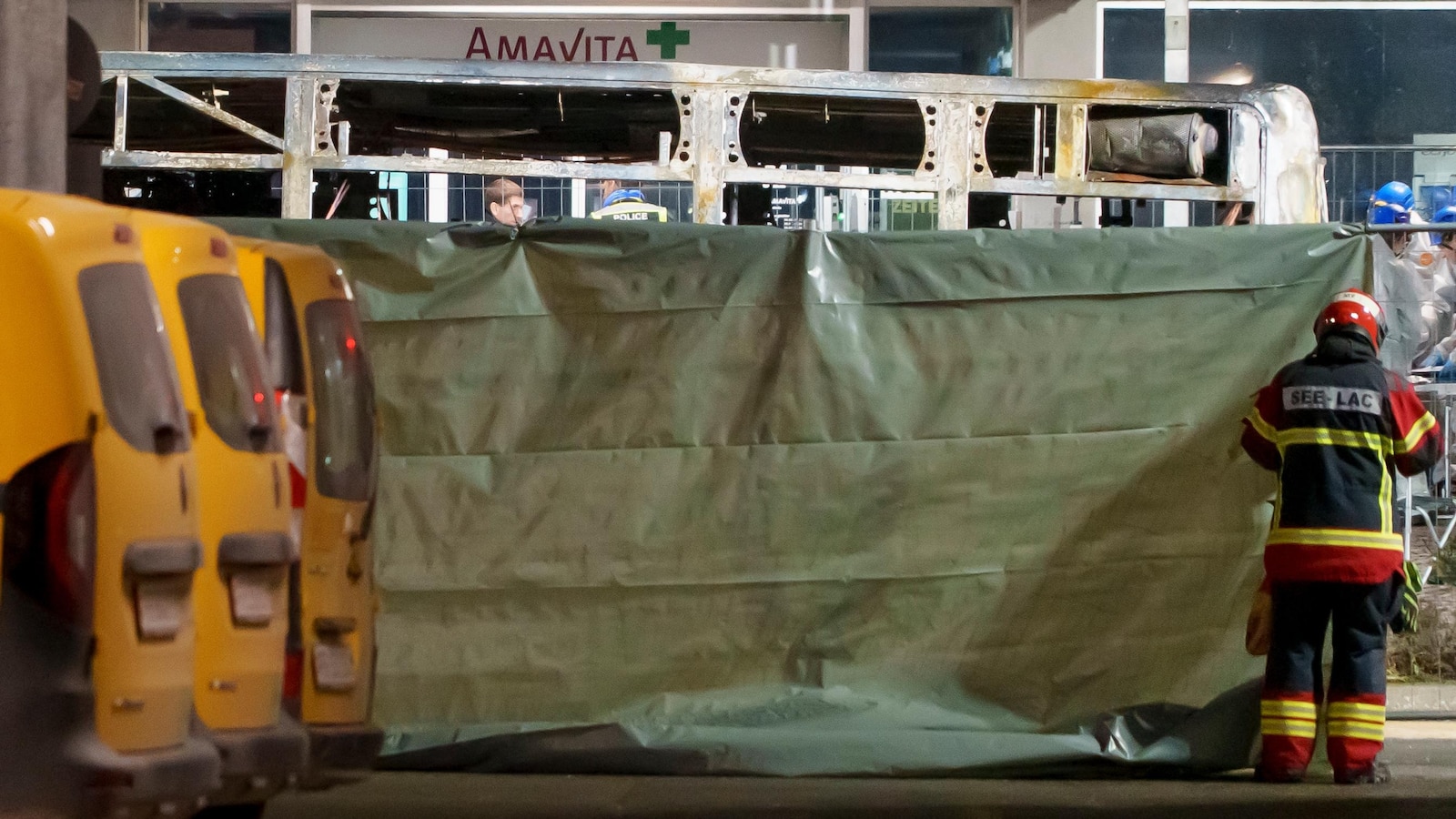
As news of the disaster spread, emergency responders from across the region rushed to the scene, while local authorities scrambled to understand what had caused such a catastrophic event. The image of firefighters and police officers working frantically to secure the area and erect barriers around the charred remains of the postal bus serves as a stark reminder of how quickly life can change and how vulnerable we all are when tragedy strikes without warning. For the residents of Kerzers, a town accustomed to the rhythms of everyday Swiss life, the scene of emergency vehicles, flashing lights, and the acrid smell of smoke represented a jarring intrusion into their normally peaceful existence.
The Emergency Response and Securing the Scene
In the immediate aftermath of the fire, first responders faced a chaotic and dangerous situation. Firefighters worked tirelessly to extinguish the flames that had engulfed the postal bus, while paramedics attended to the injured passengers who had managed to escape the inferno. The complexity of the scene required a massive coordinated effort between multiple emergency services, including fire departments, police forces, and medical personnel from surrounding areas. The Fribourg cantonal police took charge of the investigation and scene management, establishing a secure perimeter around the disaster site to preserve evidence and ensure the safety of both emergency workers and curious onlookers who had gathered in shock and disbelief.
The installation of barriers around the burned-out bus served multiple critical purposes. These barriers kept the public at a safe distance while investigators began the painstaking work of determining what had caused the fire and how it had spread so rapidly through the vehicle. They also provided a measure of dignity and privacy for the victims and their families, shielding the grim scene from public view during the recovery operations. The police and firefighters who erected these barriers worked with professional efficiency despite the emotional weight of the situation, understanding that their actions in these crucial first hours would be essential for both the investigation and the community’s healing process.
Understanding Switzerland’s Postal Bus System
To fully appreciate the impact of this tragedy, it’s important to understand the role that postal buses play in Swiss society. The PostBus system, known in German as PostAuto, is an integral part of Switzerland’s renowned public transportation network. These distinctive yellow buses connect remote villages and towns throughout the Swiss countryside, providing essential transportation services to communities that might otherwise be isolated. For many Swiss residents, especially those living in rural areas, postal buses are not just a convenience but a lifeline—connecting them to work, schools, medical facilities, and larger urban centers.
The postal bus system is generally regarded as one of the safest and most reliable forms of public transportation in the world, which makes this incident all the more shocking to the Swiss public. Switzerland prides itself on its precision, safety standards, and meticulous attention to detail in all aspects of public infrastructure. The postal buses undergo regular maintenance and inspection, and drivers are highly trained professionals who navigate some of the most challenging mountain roads in Europe. This tragedy has therefore raised difficult questions about what could have gone wrong and whether there were any warning signs that might have been missed. For a nation that holds safety and reliability as core values, the incident represents not just a loss of life but a breach of the public trust that will require thorough investigation and transparent answers.
The Human Toll and Community Impact
Behind the statistics and official reports are real people whose lives were forever changed in those terrifying moments. Families are now grieving the loss of loved ones who simply boarded a bus for what they expected to be an ordinary journey. Some of those who died may have been commuters returning home from work, students heading to educational institutions, or elderly residents traveling to appointments or visiting family. The injured survivors face not only physical recovery but the psychological trauma of having experienced such a horrific event. Many will carry both visible and invisible scars from this day for the rest of their lives.
The impact on the Kerzers community cannot be overstated. In smaller towns like this, everyone knows everyone, and a tragedy of this magnitude touches virtually every resident either directly or through connections to victims and their families. Local businesses closed their doors in respect, churches opened for prayer and reflection, and neighbors gathered to support one another in their shock and grief. The town’s normal rhythms were completely disrupted as residents tried to process what had happened in their peaceful community. Counseling services were quickly mobilized to help both survivors and witnesses deal with the trauma, recognizing that the psychological aftermath of such an event can be just as devastating as the physical damage. The local school systems prepared to support students who might have lost family members or friends, understanding that children would need special care and attention as they tried to make sense of something so senseless.
The Investigation and Search for Answers
As the immediate emergency response transitioned into investigation mode, authorities faced the difficult task of determining exactly what caused the fire and why it spread so rapidly. Bus fires, while not unheard of, are relatively rare in modern vehicles that are equipped with numerous safety features and fire suppression systems. Investigators would need to examine every possibility: mechanical failure, electrical malfunction, fuel system issues, or even the possibility of foul play, though there was no immediate indication of criminal activity. The charred remains of the bus would be carefully examined by forensic experts and accident reconstruction specialists who would painstakingly piece together the sequence of events.
The Fribourg cantonal police, working in conjunction with federal transportation safety authorities, would review maintenance records for the bus, interview the driver if possible, and speak with survivors to understand what they witnessed in the moments before and during the fire. Security camera footage from nearby businesses and traffic cameras would be collected and analyzed. Every piece of evidence, no matter how small, could potentially provide crucial insights into what went wrong. The Swiss public, known for their patience and respect for thorough process, nonetheless anxiously awaited answers. They wanted to know not just what happened, but whether this was an isolated incident or if there were systemic issues that needed to be addressed across the entire postal bus fleet. The investigation would likely take weeks or even months to complete, but the authorities understood that they owed it to the victims and to the public to conduct a comprehensive and transparent inquiry.
Moving Forward: Safety, Remembrance, and Resilience
In the days and weeks following the tragedy, Switzerland as a nation would need to grapple with both grief and the practical questions of how to prevent such a disaster from happening again. If the investigation revealed any deficiencies in safety protocols, maintenance procedures, or vehicle design, swift action would be required to address them across the entire public transportation system. The Swiss are known for learning from mistakes and implementing rigorous improvements, and this incident would undoubtedly lead to a comprehensive review of safety standards for all public transportation vehicles.
Memorial services would be organized to honor those who lost their lives and to provide a collective space for mourning and remembrance. The community of Kerzers would likely create a permanent memorial to ensure that the victims are never forgotten and that the lessons learned from this tragedy continue to inform safety practices for generations to come. The resilience of the Swiss people, combined with their strong sense of community and social responsibility, would help the healing process, though the scars of this day would remain. As firefighters and police officers stood guard around that burned-out postal bus, securing the scene and preserving the evidence, they were not just doing their professional duty—they were the first responders in a healing process that would involve an entire nation coming together to support the victims, their families, and the shaken community of Kerzers as they faced the difficult journey ahead.