
The Extraordinary Life and Legacy of Shigeaki Mori: A Bridge Between Former Enemies
A Survivor’s Mission Born from Tragedy
Shigeaki Mori, the Japanese historian and atomic bomb survivor who dedicated over four decades of his life to honoring forgotten American prisoners of war, has passed away at the age of 88. His death marks the end of a remarkable journey that transformed personal trauma into a powerful testament to human compassion and reconciliation. Born in 1937, Mori was just eight years old when the atomic bomb devastated Hiroshima on August 6, 1945. Positioned only one and a half miles from the epicenter of the blast, the young boy witnessed horrors that would haunt him for the rest of his life, yet ultimately inspired an unprecedented act of historical justice. The attack instantly destroyed the city and claimed tens of thousands of lives, with the death toll reaching 140,000 by year’s end. Three days later, a second bomb dropped on Nagasaki killed another 70,000 people. But it would take three decades before Mori discovered a little-known fact that would define his life’s work: American prisoners of war held in Japan were among those killed by the atomic bomb dropped by their own country.
Uncovering a Hidden History
Approximately thirty years after surviving the bombing, Mori stumbled upon information that would change the course of his life. While working as a full-time company employee, he learned that twelve American servicemen who had been held as prisoners of war in Hiroshima were killed in the atomic blast—casualties of their own nation’s weapon. This discovery struck him profoundly, and he felt compelled to investigate further. Despite having no formal training as a historian and juggling the demands of his regular job, Mori embarked on an exhaustive research project that would consume more than forty years of his life. He painstakingly combed through U.S. and Japanese official documents, many of which had been buried in archives or were difficult to access. His determination led him to identify all twelve American POWs who had perished in the bombing. Perhaps even more remarkably, Mori tracked down the bereaved families of these servicemen in the United States—families who had never been told the true circumstances of how their loved ones died. He began writing letters to them, providing closure and information that the U.S. government had never offered. His research represented not just historical detective work, but an act of profound humanity that bridged the divide between former enemies.
Recognition and the Power of Reconciliation
Mori’s decades of dedicated research culminated in his 2008 book, “The Secret of the American POWs Killed by the Atomic Bomb,” published initially in Japanese. The book’s impact was immediate and significant, earning him the prestigious Kikuchi Kan Prize, one of Japan’s most respected literary awards. The work was subsequently translated into English, allowing his findings to reach a broader international audience. According to the editors of the English translation, Mori died on Sunday at a Hiroshima hospital, as reported by Japanese media. His research eventually led to official U.S. confirmation of the deaths of the twelve captured American service members in the bombing—a recognition that had eluded the families for decades. Reflecting on his life’s work, Mori offered a simple yet profound explanation for his motivation: “The research I spent more than 40 years was not about people from the enemy country. It was about human beings.” This statement encapsulated his belief that the tragedy of Hiroshima transcended national boundaries and that every victim deserved to be remembered and honored, regardless of their nationality. His work demonstrated that healing from war requires acknowledging all victims and that true reconciliation comes from recognizing our shared humanity rather than perpetuating divisions based on nationality or wartime allegiances.
An Unforgettable Presidential Embrace
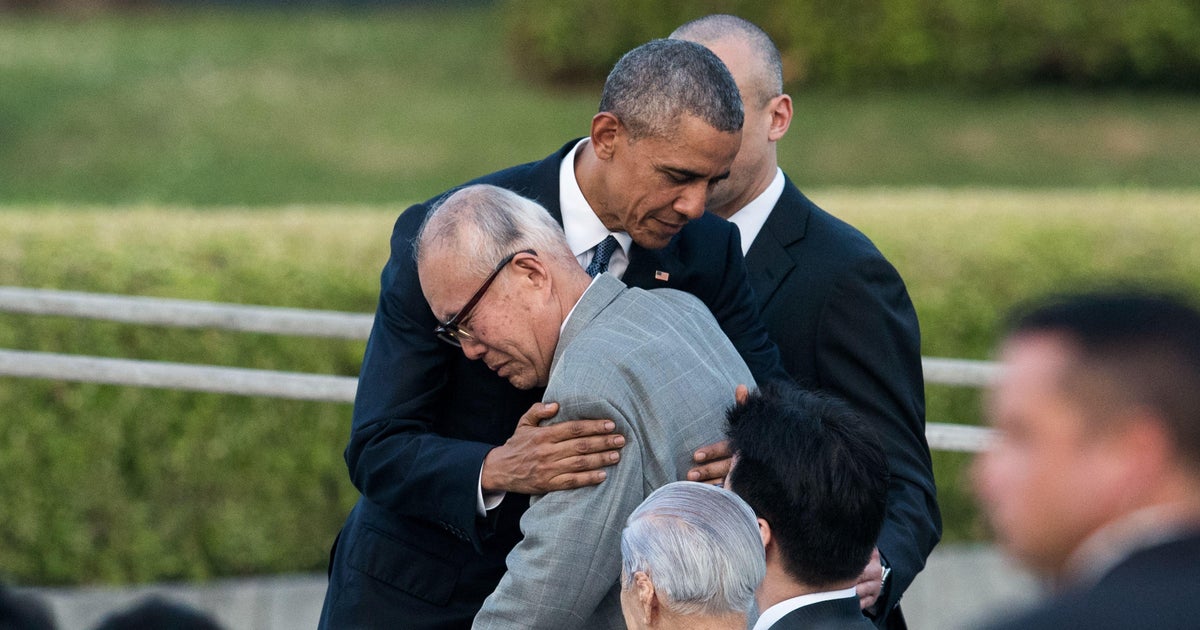
The defining public moment of Mori’s later life came on May 27, 2016, when then-President Barack Obama became the first sitting U.S. leader to visit Hiroshima’s Peace Memorial Park. During his historic speech at the site, Obama specifically mentioned “a dozen Americans held prisoner” among the bombing’s victims. He publicly recognized Mori for his extraordinary efforts in seeking out the Americans’ families, noting that Mori believed their loss was equal to his own. What happened next created one of the most emotionally powerful images of that historic visit: Obama gave the elderly survivor a heartfelt hug. Mori, visibly overwhelmed with emotion, first shook hands with the president. “The president gestured as if he was going to give me a hug, so we hugged,” Mori told reporters afterward, his voice filled with the weight of that moment. The embrace represented far more than a simple gesture of respect; it symbolized reconciliation between nations, acknowledgment of shared suffering, and the triumph of compassion over the lingering resentments of war. That hug, captured in photographs that circulated around the world, became Mori’s most recognized public moment, though it represented merely the culmination of his quiet, persistent work over four decades. For many observers, the image of the American president embracing the Japanese survivor who had worked tirelessly to honor American victims embodied the possibility of healing even the deepest historical wounds.
The Haunting Memories of August 6, 1945
Despite his later accomplishments and recognition, Mori never forgot the horrific scenes he witnessed as an eight-year-old child on that fateful August morning. In a 2016 interview with AFP before meeting President Obama, Mori recounted the traumatic details with vivid clarity. “I crawled up out of the water and saw a woman tottering toward me,” he recalled, describing how the force of the blast had thrown him into a river. “Blood was everywhere on her body, and internal organs hung from her abdomen. While holding them, she asked me where she could find a hospital. Crying, I ran away, leaving her alone.” The guilt and horror of that moment—a frightened child unable to help a dying woman—clearly remained with him decades later. His memories painted a nightmarish picture of the bombing’s immediate aftermath: “People who were still alive were collapsed all around me. I escaped by stamping on their faces and heads. I heard screams from a broken down house. But I ran away as I was still a child with no power to help.” These traumatic experiences might have left Mori embittered or broken, but instead they seemed to fuel his determination to ensure that all victims of that terrible day were properly remembered and honored. His willingness to share these painful memories served as a reminder of the human cost of nuclear warfare and the lasting psychological scars carried by survivors.
A Legacy of Humanity Transcending Borders
Shigeaki Mori’s passing at age 88 marks the loss of not just another hibakusha (atomic bomb survivor), but of a unique bridge between former enemies and a voice for reconciliation in an often divided world. His life demonstrated that individual citizens, armed with determination and compassion, can accomplish what governments sometimes cannot—the work of genuine healing and historical justice. By dedicating more than forty years to researching and honoring twelve American POWs killed in Hiroshima, Mori showed that honoring victims of war should never be constrained by nationality or political boundaries. His work ensured that these American servicemen, who had been largely forgotten by history and whose families had been left without answers, were finally recognized and remembered. The families he reached out to received not just information about their loved ones’ fates, but also the knowledge that a former enemy cared enough to spend decades tracking down the truth. As the generation of World War II survivors continues to pass, Mori’s legacy stands as a powerful reminder that reconciliation is possible even after the most devastating conflicts, that every victim deserves remembrance, and that our common humanity is more important than the divisions that drive nations to war. His story challenges us to look beyond national narratives and see the individual human beings affected by historical events—a lesson that remains urgently relevant in our contemporary world still marked by conflict and division.