
Lindsey Vonn’s Olympic Dream: A Story of Courage, Heartbreak, and No Regrets
A Champion’s Unwavering Spirit in the Face of Devastating Injury
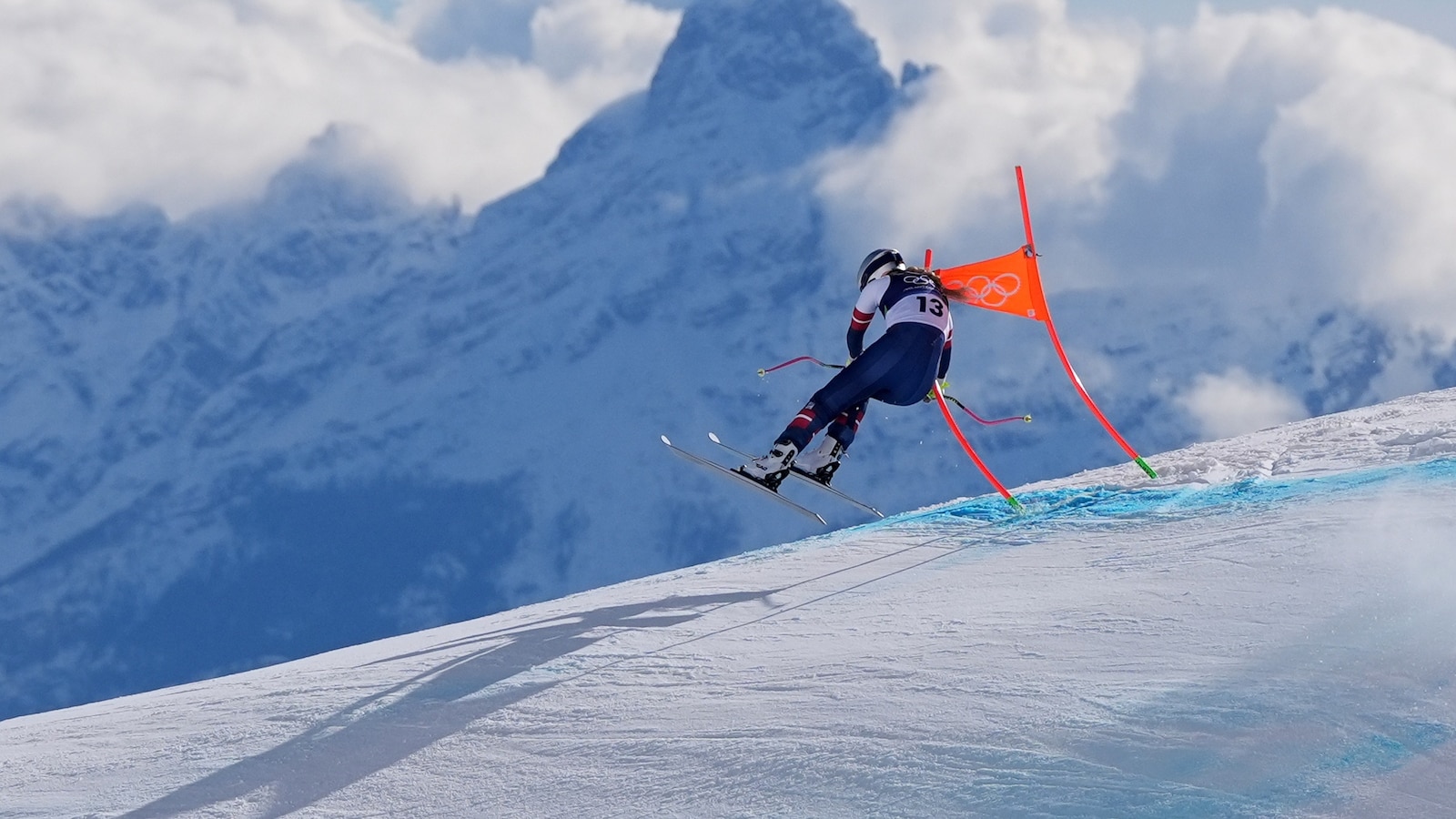
Just one day after suffering a catastrophic crash that shattered her hopes of making Olympic history, 41-year-old alpine skiing legend Lindsey Vonn spoke out with a message that captured the essence of her remarkable career: she has absolutely no regrets. The American superstar, who was attempting to become the oldest alpine skier—male or female—to win an Olympic medal, crashed merely 13 seconds after launching from the start gate during the downhill event on the demanding Olympia delle Tofane slope at the Milan Cortina Winter Olympics. The severity of the accident necessitated an immediate helicopter evacuation to a nearby hospital, where doctors discovered she had sustained a complex tibia fracture requiring multiple surgeries. Yet in the aftermath of this devastating moment, Vonn’s response demonstrated the warrior mentality that has defined her throughout her storied career. Speaking through an Instagram statement on Monday, she reflected on the experience with remarkable clarity and perspective, emphasizing that despite the intense physical pain and the heartbreaking end to her Olympic dreams, standing in that starting gate knowing she had a genuine chance to win represented a victory all its own.
The Terrifying Moment Everything Changed
The crash itself was both sudden and brutal, unfolding in the way that all downhill skiers dread—a split-second mistake with devastating consequences. According to the U.S. Ski & Snowboard team, Vonn’s right ski pole snagged a gate near the top of her run, violently jerking her off balance and sending her careening out of control down the mountain. Video footage of the accident captured the horrifying sequence of events as Vonn tumbled repeatedly down the slope before finally sliding to a stop, her screams of pain audible on the NBC broadcast as a stunned silence fell over the spectators, including her own family members who had been waiting hopefully at the finish line. What made the crash particularly cruel was that Vonn was already competing under extraordinarily challenging physical circumstances. She was skiing with a torn anterior cruciate ligament (ACL) in her left knee, sustained just a week before the Olympics during a practice run in Switzerland. Additionally, she has a titanium implant in her right knee from previous injuries and was wearing a heavy brace on her recently damaged left knee during the race. The image of rescue crews scrambling up the slope to reach the fallen champion, followed by the helicopter evacuation—described as “common practice for injuries during alpine competition”—underscored the inherent dangers of a sport that fellow Olympic skier Sam Morse aptly described as “one of the last gladiator sports.”
Defying the Odds and Her Own Body
What made Vonn’s presence at these Olympics so remarkable was not just her age, but the sheer determination it took for her to even reach the starting gate. When she tore her left ACL on January 30th during a downhill practice run at a World Cup race in Crans-Montana, Switzerland, most observers assumed her Olympic dreams were finished. The injury was severe—not just the torn ACL, but also a bone bruise and tears to the meniscus, the crucial cushioning cartilage in the knee. For most athletes, even much younger ones, such an injury would automatically rule out competition just days later. But Lindsey Vonn has never been most athletes. After what she described as “extensive consultations with doctors, intense therapy, physical tests as well as getting back on the slopes for practice runs,” she made the audacious decision to compete anyway. At a February 3rd news conference at the Cortina Curling Stadium, she delivered what would become a prophetic statement about her mindset: “I’m not letting this slip through my fingers. I’m gonna do it. End of story. I’m not crying, my head is high, I’m standing tall. And I’m gonna do my best, and whatever the result is, that’s what it is. But never say I didn’t try.” Those words now carry additional weight in light of what happened, representing both the courage that got her to the starting line and the acceptance she would later demonstrate in the aftermath of the crash.
The Truth Behind the Crash and the Razor-Thin Margins of Downhill Racing
In her Monday statement, Vonn was adamant about one thing: her pre-existing injuries, including the torn ACL, had absolutely nothing to do with the crash. She wanted to set the record straight, explaining with the technical precision of a veteran competitor exactly what went wrong. “Because in Downhill ski racing the difference between a strategic line and a catastrophic injury can be as small as 5 inches,” she explained. “I was simply 5 inches too tight on my line when my right arm hooked inside of the gate, twisting me and resulted in my crash.” This explanation highlights the unforgiving nature of downhill skiing at the Olympic level, where athletes hurtle down mountains at speeds exceeding 80 miles per hour, making split-second decisions that can mean the difference between glory and disaster. Sam Morse, a men’s downhill Olympic competitor, provided additional context about what happened, explaining that when Vonn’s right arm and shoulder caught the gate while she was airborne, she became “a victim to rotating” with no way to correct it. “Once you’re spinning in the air you have no reference point to stabilize off of,” he noted, before describing downhill skiing in vivid terms: “There’s no seat belts, there’s no roll cages. We’re out there in these little skintight suits just hurtling down the mountain.” The incredibly narrow margins in the sport mean that even the world’s most experienced and decorated skiers are just inches away from disaster on every run.
A Legacy That Transcends This Single Moment
While the crash was undoubtedly a heartbreaking end to Vonn’s Olympic comeback story, it cannot diminish the extraordinary legacy she has built throughout her career. Lindsey Vonn stands as one of the most successful female alpine skiers in the history of the sport. She is a four-time overall World Cup champion and has claimed three Olympic medals during her career, including the coveted gold in the downhill at the 2010 Vancouver Games. Her competitive achievements include an astounding 83 World Cup race victories, with her most recent triumph coming just months before the Olympics at the Audi FIS World Cup in St. Moritz, Switzerland, in December. After that victory, which demonstrated she still possessed the skills to compete at the highest level despite her age and previous injuries, Vonn described the experience as “like a dream” and “more than a dream,” crediting the hard work of her summer training and her dedicated team. The fact that she was genuinely competitive at age 41 in a sport typically dominated by athletes in their twenties speaks volumes about her dedication, training regimen, and sheer willpower. Moreover, even in the immediate aftermath of her crash, there was a silver lining for American skiing as Breezy Johnson of Jackson Hole, Wyoming, won the gold medal in the women’s downhill, becoming only the second American after Vonn herself to capture that event.
The Message of Courage That Defines Her Journey
Perhaps the most powerful aspect of Vonn’s response to this devastating setback is the message she shared with her fans and supporters around the world. Rather than dwelling on what might have been or expressing bitterness about the cruel timing of the crash, she chose to frame her experience as a lesson in courage and the importance of taking chances. “I hope if you take away anything from my journey it’s that you all have the courage to dare greatly,” she wrote in her statement. “Life is too short not to take chances on yourself. Because the only failure in life is not trying.” These words capture something essential about the human spirit and the nature of true achievement. Vonn’s decision to compete despite her injuries, knowing full well the risks involved, represents the kind of bold choice that defines great athletes and inspiring human beings. She acknowledged from the beginning that “racing was a risk. It always was and always will be an incredibly dangerous sport.” Yet she chose to take that risk, to stand in the starting gate one more time, to give herself a chance at making history. The fact that it ended in injury rather than triumph doesn’t change the fundamental courage of that choice. In a world that often celebrates playing it safe, Vonn’s example reminds us that the most meaningful moments in life often come from our willingness to be vulnerable, to risk failure, and to dare greatly in pursuit of our dreams. Her journey to these Olympics—the comeback from retirement, the grueling training, the decision to compete on a torn ACL—represents the kind of determination and heart that transcends sport and speaks to the broader human experience of striving for something greater than ourselves, regardless of the obstacles or the odds.