



Understanding the MLB Betting Scandal: Expert Analysis of the Guardians Pitching Controversy
The Scandal That Shook Baseball
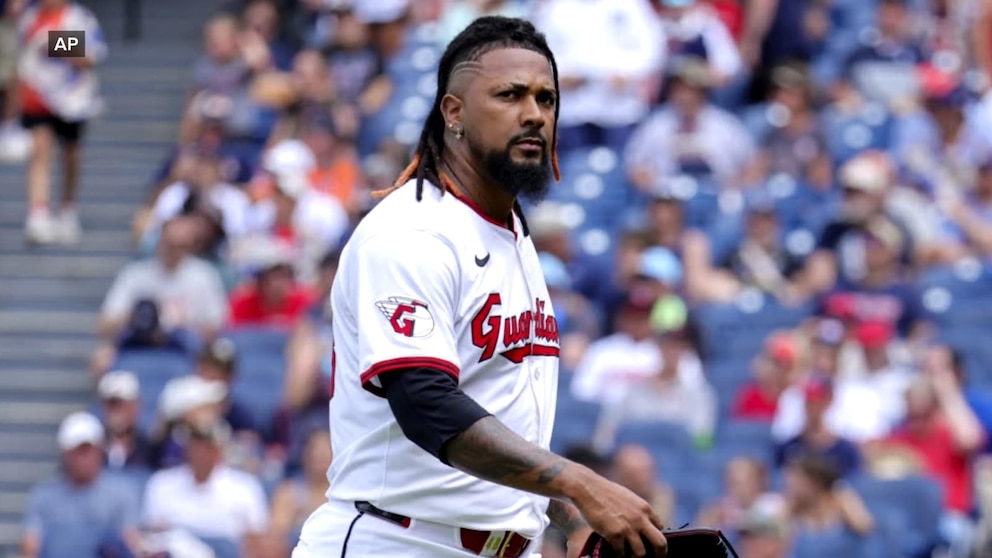
The world of Major League Baseball was rocked in late 2025 when news broke of a serious gambling investigation involving two Cleveland Guardians pitchers. This wasn’t just another story about athletes placing bets—this was something far more sinister and troubling for the integrity of America’s pastime. Sports betting analyst Jared Smith weighed in on the controversy, helping fans and stakeholders understand the gravity of the situation. The allegations suggest that these pitchers didn’t simply bet on games; they allegedly conspired with outside sports bettors to manipulate specific pitches during actual games, effectively rigging outcomes in ways that could be exploited for gambling profits. This type of scandal strikes at the very heart of competitive sports, raising questions about trust, integrity, and the increasing intersection between professional athletics and the rapidly expanding sports betting industry. For baseball purists and casual fans alike, the revelation that players might intentionally alter their performance—not to help their team win or lose, but to satisfy predetermined betting arrangements—represents a fundamental betrayal of the sport’s competitive spirit.
The timing of this scandal is particularly significant given the explosive growth of legalized sports betting across the United States in recent years. Since the Supreme Court’s 2018 decision to overturn the federal ban on sports wagering, betting has transformed from a shadowy, largely illegal activity into a multi-billion-dollar mainstream industry with advertising everywhere from stadium billboards to broadcast commentary. This normalization of betting culture has brought tremendous revenue opportunities but has also created new vulnerabilities and temptations for athletes, coaches, and others with inside access to team information. The Cleveland Guardians case represents one of the nightmare scenarios that league officials and gambling regulators have long feared—not just betting by players, which is prohibited, but active manipulation of game elements to benefit betting conspiracies.
How Pitch-Rigging Schemes Actually Work
Understanding exactly what these pitchers allegedly did requires breaking down how such a scheme would function in practice. Unlike fixing an entire game’s outcome, which would be extremely difficult for a single pitcher to guarantee, rigging individual pitches or pitch sequences offers a more subtle approach that’s harder to detect but still valuable to bettors. According to Smith’s analysis, modern sports betting markets offer wagers on incredibly specific in-game events—not just who wins or loses, but pitch counts, strikeouts, walks, hits in specific innings, and countless other “micro-bets” or “prop bets” that have become increasingly popular with the rise of in-game live betting technology. A pitcher with knowledge of what he’s planning to throw could communicate this information to outside conspirators who could then place bets with a significant advantage, knowing outcomes that would otherwise be unpredictable.
For example, a pitcher might agree in advance to throw a certain number of balls in a particular at-bat, deliberately walking a batter when the situation wouldn’t normally call for it, or could agree to serve up a hittable pitch to a specific batter. These actions might appear to observers as simple mistakes or poor performance—after all, even the best pitchers have off days and make bad pitches. This built-in plausible deniability makes pitch-rigging schemes particularly insidious and difficult to prove without insider evidence or communications between the athletes and the bettors. The financial incentives can be substantial; even relatively small bets placed with foreknowledge of specific outcomes can generate significant returns, especially when repeated across multiple games. Smith emphasized that these schemes don’t require the entire team or even a single teammate to be involved—a lone pitcher working with outside gamblers could execute such a plan with minimal risk of detection, at least in the short term, making it an especially concerning vulnerability for league integrity officials.
The Investigation and Its Implications
While specific details of the investigation into the Cleveland Guardians pitchers remain limited due to the ongoing nature of the case, Smith outlined what typically happens in these situations and what we might expect moving forward. Major League Baseball has become increasingly sophisticated in its monitoring of unusual betting patterns, working closely with legal sportsbooks and state gambling regulators to identify suspicious activity that might indicate insider manipulation or information leaks. Sportsbooks themselves have powerful incentive to detect and report such schemes, as they stand to lose substantial money when bettors have inside information that gives them unfair advantages. When unusual betting patterns emerge—such as unexpectedly heavy action on obscure prop bets that then hit at improbable rates—this triggers alerts that can launch investigations involving MLB security, law enforcement, and gambling regulators.
The investigation process typically involves examining communications between athletes and known or suspected gamblers, reviewing financial records to track unusual payments or deposits, analyzing betting patterns and volumes on specific games and propositions, and conducting interviews with players, team personnel, and others who might have relevant information. If the allegations against the Guardians pitchers are substantiated, the consequences could be severe and far-reaching. Baseball has historically taken an extremely hard line against gambling-related offenses, with the permanent ban of Pete Rose for betting on baseball games serving as the sport’s most famous cautionary tale. Players found guilty of actively manipulating games for gambling purposes would likely face permanent banishment from the sport, criminal prosecution for fraud and gambling-related offenses, and potentially massive civil liability from sportsbooks and bettors who lost money based on the manipulated outcomes.
Beyond the individual punishments, Smith noted that this case could have broader implications for how baseball and other professional sports approach the intersection of athletics and gambling. We might see enhanced monitoring technologies, more restrictive policies about athlete access to betting markets and information, increased education programs warning players about the consequences of gambling-related violations, and potentially new regulations requiring athletes to report approaches from gamblers seeking inside information or cooperation in schemes. The case also raises uncomfortable questions about whether the sports betting industry has grown too quickly without adequate safeguards, and whether the constant barrage of betting-related advertising and integration into sports broadcasts has created a culture that insufficiently emphasizes the serious legal and ethical boundaries that must be maintained.
The Broader Context of Sports and Gambling
To fully understand this scandal’s significance, Smith emphasized the need to examine the broader context of how professional sports and gambling have become increasingly intertwined in recent years. For most of baseball’s history, the sport maintained an arms-length relationship with gambling, recognizing it as a threat to competitive integrity. The Black Sox scandal of 1919, when Chicago White Sox players conspired to throw the World Series in exchange for payments from gamblers, traumatized the sport and led to the creation of the Commissioner’s office specifically to safeguard baseball’s integrity. For decades afterward, association with gambling was career poison for baseball players and personnel, with Pete Rose’s permanent ineligibility serving as a constant reminder of the zero-tolerance policy.
However, the landscape shifted dramatically with the 2018 Supreme Court decision and subsequent state-by-state legalization of sports betting. Professional sports leagues, including MLB, initially opposed this expansion but quickly reversed course when they recognized the massive revenue opportunities. Today, virtually every professional sports team and league has partnerships with gambling companies, stadiums feature sportsbooks and betting lounges, broadcasts incorporate betting odds and lines into their coverage, and a substantial portion of fan engagement happens through betting-related activities. This normalization has brought billions in new revenue and increased fan engagement, but it has also created the environment in which scandals like the Guardians case can emerge. When athletes are constantly surrounded by gambling messaging, when their performances are dissected into countless betting propositions, and when the financial stakes of the gambling industry dwarf player salaries in many cases, the temptations and opportunities for corruption inevitably increase.
Smith pointed out that this isn’t just a baseball problem—similar concerns exist across all professional sports, and there have been smaller scandals involving NBA players sharing injury information with gamblers, football players betting on games, and allegations of manipulation in various international sports. The challenge facing sports leagues is how to enjoy the financial benefits of partnerships with the gambling industry while maintaining the integrity that makes their product valuable in the first place. If fans begin to suspect that games are being manipulated for gambling purposes, the entire value proposition of professional sports collapses. This creates an existential need for robust monitoring, enforcement, and punishment of gambling-related violations, even as leagues promote betting as a form of fan engagement.
Protecting the Integrity of the Game Moving Forward
Looking ahead, Smith discussed what measures might be necessary to prevent future incidents and restore confidence in baseball’s integrity. The most immediate need is for swift, transparent, and severe consequences for anyone found guilty in the current investigation. Half-measures or lenient punishments would send entirely the wrong message and potentially encourage others to take similar risks. Beyond punishment, however, there’s a need for comprehensive preventive measures that address the structural vulnerabilities that make such schemes possible. This might include restricting the types of bets that can be offered on games, particularly the highly specific prop bets that are most vulnerable to manipulation by individual players. While such restrictions might reduce betting revenue, they could significantly improve the integrity of the underlying competition.
Technology will also play a crucial role in protection efforts. Advanced analytics and artificial intelligence can monitor betting patterns with increasing sophistication, identifying suspicious activity that might indicate manipulation before substantial damage occurs. Similar technologies can analyze player performance for statistical anomalies that might suggest intentional poor performance in specific situations. MLB and other leagues are already investing heavily in these capabilities, working with gambling regulators and sportsbooks to share information and coordinate responses to suspected manipulation. Education represents another critical component—ensuring that every player, from minor leaguers to established veterans, understands not only the rules against gambling-related activities but the detection capabilities that exist and the life-altering consequences of violations. Smith emphasized that many young players may not fully appreciate how closely their actions and communications can be monitored in the digital age, or how a single poor decision made in response to financial pressure or persuasive gamblers can end a promising career and result in criminal prosecution.
The Cleveland Guardians pitching scandal serves as a watershed moment that could reshape how professional sports approach their relationship with gambling. The outcome of this investigation and the league’s response will likely influence policies and practices across all professional sports for years to come. For fans who love baseball for its competition, history, and integrity, the scandal is deeply troubling—but it also represents an opportunity for the sport to demonstrate its commitment to protecting what makes it valuable. As Smith concluded in his analysis, the integration of sports and gambling isn’t going away, and it doesn’t have to destroy the integrity of competition if appropriate safeguards, monitoring, and enforcement are prioritized. The question is whether leagues, regulators, and the gambling industry itself will take the threat seriously enough to implement measures that protect the competitive integrity that is, ultimately, the foundation of everything else. For baseball, a sport still haunted by the ghost of the Black Sox scandal more than a century later, the stakes couldn’t be higher.