
Israeli President Defends Military Action Against Iran: A Deep Dive Into Middle East Tensions
The Justification for Strikes: Security Concerns and Nuclear Threats
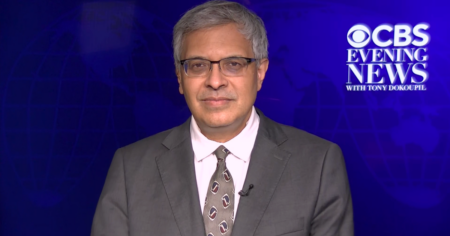
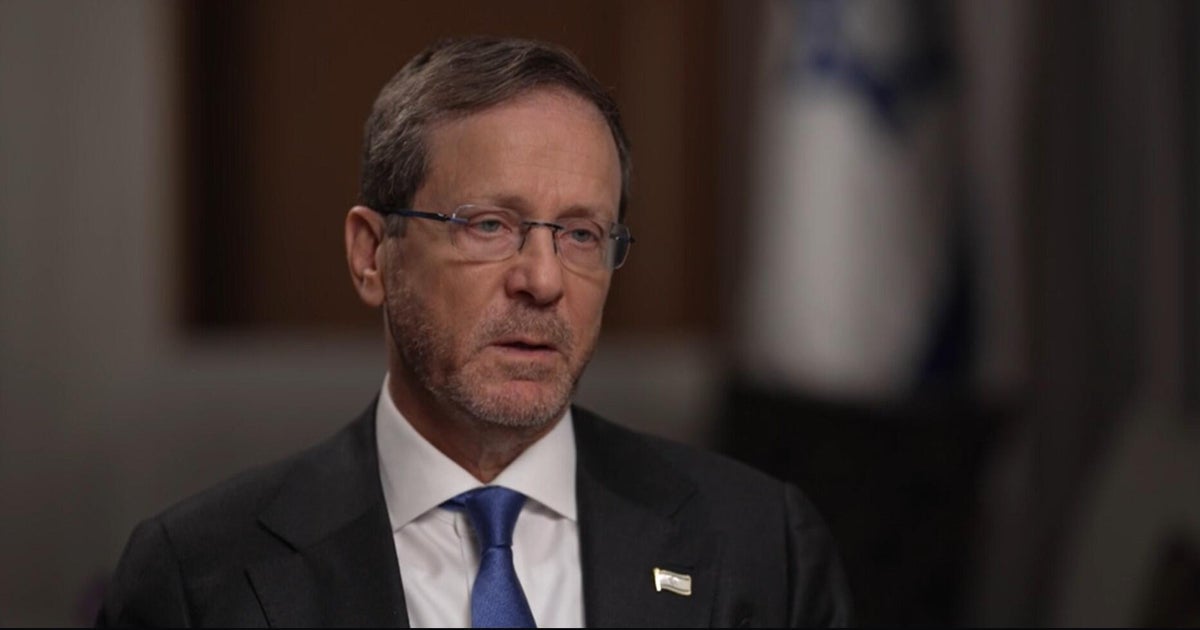
In a revealing interview that sheds light on one of the most significant military operations in recent Middle East history, Israeli President Isaac Herzog opened up about why his country, alongside the United States, felt compelled to launch strikes against Iran. Speaking candidly, Herzog emphasized that this wasn’t a decision made lightly or hastily. According to the Israeli leader, intelligence reports suggest that Iran has ambitious and alarming plans to dramatically expand its long-range missile capabilities – from a current arsenal of approximately 2,000 missiles to a staggering 20,000. This potential tenfold increase represents what Herzog and Israeli security officials view as an unacceptable threat not just to Israel, but to regional stability as a whole.
Beyond the missile threat, Herzog pointed to what he described as Iran’s relentless pursuit of nuclear weapons capability. He claimed that intelligence agencies have uncovered “another new secret plan to rush to the bomb,” suggesting that Iran’s nuclear ambitions remain active despite years of international pressure and diplomatic efforts to curb them. The Israeli president painted a picture of a regime that has systematically diverted national resources away from its own people and toward creating what he called “havoc in the Middle East,” all while Israel has been working to normalize relations with other Muslim countries in the region. It’s worth noting, however, that neither Israel nor the United States has publicly presented concrete evidence to support these specific claims about Iran’s nuclear weapons program. White House special envoy Steve Witkoff did mention that Iranian negotiators reportedly stated during recent talks that they possessed enough uranium to produce 11 nuclear bombs, though Iran has consistently maintained that its nuclear program serves exclusively peaceful purposes, such as energy production and medical applications.
No Ground Invasion: Drawing Clear Lines
One of the most significant revelations from Herzog’s interview was his firm stance against a ground invasion of Iran. In an era where American public opinion remains deeply skeptical of prolonged military engagements in the Middle East – shaped by the experiences in Iraq and Afghanistan – Herzog was crystal clear about Israel’s intentions. “Let me be clear, I’m not calling on any boots on the ground. I’m not asking any American or anyone else,” he stated emphatically. This declaration serves multiple purposes: it addresses American concerns about another potentially costly and lengthy Middle Eastern conflict, and it sets boundaries around Israel’s military objectives.
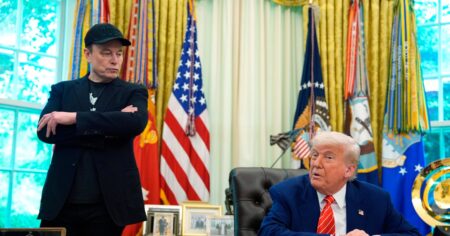
Herzog was also careful to address the sensitive question of who actually made the decision to carry out these strikes – Israel or the United States under President Trump’s leadership. The Israeli president was diplomatic but direct in his response, stating that “Israel does not dictate to President Trump anything, and Israel does not drag America into a war, God forbid.” He characterized Trump’s decision as stemming from “clear considerations and professional decision-making process,” while acknowledging that Israel was certainly “a factor because Israel is an ally.” This careful language walks a fine line: it respects American sovereignty and decision-making while simultaneously acknowledging the deep security partnership between the two nations. By framing it this way, Herzog attempts to counter potential criticism that Israel manipulated or pressured the United States into military action – a sensitive topic in American political discourse.
The Real Goal: “Middle East Change” Rather Than Regime Change
When pressed about whether regime change in Iran was the ultimate objective of this military campaign, Herzog offered a nuanced answer that reveals the complexity of the situation. He said regime change is “not necessarily” the goal, instead advocating for what he termed “Middle East change.” But what does that actually mean in practical terms? According to Herzog, it involves fundamentally crippling Iran’s ability to develop nuclear weapons and ending its role as what Western nations consider the world’s leading state sponsor of terrorism. This includes cutting off the support Iran provides to various militant groups that act as its proxies throughout the region – Hamas in Gaza, Hezbollah in Lebanon, and the Houthis in Yemen.
Herzog’s language on this topic was revealing in its evolution throughout the interview. At one point, he expressed frustration with Iran’s behavior, saying “It’s about time that everybody tells Iran, ‘Guys, we’re fed up, this has to change.'” Then, perhaps showing his true preferences, he added, “One way or another, if it will lead to a regime change, the more the better.” This suggests that while regime change might not be the stated primary objective, it would certainly be viewed as a welcome outcome by Israeli leadership. The strategy appears to be one of applying sustained military pressure to degrade Iran’s capabilities while hoping that internal pressures might eventually lead to political change within Iran itself – a hope rather than a guaranteed outcome.
The Missing Endgame: Concerns About Long-Term Strategy
One of the most pressing questions surrounding this military operation is perhaps the most difficult to answer: how does it end? When directly asked about whether he was concerned that there’s no clear endgame to the war, Herzog acknowledged that “it’s always something that one needs to take into account.” This admission is significant because it touches on a fundamental criticism of military interventions – the lack of a clearly defined exit strategy or criteria for declaring success. When pressed further on a specific timeframe for ending the conflict, Herzog’s response was notably vague: “It takes time, because these things take time.”
He attempted to provide reassurance by suggesting that from a “birds-eye view” and based on available data, there is evidence of “a constant weakening of the Iranian regime’s capabilities.” However, this doesn’t really answer the core question about when the strikes might end or what specific conditions would need to be met for that to happen. This ambiguity is particularly concerning given that the joint strikes were already in their fifth day at the time of the interview, with no clear end in sight. The lack of specificity about endgame scenarios echoes criticisms of previous military engagements in the region, where initial objectives evolved or expanded over time, leading to prolonged conflicts without clear resolution. Herzog’s reluctance or inability to define concrete endpoints for the military campaign may fuel concerns among both American and international observers about the potential for this to develop into another open-ended conflict.
American Public Opinion and the Coordination Question
Herzog demonstrated awareness of a critical challenge facing this military operation: the American public’s skepticism. A CBS News poll released during this period found that 62% of Americans believe the White House hasn’t clearly explained its goals for the military action against Iran – a damning figure that reveals a significant communication gap or a fundamental disconnect between government actions and public understanding. Herzog acknowledged this reality directly: “I understand it’s not a popular war in America, because, you know, usually, people do not know the intricacies of the war, and they also compare it to previous and other wars.”
His explanation for this public skepticism contains an implicit criticism – that ordinary Americans don’t fully understand the complex details that justify the action. He insisted that “this is a unique war,” suggesting it shouldn’t be judged by the standards of previous Middle Eastern conflicts. When asked whether Israeli officials were worried that declining American public support might cause the United States to withdraw from the operation, Herzog declined to provide a direct answer, though his acknowledgment of the unpopularity suggests this is indeed a concern. Regarding the coordination between the U.S. and Israel throughout the campaign, Herzog described it as “superbly close, very close,” but notably declined to provide any specific details about how that coordination was actually functioning in practice. He also remained silent when asked whether Israel has a list of preferred candidates to lead Iran in the event of regime change, despite President Trump indicating in a separate interview that he had “some good candidates” in mind, saying only that “it is not our job to decide who can lead Iran.”
Broader Regional Implications and Future Uncertainties
The situation Herzog described raises profound questions about the future of Middle Eastern geopolitics and the potential for wider conflict. While he stated that Israel is not asking other Gulf nations to enter the war, the reality is that major military action against Iran inevitably affects the entire region. Herzog offered the perspective that “sometimes you have no choice, if you are hit, you have to fight back,” framing the Israeli position as fundamentally defensive rather than aggressive. However, critics might point out that the question of who struck first and whether military action was truly the only option remains subject to intense debate.
The interview reveals the enormous complexity of the current situation – a military campaign being conducted by two nations with somewhat different domestic political pressures, against a target whose defeat is difficult to define, with goals that range from the concrete (destroying specific weapons facilities) to the abstract (“Middle East change”), and without a clear timeline or endgame. As the strikes continue, the international community watches nervously, aware that conflicts in this volatile region have a history of expanding in unexpected ways, drawing in additional actors, and lasting far longer than initial projections suggested. Whether this operation will achieve its stated objectives of curbing Iran’s nuclear ambitions and reducing its support for militant groups, or whether it will instead lead to escalation, retaliation, and prolonged regional instability, remains one of the most consequential unanswered questions in contemporary international relations.