


‘This Case Chose Us’: West Virginia Attorney General Discusses Supreme Court Battle Over Transgender Sports Ban
A National Spotlight on a Small State’s Big Legal Battle
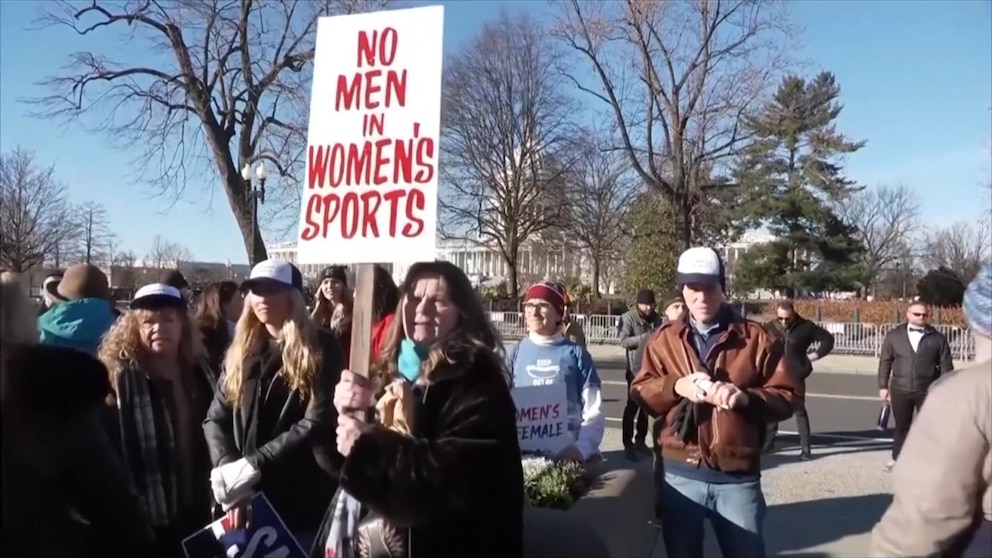
West Virginia finds itself at the center of one of the most contentious cultural and legal debates in America today. The state’s attorney general, J.B. McCuskey, recently sat down with ABC News’ Linsey Davis to discuss the journey that brought his state’s transgender athlete ban all the way to the United States Supreme Court. With oral arguments now being heard by the nation’s highest court, McCuskey reflected on how this case emerged not from political calculation, but from what he describes as a necessary response to protect fairness in women’s sports. “This case chose us,” McCuskey emphasized, suggesting that West Virginia didn’t seek out this controversy but felt compelled to act when the issue arose within their state. The case has drawn national attention and has become a flashpoint in the ongoing debate about transgender rights, athletic competition, and how states navigate the intersection of gender identity and competitive sports.
The attorney general’s characterization of the case as something that “chose” his state speaks to the broader cultural moment America finds itself in, where questions about transgender participation in sports have moved from the margins to the mainstream of political discourse. For West Virginia, a state that often flies under the radar in national conversations, this case has thrust them into the spotlight as they defend their position that biological males should not compete in women’s sports, regardless of their gender identity. McCuskey’s role in this case isn’t just about legal argumentation; it represents the state’s attempt to balance what they view as protecting opportunities for cisgender female athletes while also navigating the complex and emotionally charged terrain of transgender rights. As the Supreme Court weighs in on this issue, the decision will have far-reaching implications not just for West Virginia, but for schools, athletic programs, and transgender youth across the entire nation.
The Legal Framework and West Virginia’s Position
The ban that West Virginia has implemented and is now defending before the Supreme Court prohibits transgender girls and women from participating in school sports teams that align with their gender identity. Instead, the law requires students to compete on teams that correspond with their biological sex assigned at birth. McCuskey and other supporters of the ban argue that this policy is necessary to preserve competitive fairness in women’s athletics, contending that individuals who were assigned male at birth possess inherent physical advantages—such as greater muscle mass, bone density, and lung capacity—that persist even after gender transition. From the state’s perspective, allowing transgender girls to compete on girls’ teams would undermine the very purpose of Title IX, the federal law designed to ensure equal opportunities for women in education and athletics. They argue that decades of progress in women’s sports could be eroded if biological males are permitted to compete against biological females.
The legal arguments that McCuskey and his team have presented to the Supreme Court rest on the interpretation of Title IX and whether its protections based on “sex” should be understood as biological sex or should extend to include gender identity. West Virginia’s position is that sex in the context of Title IX was always meant to refer to biological sex, and that reinterpreting it to include gender identity represents a radical departure from the law’s original intent and purpose. Additionally, the state argues that it has a legitimate interest in regulating athletics to ensure fair competition and that the ban is a narrowly tailored means of achieving that goal. McCuskey has framed this not as discrimination against transgender individuals, but rather as a matter of protecting the rights and opportunities of cisgender female athletes who have worked hard to compete and excel in their sports. The attorney general maintains that the state is not motivated by animus toward transgender people but by a commitment to fairness and equality in athletic competition.
The Human Impact and Competing Perspectives
While the legal arguments are complex, at the heart of this case are real young people whose lives and opportunities are directly affected by the outcome. Supporters of transgender inclusion in sports argue that bans like West Virginia’s inflict profound harm on transgender youth, who already face elevated rates of discrimination, bullying, and mental health challenges. For these young people, participation in sports isn’t just about winning or losing; it’s about belonging, building friendships, developing confidence, and experiencing the sense of community that athletics can provide. Advocates contend that excluding transgender girls from girls’ sports sends a message that they are not truly girls and denies them the full participation in school life that their peers enjoy. They also point to the fact that transgender athletes have been competing at various levels for years without dominating women’s sports, suggesting that fears about unfair competition are overblown and not supported by evidence.
On the other side of this debate are those who share West Virginia’s concerns about competitive fairness and the preservation of women’s sports as a distinct category. Parents of cisgender female athletes have voiced worries that their daughters might lose opportunities for competition, scholarships, and recognition if they must compete against individuals who were assigned male at birth. Some female athletes have spoken publicly about feeling that they’re in an impossible position—wanting to be supportive of their transgender peers while also feeling that the competition isn’t entirely fair. These concerns, while controversial, reflect genuine anxieties about how to balance inclusion with competitive equity. McCuskey has positioned himself as a voice for these athletes and their families, arguing that the state has an obligation to ensure that girls’ sports remain a level playing field. The challenge, of course, is that in trying to protect one group, the policy necessarily excludes another, and navigating this tension is precisely what makes this case so difficult and emotionally charged.
The Supreme Court’s Role and the Broader Constitutional Questions
The Supreme Court’s decision to hear this case signals that the justices recognize the need for legal clarity on an issue that has generated conflicting lower court rulings and passionate debate across the country. The Court will need to wrestle with fundamental questions about how to interpret civil rights laws in the context of gender identity, what level of scrutiny should apply to laws that distinguish between transgender and cisgender individuals, and how to balance competing rights and interests when they come into conflict. The justices will hear arguments from West Virginia defending its ban, as well as from challengers who argue that the policy violates the Equal Protection Clause of the Fourteenth Amendment and Title IX itself. The outcome will depend in part on whether the Court’s conservative majority views this primarily as a matter of biological reality and fairness in sports or as a question of discrimination against a vulnerable minority group.
Beyond the immediate question of transgender athletes, this case touches on broader themes that have animated constitutional law for decades: how do we define sex and gender for legal purposes? What is the appropriate role of the federal government versus states in regulating these issues? How should courts balance religious and moral convictions held by many Americans with the rights of LGBTQ+ individuals to equal treatment under the law? The Supreme Court’s ruling could have implications that extend well beyond the sports context, potentially affecting policies related to bathrooms, locker rooms, prisons, and other sex-separated facilities and programs. McCuskey and other attorneys general defending similar laws in their states are acutely aware that they’re not just fighting for a sports policy; they’re engaged in a larger cultural and legal battle about gender, identity, and the limits of anti-discrimination law. The stakes are high for everyone involved, and the Court’s decision will likely shape policy and politics for years to come.
West Virginia’s Journey to the Nation’s Highest Court
Reflecting on how his state ended up at the Supreme Court, Attorney General McCuskey’s comment that “this case chose us” reveals something important about how cultural flashpoint issues often emerge in unexpected places. West Virginia is a small, largely rural state that doesn’t typically drive national conversations on social policy. Yet when the issue of transgender athletes arose within their state, policymakers felt they needed to act. The law in question, known as the “Save Women’s Sports Bill,” was passed by the state legislature and signed by the governor as part of a wave of similar legislation in Republican-led states across the country. However, McCuskey seems intent on framing West Virginia’s involvement not as part of a coordinated political strategy, but as a genuine response to concerns raised by their own constituents, athletes, and families.
The path from state law to Supreme Court case involved legal challenges filed by transgender athletes and advocacy organizations who argued that the ban was unconstitutional and violated federal law. Lower courts issued varying rulings, with some blocking enforcement of the law and others allowing it to proceed. This patchwork of decisions created legal uncertainty and demonstrated the need for the Supreme Court to provide definitive guidance. Throughout this process, McCuskey and his legal team have maintained that West Virginia’s law is both legally sound and morally justified. They’ve worked to distinguish their state’s approach from what they characterize as overreach by federal agencies that have sought to interpret Title IX as protecting gender identity. By taking this case all the way to the Supreme Court, West Virginia is positioning itself as a defender of what it views as common sense and fairness, even as critics argue that the state is on the wrong side of history and is perpetuating discrimination against some of its most vulnerable young people. Regardless of one’s position on the underlying issue, there’s no denying that this small state’s legal battle will have enormous consequences for the entire nation.