
The Hospice Fraud Epidemic: Inside the Building Housing 89 Hospice Companies
Ground Zero for Medicare Fraud
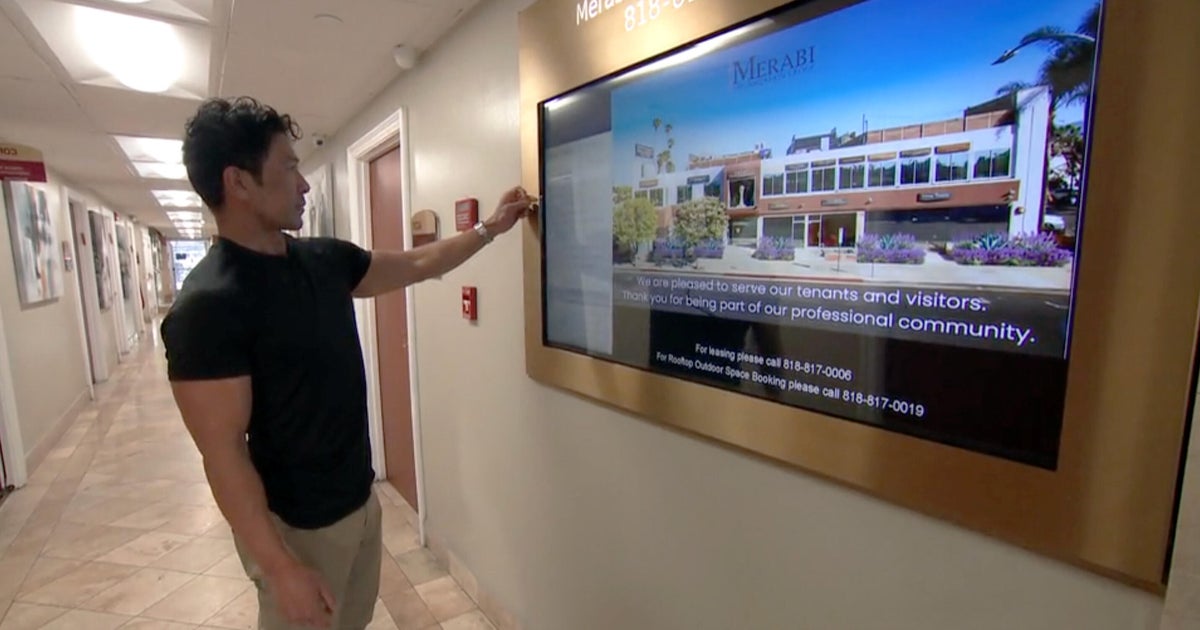
In an unassuming corner of Los Angeles stands the Merabi Professional Medical Plaza, a three-story building spanning 32,000 square feet of stucco and glass that has become the unlikely epicenter of a massive Medicare fraud investigation. While the building houses what you’d expect from a typical professional complex—a salon, a law office, a modeling agency, and a realty corporation—it also contains something far more troubling: 89 licensed hospice companies crammed into its modest square footage. Patient advocate Sheila Clark, who has dedicated her career to exposing Medicare fraud in the hospice industry, describes this building as “ground zero” for the problem plaguing America’s end-of-life care system. When Clark first noticed the sheer concentration of hospices in this single location, her reaction was one of immediate skepticism. “This particular building I noticed, I’m like, ‘dang, how can there be that many licensed and certified hospices in this tiny little building?'” she recalled. For those familiar with how legitimate medical practices operate, the numbers simply don’t add up. The Merabi Plaza represents an extreme example of what state auditors call “clustering”—a phenomenon where unusually large numbers of hospice offices congregate in a single location, raising immediate red flags about potential fraudulent activity. This building’s address appears repeatedly throughout state licensing records, with dozens of hospice agencies supposedly operating from within its walls, their names lining the directories in the entry hall along the long tiled corridors.
Understanding the Clustering Red Flag
The clustering phenomenon that makes Merabi Plaza so suspicious isn’t just about numbers—it’s about what those numbers reveal about the business practices of these hospice agencies. According to state auditors who have studied the issue extensively, when you find numerous hospice companies operating from the same address, it strongly suggests that “the number of agencies in these areas likely exceeds the number of patients who need services.” In other words, there simply aren’t enough dying patients in the surrounding community to justify this many separate hospice providers. The problem extends far beyond just this one building. A comprehensive 2022 California State Auditor’s report painted a disturbing picture of the hospice industry in Los Angeles County, revealing a staggering 1,500% increase in hospice companies countywide since 2010. To put this explosive growth in perspective, Los Angeles County now has six times more hospice providers than the national average when adjusted for the area’s elderly population. This unprecedented proliferation of end-of-life care companies doesn’t reflect a sudden surge in demand or an aging population boom—instead, it points to a systematic exploitation of a healthcare system that relies on trust and has historically operated with minimal oversight. The auditors identified several warning signs that, when appearing together, strongly indicate potential fraudulent operations: multiple hospices operating from a single building, geographic clustering of companies, suspiciously low patient counts, unusually high rates of terminally ill patients who are later discharged alive (suggesting they weren’t actually dying), excessive billing patterns, and staff members who work across multiple supposedly separate companies. These red flags paint a picture of shell companies designed not to provide compassionate end-of-life care, but to bilk the Medicare system of taxpayer dollars.
A Pattern of Violations and Phantom Care
When CBS News conducted its sweeping investigation into the hospice companies operating from Merabi Plaza, they discovered troubling patterns that confirmed auditors’ worst suspicions. Of the 89 registered hospices in the building, a shocking 72 exhibited at least three of the six major warning signs for fraud. This wasn’t the first time authorities had come knocking on these doors either. Federal records document that regulators visited multiple suites within Merabi Plaza between 2021 and 2025, uncovering nearly 400 violations across 75 different companies—a stunning track record of regulatory failures and suspicious practices. The nature of these violations reveals the human cost of hospice fraud, showing how vulnerable patients and their families become pawns in elaborate billing schemes. In one particularly egregious case, inspectors found documentation where a nurse reported that a patient’s family was satisfied with the care being provided, despite clear evidence that no one from the hospice agency had ever actually visited that patient. This represents the very definition of “ghost hospice” operations—companies that exist primarily on paper, billing the government for services never rendered to patients who may or may not have actually been enrolled in their programs. Other inspections uncovered equally disturbing findings that revealed the shoddy, fabricated nature of patient records. One patient’s chart listed medications for treating malaria and diabetes, yet when inspectors spoke directly with the patient, he confirmed he wasn’t taking either medication. At that same company, inspectors found documentation where a hospice social worker had written detailed notes about a family’s grief following the death of their loved one—except there was no evidence the patient had actually died. These aren’t simple clerical errors or administrative oversights; they represent systematic fabrication of medical records to justify billing Medicare for services that never occurred.
The Business of Death Without the Care
What makes the situation at Merabi Plaza particularly troubling is that many of these questionable hospice companies have been billing Medicare for years, steadily collecting reimbursements funded by federal tax dollars with apparently minimal scrutiny until recently. The hospice benefit under Medicare represents one of the program’s most compassionate provisions, designed to ensure that Americans facing terminal illness can spend their final days in comfort and dignity, with their pain managed and their emotional and spiritual needs addressed. Instead, bad actors have recognized this benefit as a lucrative opportunity for fraud, knowing that the vulnerability of dying patients and their grieving families makes them unlikely to complain or question the care they receive. When CBS News reporters visited the building recently to investigate, they encountered the building’s owner, Kambiz Merabi, who offered a perspective that highlights the complexity of addressing this fraud. Merabi explained that Medicare officials had visited his building approximately two years earlier, specifically looking for hospice agencies, and he had cooperated fully with their inspections. From his viewpoint as a landlord, the businesses appear legitimate—his tenants provide the standard documentation showing they’re licensed and certified to operate. “I’m not a police or keeper of what they do, how they do business,” Merabi told reporters, expressing a sentiment that many building owners might share when faced with questions about their tenants’ operations. However, Merabi also pointed out a significant discrepancy that further muddies the waters. While government records show 89 hospice companies registered at his building’s address, his actual tenant list shows only 12 hospice companies currently operating there. He explained that numerous agencies had recently moved out of the building, though public records hadn’t yet been updated to reflect these changes—despite the fact that hospices are legally required to notify authorities when they relocate.
The Ghost Hospice Phenomenon
This discrepancy between official records and actual occupancy raises profound questions about what patient advocates call “ghost hospices”—paper companies that exist primarily to bill the government for patients they never actually treat, operating from addresses where they may have only the most minimal physical presence, if any at all. The ghost hospice model is particularly insidious because it exploits the very nature of hospice care, which often occurs in patients’ homes rather than in medical facilities. Unlike a hospital or clinic where you’d expect to see patients coming and going, a hospice administrative office might legitimately have little foot traffic while still serving numerous patients in the community. This makes it difficult for building owners, neighbors, or even casual observers to distinguish between a legitimate hospice with a small administrative office and a fraudulent operation that exists only to process paperwork and collect Medicare payments. The financial incentives driving this fraud are substantial. Medicare pays hospices a daily rate for each patient enrolled, regardless of how much care that patient actually receives. For fiscal year 2025, the routine home care rate—the most common level of care—is approximately $200 per day per patient. This payment structure was designed to give hospices financial stability and predictability, allowing them to focus on providing quality care rather than constantly worrying about reimbursement for every individual service. However, it also creates an obvious opportunity for fraud: enroll patients who don’t actually qualify for hospice care (or who don’t exist at all), provide minimal or no actual services, collect the daily per-patient rate, and repeat. Multiply this across dozens of fake or barely-operational companies, and the potential profits become enormous.
The Path Forward: Enforcement and Reform
California Attorney General Rob Bonta, whose office bears responsibility for investigating the hospice industry throughout the state, acknowledges that hospice fraud rates remain “unacceptable.” “We’re committed to tackling the issue until we root it out and extinguish all fraud,” Bonta stated, though the sheer scale of the problem—with Los Angeles County alone seeing that 1,500% increase in hospice providers—suggests this will require sustained effort and significant resources. At the federal level, Dr. Mehmet Oz, who now heads the Centers for Medicare and Medicaid Services, has promised a more aggressive approach to combating fraudulent billing. “We’ve dramatically accelerated our ability to take out the bad guys by stopping their payments,” Dr. Oz said, outlining a shift from the traditional pay-and-chase model (where Medicare pays claims and then tries to recover fraudulent payments later) toward more upfront verification. “I want to make it clear, we’re not going to pay you money just because you sent me a piece of paper with a bill on it. We’re going to check to make sure that’s legitimate, and that document is evidence that you actually performed something that’s helpful to the American people, or you’re not getting money from us.” This represents a fundamental shift in how Medicare approaches fraud prevention, moving from a system built largely on trust to one that demands verification before payment. Even building owner Kambiz Merabi, who has found himself unwittingly at the center of this fraud investigation, supports these enforcement efforts. “I’m all for it because at the end of the day, you and I are paying for all those things that are not right,” Merabi said, acknowledging that taxpayers ultimately bear the cost of Medicare fraud. The situation at the Merabi Professional Medical Plaza serves as a powerful reminder that healthcare fraud isn’t a victimless crime—it diverts resources away from people who genuinely need care, undermines public trust in vital programs like Medicare, and can leave vulnerable patients and their families without the support they desperately need during life’s most difficult moments. Addressing this crisis will require continued vigilance from regulators, cooperation from industry stakeholders, and a recognition that protecting the integrity of hospice care ultimately means protecting some of our society’s most vulnerable members.