


Supreme Court Takes on Critical Mail Ballot Dispute That Could Reshape American Elections
The Heart of the Legal Battle
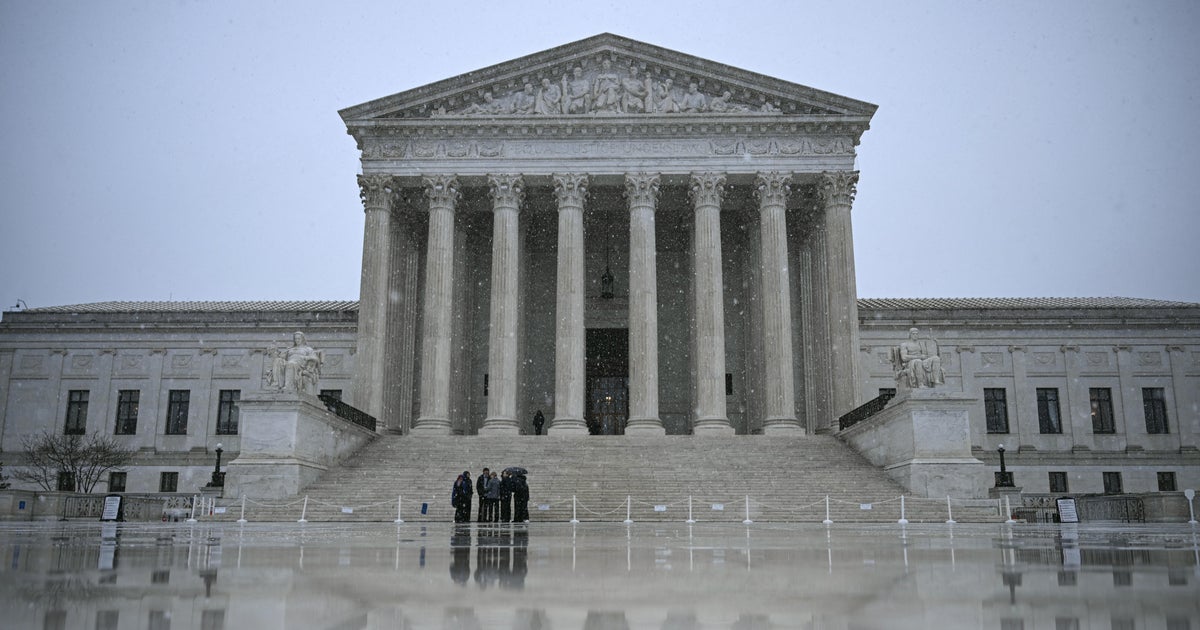
The Supreme Court is grappling with a fundamental question that could transform how millions of Americans cast their votes: Can states count mail-in ballots that arrive after Election Day, as long as they were postmarked on or before that date? At the center of this controversy is Mississippi’s law, which allows election officials to count ballots received up to five business days after Election Day, provided they bear an Election Day postmark. This case has landed on the nation’s highest court at a particularly charged moment, as President Trump continues his campaign to drastically curtail mail voting options. The legal challenge was brought by the Republican National Committee, Mississippi’s state Republican Party, and interestingly, the state’s Libertarian Party, all arguing that federal laws from the 1800s establishing a uniform Election Day are being violated by these grace periods. The stakes couldn’t be higher—a decision against Mississippi’s law could affect similar provisions in 13 other states and the District of Columbia, potentially disrupting the voting process for millions of Americans, including military service members and citizens living overseas who depend heavily on mail-in voting.
Understanding the Patchwork of State Voting Laws
To truly grasp what’s at stake, it’s important to understand the current landscape of mail voting across America. While all 50 states require that ballots be marked and submitted by Election Day, there’s significant variation in how “submitted” is interpreted. Currently, 14 states plus Washington D.C. have implemented grace periods that allow ballots postmarked by Election Day to be counted even if they physically arrive at election offices in the days following. The reasoning behind these policies is straightforward and practical: voters shouldn’t be disenfranchised because of postal service delays beyond their control. If someone fulfills their civic duty by completing and mailing their ballot on time, should their vote be thrown out simply because the mail was slow? Additionally, 29 states and D.C. have special provisions allowing military and overseas ballots to arrive after Election Day, recognizing the unique challenges faced by Americans serving abroad or living in foreign countries. However, the tide has been shifting in some places—just last year, Kansas, North Dakota, Ohio, and Utah eliminated their grace periods, now requiring that mail ballots be physically in hand by Election Day to be counted. This patchwork of regulations reflects America’s federalist system, where states have traditionally maintained significant authority over how they conduct elections, even for federal offices.
The Legal Arguments on Both Sides
The legal battle has produced compelling arguments from both sides, revealing fundamentally different interpretations of what constitutes an “election” under federal law. The Republican challengers argue that federal statutes from the 19th century establishing Election Day as “the Tuesday after the first Monday in November” mean exactly what they say—the election must conclude on that specific day, including both the casting and receipt of all ballots. In their view, when Congress set a uniform Election Day, it was establishing a hard deadline for every aspect of the voting process. The 5th Circuit Court of Appeals agreed with this interpretation, reasoning that “while election officials are still receiving ballots, the election is ongoing” and the result isn’t truly fixed because “live ballots are still being received.” The GOP has also raised concerns about fraud and the appearance of impropriety, arguing that allowing ballots to trickle in after Election Day undermines public confidence in election integrity—though it’s worth noting that actual instances of mail-voting fraud are exceptionally rare, according to election experts. Meanwhile, Mississippi Secretary of State Michael Watson and other defenders of grace periods present a different understanding of what an “election” actually is. They argue that an election is fundamentally about the voter’s choice—the moment when a citizen marks their ballot and commits to their selection of candidates. By this logic, as long as a voter has made their choice and mailed their ballot by Election Day, they have participated in the election on time, and the administrative task of ballot collection shouldn’t determine whether their vote counts. Watson emphasizes that Mississippi’s law respects the federal Election Day requirement because all voters must make their “conclusive” choice by that date—the subsequent days are merely an accommodation for mail delivery times, not an extension of when people can vote.
The Implications for Military and Overseas Voters
One of the most concerning aspects of this case involves its potential impact on military service members and Americans living abroad—a population of nearly 4 million citizens who depend almost entirely on mail voting to exercise their democratic rights. These voters face unique challenges that domestic voters don’t encounter: their ballots must travel much greater distances, often from remote military bases or foreign countries with less reliable postal infrastructure, and they’re subject to international shipping delays completely beyond anyone’s control. A coalition representing troops, military families, and overseas voters has expressed serious alarm about what might happen if the Supreme Court sides with the GOP challengers. Even states without general grace periods often have special provisions recognizing that military and overseas ballots need extra time to arrive—these accommodations could be threatened if the Court adopts a strict interpretation that all ballots must be received by Election Day without exception. The irony isn’t lost on observers that these voters—many of whom are literally serving their country in uniform—could find their voting rights restricted by a ruling intended to standardize election procedures. This highlights one of the central tensions in the case: the balance between creating uniform national election standards and recognizing the practical realities that voters face in different circumstances. For service members stationed in combat zones or diplomatic personnel in remote posts, the idea that their carefully completed and timely mailed ballots might be discarded because of mail delays feels particularly unjust.
The Politics and Timing of the Decision
This case is unfolding against a highly politicized backdrop that’s impossible to ignore. President Trump has made opposition to mail voting a cornerstone of his political messaging, repeatedly making claims about fraud that election experts have thoroughly debunked—study after study has found that voter fraud, particularly through mail voting, is extraordinarily rare in the United States. The Trump administration has formally sided with the Republican challengers in this case, with Solicitor General D. John Sauer arguing in a friend-of-the-court brief that federal law clearly requires “the ballot box must close, and every vote must have been received” by Election Day. This alignment isn’t surprising given the President’s public stance, but it adds political weight to what is ostensibly a technical legal question about statutory interpretation. The timing also creates practical concerns for election administration. The Supreme Court is expected to issue its decision by the end of June or early July, which would leave only about four months before the November midterm elections. If the Court strikes down grace periods, election officials in affected states would face a scrambling rush to update their procedures, redesign voter information materials, launch public education campaigns about changed deadlines, and potentially reprogram voting systems—all while trying to maintain voter confidence in an already polarized environment. State and local election administrators, who are often overworked and underfunded, would bear the burden of implementing major changes on an extremely compressed timeline.
What Happens Next and Why It Matters
The Supreme Court’s decision in this case will ripple far beyond Mississippi’s borders, potentially reshaping how Americans cast ballots in elections for years to come. If the Court sides with Mississippi and upholds grace periods, it would affirm states’ authority to accommodate the realities of mail delivery times and provide some breathing room for voters who fulfill their responsibilities on time but depend on postal services. This outcome would preserve the current system in 14 states and protect the special provisions that help military and overseas voters participate despite the logistical challenges they face. On the other hand, if the Court agrees with the 5th Circuit and the GOP challengers, declaring that federal law requires all ballots to be received by Election Day, the consequences would be swift and widespread. States would need to eliminate their grace periods, and voters would face a higher risk of disenfranchisement due to postal delays beyond their control—particularly concerning given recent, well-documented struggles with mail delivery reliability. This could also threaten special accommodations for military voters, though the Court might try to distinguish between general grace periods and military-specific provisions. Beyond the immediate practical effects, this case touches on deeper questions about American federalism and how much authority states should have in administering elections versus how much uniformity federal law should impose. It also reflects ongoing partisan battles over voting access, with Democrats generally favoring policies that make voting more convenient and accessible, while Republicans often emphasize security concerns and stricter regulations, even when actual fraud is virtually nonexistent. Whatever the Supreme Court decides, the ruling will arrive in a fraught political environment where trust in elections has been damaged by years of unfounded fraud claims. For the millions of Americans who rely on mail voting—whether by choice or necessity—this decision will have concrete impacts on whether their voices are heard in American democracy.