
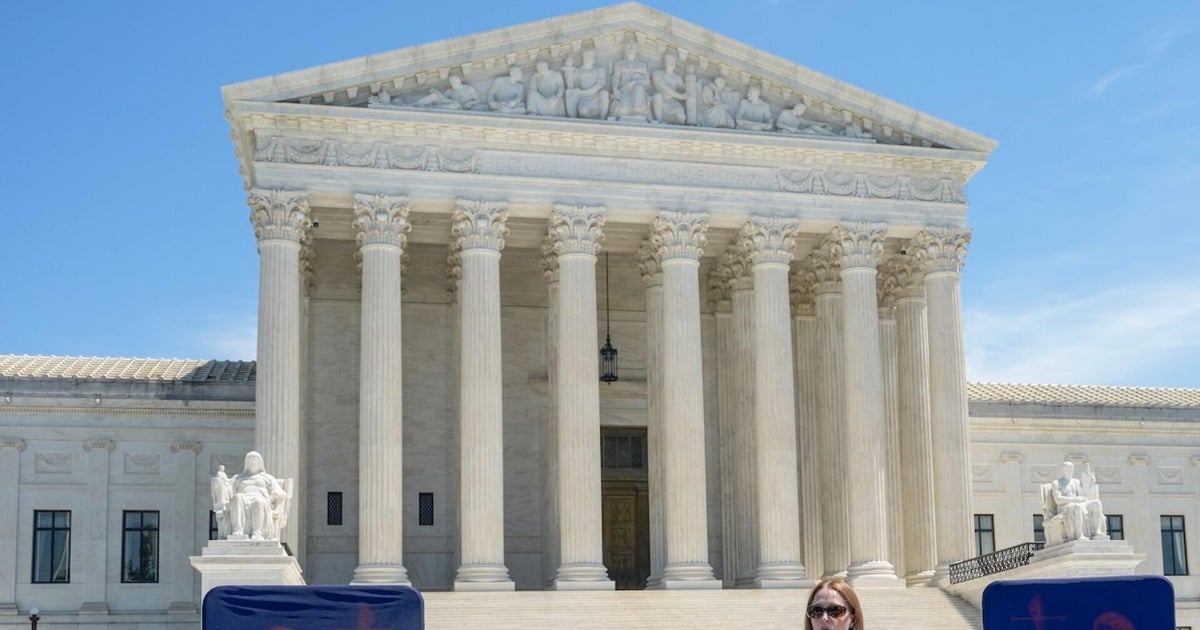

Supreme Court’s Louisiana Redistricting Decision Sparks Heated Exchange Between Justices
Immediate Implementation of Controversial Map Ruling
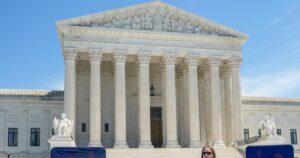
The Supreme Court made waves this week by deciding to fast-track the implementation of a controversial ruling that struck down Louisiana’s congressional map. In a 6-3 decision in the case Louisiana v. Callais, the Court determined that the state’s current U.S. House map—which features two majority-Black districts represented by Democrats—violates the Constitution. What makes this decision particularly significant isn’t just the ruling itself, but the Court’s subsequent choice to waive the standard 32-day waiting period before the decision takes effect. This unusual move has thrown Louisiana’s electoral process into immediate chaos, forcing state officials to suspend this month’s House primaries and scramble to redraw district lines before the upcoming elections. The urgency of the situation reflects the delicate balance between constitutional principles and practical electoral timelines, setting the stage for a broader conversation about voting rights and representation in America.
A Battle of Judicial Philosophies
The decision to expedite the ruling’s implementation sparked an extraordinary public disagreement between two Supreme Court justices that laid bare the deep philosophical divisions within the Court. Justice Ketanji Brown Jackson, one of the Court’s three liberal members, issued a sharp critique of Monday’s decision to speed up the process, calling it “unwarranted and unwise.” She expressed concern that the Court was effectively endorsing Louisiana’s decision to cancel its primaries and rush through new maps, potentially creating an appearance of political favoritism. Jackson invoked the Court’s longstanding principle of avoiding changes to election procedures close to election day, suggesting that by abandoning this tradition, the Court risked appearing partisan. Her pointed conclusion—”And just like that, those principles give way to power”—struck at the heart of concerns about the Court’s credibility and consistency in applying its own standards. This wasn’t just a technical legal disagreement; it was a fundamental challenge to how the Court balances competing interests when electoral deadlines loom and constitutional questions demand immediate answers.
A Forceful Conservative Response
Justice Samuel Alito, who authored the majority opinion in the Callais case, didn’t take Jackson’s criticism lightly. In a strongly worded concurrence joined by Justices Clarence Thomas and Neil Gorsuch, Alito fired back, calling Jackson’s concerns about bias “baseless and insulting” and her suggestion that the Court was abandoning its principles “groundless and utterly irresponsible.” Alito presented a counter-argument that turned Jackson’s logic on its head: by allowing the standard waiting period to run out, the Court would actually be forcing Louisiana to use a map that had been deemed unconstitutional, which could itself create an appearance of partiality. He questioned what principle the Court had actually violated, asking whether Jackson believed the 32-day waiting period should never be shortened regardless of circumstances, or whether the Court should avoid any action that might be criticized as partisan. This heated exchange between the two justices—conducted through formal legal opinions but carrying the unmistakable tone of personal frustration—reveals just how high the stakes are in redistricting battles and how differently justices can interpret the same set of facts and principles.
The Broader Implications for Voting Rights
Beyond the immediate drama of the judicial disagreement, the Callais decision carries potentially transformative consequences for voting rights across the country. The ruling fundamentally changes how Section 2 of the Voting Rights Act of 1965 is interpreted and applied. For decades, this provision has served as a crucial tool for challenging congressional maps that dilute minority voting power. Southern states, in particular, have frequently been required to draw majority-minority districts to comply with the Voting Rights Act and ensure that minority communities have a meaningful opportunity to elect representatives of their choice. However, the Court’s new interpretation, as articulated by Justice Alito, raises the bar significantly for such challenges. According to the majority opinion, maps only violate the Voting Rights Act when there is a “strong inference that the State intentionally drew its districts to afford minority voters less opportunity because of their race.” This new standard shifts the focus from the effects of redistricting to the intent behind it, making it considerably more difficult to successfully challenge maps that may disadvantage minority voters. The implications extend well beyond Louisiana, as Tennessee and Alabama have already launched last-minute redistricting efforts that could reduce Democratic representation, potentially emboldened by this ruling.
The Intent Versus Impact Debate
Justice Alito defended the new standard by arguing that it better aligns with the actual text of Section 2 and reflects significant changes in American society over recent decades, including dramatically increased turnout among Black voters and the elimination of overtly discriminatory voting laws. From this perspective, the original interpretation of Section 2 may have been necessary during an era of explicit racial discrimination, but contemporary America requires a different approach that doesn’t automatically mandate racial considerations in district drawing. However, this reasoning met fierce opposition from the Court’s liberal wing. Justice Elena Kagan, writing for the dissenting justices, argued that the Callais ruling “eviscerates” Section 2 and renders it “all but dead-letter.” She contended that proving intentional racial discrimination in how states draw their maps is “well-nigh impossible” in practice, since state officials rarely announce racist motivations openly. The dissent, joined by Justices Jackson and Sotomayor, emphasized that this decision undermines a fundamental right that Congress established—the right to racial equality in electoral opportunity. This clash highlights a central tension in contemporary voting rights law: should protections focus on discriminatory intent, which is difficult to prove, or on discriminatory effects, which are easier to demonstrate but may require more aggressive intervention in state redistricting processes?
Democracy in Real-Time Crisis
As this legal battle plays out in Supreme Court opinions and dissents, real people in Louisiana face concrete consequences. The suspension of House primaries throws the state’s electoral calendar into uncertainty, leaving candidates, voters, and election officials in limbo. State lawmakers must now race against the clock to draw new congressional maps that satisfy the Supreme Court’s constitutional concerns while also meeting tight deadlines for upcoming elections. This situation exemplifies the messy reality of democracy, where lofty constitutional principles must somehow be reconciled with practical electoral administration. The heated exchange between Justices Jackson and Alito reflects more than just a disagreement about procedure; it speaks to fundamentally different visions of the Court’s role in American democracy. Should the Court stick rigidly to its traditional procedures even when circumstances might justify flexibility? Or should it adapt its timelines to prevent states from being forced to use maps it has deemed unconstitutional? These aren’t easy questions, and reasonable people can disagree about the answers. What’s clear is that redistricting battles will continue to be fought at the intersection of race, politics, and constitutional law, with the Supreme Court serving as the ultimate referee—even as its members disagree sharply about how to interpret the rules of the game. The Louisiana case may be decided, but the larger conversation about voting rights, racial equity, and democratic representation is far from over.