

Japan’s Historic Market Surge: Understanding the Takaichi Effect
A New Era Begins for Japanese Markets
Monday marked a watershed moment for Japan’s financial markets as the Nikkei 225 stock index shattered previous records, climbing an impressive 3.4% to break through the psychologically significant 57,000-point barrier. This extraordinary rally came on the heels of Prime Minister Sanae Takaichi’s commanding victory in Sunday’s general election, where she secured what political analysts are calling a “supermajority”—a level of parliamentary control that gives her government unprecedented power to implement its economic vision without significant opposition. For investors and everyday Japanese citizens alike, this election result represented more than just a political shift; it signaled the potential beginning of a bold new chapter in Japan’s economic story, one that promises aggressive government intervention designed to shake the country out of decades of economic stagnation and deflation that have plagued the world’s third-largest economy.
The magnitude of Takaichi’s electoral victory cannot be overstated. In Japan’s parliamentary system, achieving a supermajority means her coalition controls enough seats to override opposition resistance and push through legislation with relative ease. This political capital is particularly significant given the ambitious economic reforms she campaigned on, which represent a dramatic departure from the cautious, incremental approach that has characterized Japanese economic policy for much of the past three decades. Markets responded with enthusiasm because investors recognize that this level of political backing makes it far more likely that Takaichi’s promised economic measures will actually become reality, rather than being watered down through political compromise or abandoned altogether—a fate that has befallen many ambitious reform proposals in Japan’s consensus-driven political culture.
The $135 Billion Stimulus Gamble
At the heart of what financial analysts are now calling the “Takaichi Trade” lies an enormous $135 billion stimulus package that represents one of the most ambitious economic intervention plans Japan has seen in recent memory. This massive injection of government spending is designed around two primary pillars: substantial infrastructure investment aimed at modernizing Japan’s aging physical plant and strategic tax cuts intended to put more money in the pockets of consumers and businesses alike. The infrastructure component addresses a critical need in Japan, where bridges, roads, tunnels, and public facilities built during the high-growth period of the 1960s and 1970s are reaching the end of their useful lives and require either extensive renovation or complete replacement. Beyond mere maintenance, however, Takaichi’s vision includes forward-looking investments in digital infrastructure, green energy systems, and transportation networks designed to position Japan competitively in the economy of the future.
The tax cut component of the stimulus package represents an attempt to break what economists call the “deflationary mindset” that has gripped Japanese consumers and businesses for decades. When people expect prices to remain flat or fall, they delay purchases and investments, waiting for better deals that may come tomorrow. This creates a vicious cycle where reduced spending leads to lower economic growth, which reinforces the expectation of continued stagnation. By putting more money in people’s pockets through tax relief, Takaichi’s government hopes to encourage immediate spending and investment, creating a positive feedback loop of economic activity. The gamble, of course, is that this massive increase in government spending won’t simply add to Japan’s already substantial public debt burden—currently among the highest in the developed world—without generating sufficient economic growth to justify the expense. Critics worry about the long-term fiscal sustainability of such aggressive spending, while supporters argue that Japan’s unique position as a creditor nation with control over its own currency gives it more room to maneuver than conventional economic wisdom might suggest.
Global Markets Catch the Wave
The impact of Japan’s political and economic developments didn’t remain confined to Tokyo’s trading floors. In a dramatic demonstration of how interconnected global financial markets have become, the “Takaichi Trade” sent shockwaves through multiple asset classes around the world. Gold, traditionally viewed as a safe-haven asset and a hedge against inflation, soared past the psychologically significant $5,000 per ounce mark for the first time in history. This surge reflects investor expectations that Japan’s massive stimulus spending will eventually lead to inflation—not just in Japan, but potentially globally—as such a large economy pumping money into the system could have spillover effects on international prices. Gold investors, anticipating this inflationary scenario, rushed to acquire the precious metal, driving prices to unprecedented heights.
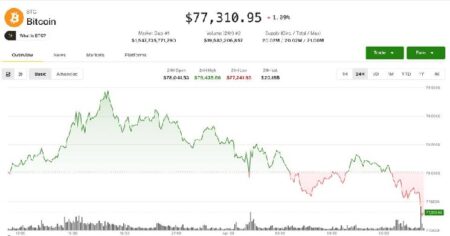
Perhaps even more surprising was the reaction in cryptocurrency markets, where bitcoin briefly touched $72,000 before stabilizing above the $70,000 level during Asian morning trading hours. The cryptocurrency’s surge might seem counterintuitive at first glance, but it reflects a complex set of investor calculations. Some see bitcoin as “digital gold”—another inflation hedge that benefits when governments engage in massive spending programs that could devalue traditional currencies. Others view the Japanese stimulus as part of a broader global trend toward more aggressive monetary and fiscal policy, which has historically been favorable for risk assets like cryptocurrencies. The fact that bitcoin rallied alongside gold suggests that investors are positioning themselves for a scenario where traditional safe havens and alternative assets both benefit from the changing economic landscape. Meanwhile, U.S. stock market futures opened higher, indicating that American investors also viewed the Japanese developments positively, perhaps seeing them as a sign that major economies are willing to take bold action to support growth, which could benefit corporate earnings globally.
International Endorsement and Political Implications
The political significance of Takaichi’s victory extended well beyond Japan’s borders, as evidenced by the congratulatory messages from high-profile American officials. Both President Donald Trump and U.S. Treasury Secretary Scott Bessent personally reached out to the new Prime Minister, a level of attention that underscores the geopolitical importance of Japan’s political direction. These aren’t merely ceremonial gestures; they represent a strategic alignment between the world’s largest and third-largest economies on fundamental questions of economic policy. The Trump administration’s enthusiasm for Takaichi’s victory likely stems from several factors: her commitment to increased defense spending (a longstanding American priority for allies), her pro-growth economic stance that mirrors Trump’s own policy preferences, and the potential for expanded trade and investment opportunities as Japan’s economy revitalizes.
This international support also reflects a broader ideological shift taking place among major economies, moving away from the austerity-focused, debt-reduction priorities that dominated policy discussions in the aftermath of the 2008 financial crisis, and toward a renewed willingness to use government spending as a tool for economic growth. President Trump’s own ambitious goal of seeing the Dow Jones Industrial Average reach 100,000 by the end of his term—which would represent a doubling from current levels after the index just breached 50,000 for the first time on Friday—suggests a belief that aggressive pro-growth policies can deliver extraordinary returns. Whether this represents sound economic policy or dangerous wishful thinking remains a subject of intense debate among economists, but the political momentum is clearly behind the growth-at-all-costs approach, at least for now.
Understanding What This Means for Ordinary People
For those not immersed in the daily machinations of financial markets, these numbers and policy discussions might seem abstract and disconnected from everyday life. However, the developments in Japan and their global reverberations have very real implications for ordinary people around the world. If Takaichi’s stimulus package succeeds in reviving Japan’s economy, it could create a template that other developed nations facing similar challenges—aging populations, sluggish growth, and deflationary pressures—might choose to follow. Success could mean more jobs, rising wages, and renewed optimism in economies that have struggled to generate robust growth for years. The infrastructure investments could improve quality of life through better transportation, more reliable utilities, and modernized public facilities, while the tax cuts could provide immediate relief to household budgets.
However, the risks are equally real and shouldn’t be dismissed. If the stimulus fails to generate sufficient economic growth to justify its cost, Japan could face a debt crisis that would have devastating consequences not just for Japanese citizens, but potentially for the global financial system given Japan’s size and interconnectedness. The surge in gold and bitcoin prices suggests that many investors are hedging against the possibility of inflation or currency devaluation—scenarios that would erode the purchasing power of ordinary people’s savings and wages. The challenge for policymakers is finding the right balance: enough stimulus to jumpstart growth, but not so much that it creates new problems that are worse than the stagnation they’re trying to cure. For now, markets are betting that Takaichi will thread this needle successfully, but only time will tell whether this optimism is justified or whether we’re witnessing the inflation of another financial bubble that will eventually burst with painful consequences for those who can least afford it.