
Senator Tillis Blocks Federal Reserve Nomination Amid Justice Department Investigation
A Political Standoff Over Fed Independence
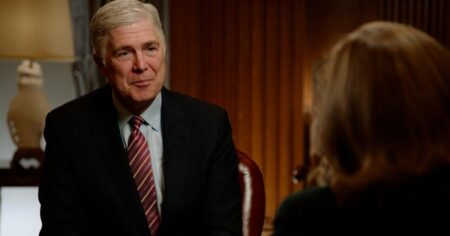
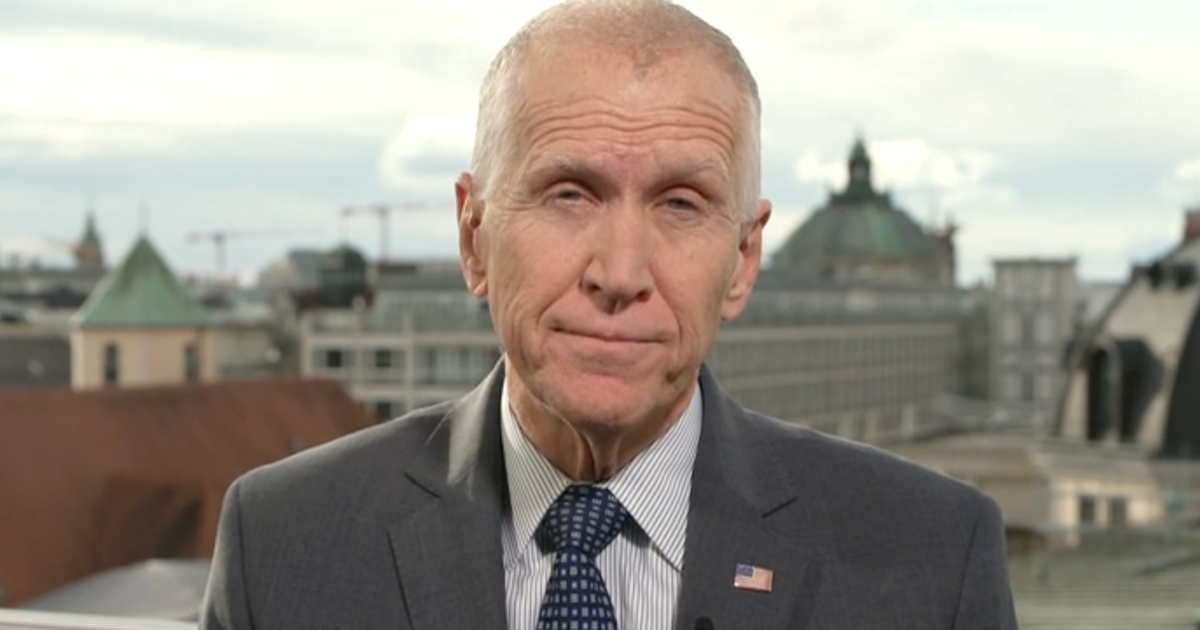
In a dramatic turn of events that highlights the delicate balance between political oversight and central bank independence, Republican Senator Thom Tillis of North Carolina has taken a firm stance that could derail President Trump’s plans to reshape leadership at the Federal Reserve. During an interview with “Face the Nation with Margaret Brennan” scheduled to air Sunday, Tillis made clear his position: he will not support the confirmation of Kevin Warsh or any other nominee to the Federal Reserve Board until the Justice Department concludes its controversial investigation into current Federal Reserve Chairman Jerome Powell. This decision puts Warsh, President Trump’s handpicked successor to Powell, in an uncomfortable position where he must weigh whether continuing with the nomination process is worth the restrictions it would place on his business activities, even as the path forward remains blocked by senatorial opposition.
The Investigation That Started It All
The controversy at the heart of this political drama stems from what many observers consider an unusual and potentially troubling investigation. Federal Reserve Chairman Jerome Powell disclosed last month that the central bank had received grand jury subpoenas from the Justice Department, which he indicated could potentially lead to criminal charges. The focus of this investigation? Powell’s June 2025 testimony before the Senate Banking Committee regarding a multi-year renovation project at the Federal Reserve’s headquarters. The investigation is being led by Jeanine Pirro, the U.S. Attorney for the District of Columbia, who previously served as a district attorney in Westchester County, New York, and spent years as a Fox News host before President Trump appointed her to this powerful federal prosecutor position. Pirro has defended her office’s actions, stating that prosecutors reached out to the Fed “multiple occasions” to discuss cost overruns related to the renovation project and Powell’s testimony about it, but felt compelled to pursue legal action when their inquiries were “ignored.” She notably pushed back against any suggestion of impropriety, insisting that “this office makes decisions based on the merits, nothing more and nothing less.”
Republican Criticism of the Investigation
Senator Tillis hasn’t minced words in his criticism of the Justice Department’s investigation, suggesting it represents an overzealous prosecutor seeking attention rather than a legitimate inquiry into criminal wrongdoing. In characteristically blunt language, the North Carolina Republican told “Face the Nation” that “I think we had a young U.S. attorney with a dream trying to get the president’s attention, not even consulting with the administration and big DOJ on something that maybe they thought they’d get brownie points for. It’s not cute.” His criticism reflects a broader concern among Republicans that the investigation threatens the independence of the Federal Reserve, an institution that has historically operated with significant autonomy from direct political pressure. Tillis has been joined by other Republican senators in questioning the legitimacy of the investigation. Senator Tim Scott of South Carolina, who chairs the Banking Committee, acknowledged to Fox Business that while he believes Powell showed poor judgment and wasn’t adequately prepared for the hearing in question, “I do not believe that he committed a crime.” This sentiment appears to be shared by other Republican members of the committee who were present during Powell’s testimony and saw nothing that would constitute criminal behavior.
The Protocol Problem and Political Questions
Adding another layer to this controversy, Senator Tillis pointed out what he sees as a fundamental breach of normal congressional protocol. Typically, when someone testifies before a Senate committee, any concerns about potential criminal behavior would result in a referral from the committee chair or members to the Justice Department, formally requesting an investigation. In this case, no such referral was made. As Tillis put it with evident frustration, “We’ve got a crime scene where seven Republican members say no crime was committed. How hard is that to understand?” This unusual situation—where prosecutors are pursuing an investigation into congressional testimony that the very senators who heard that testimony say was not criminal—raises significant questions about the appropriate boundaries between the executive branch’s prosecutorial power and legislative oversight. It’s worth noting that the Federal Reserve operates under a unique financial structure: it is self-funded and doesn’t receive taxpayer dollars through the congressional appropriations process, which means the renovation project at the center of this controversy wasn’t using public funds in the traditional sense. This makes the aggressive pursuit of Powell over testimony about the project even more puzzling to his defenders.
The Warsh Nomination in Limbo
Kevin Warsh now finds himself in an unenviable position. Announced by President Trump as his choice to succeed Powell as Federal Reserve Chairman, Warsh has been acknowledged even by his current opponent, Senator Tillis, as “a qualified nominee with a deep understanding of monetary policy.” However, the senator’s principled stand means that Warsh’s qualifications may be irrelevant as long as the investigation into Powell continues. The practical implications for Warsh are significant. As Tillis explained, “once the nominee is put forward, there are certain restrictions on what he can do in his business life.” These restrictions, designed to prevent conflicts of interest during the nomination process, could prove costly and burdensome for Warsh if his nomination remains stalled indefinitely. Treasury Secretary Scott Bessent expressed optimism earlier Friday, telling CNBC that he believes the Banking Committee will move forward with a confirmation hearing for Warsh. While Senator Tim Scott, as committee chair, does have the authority to schedule such a hearing, Senator Tillis maintains his own power as a committee member to block the nomination from advancing. As he clearly stated, “The decision I get to make is whether or not I allow a markup, and if I do allow a markup, how I vote. And I’m saying that until the matter is solved, I’m a no.”
Broader Implications for Federal Reserve Independence
This controversy unfolds against a backdrop of President Trump’s well-documented frustration with Jerome Powell, whom Trump himself nominated to chair the Federal Reserve during his first term. The President has frequently criticized Powell over the Fed’s interest rate decisions, calling him “crooked” and “incompetent” in various public statements. Powell’s term as Fed chairman is scheduled to end in May, though his appointment as a Federal Reserve governor extends until 2028, unless he chooses to step down earlier. Senator Tillis’s position represents a fascinating political moment where a Republican senator is effectively defending a Fed chairman whom a Republican president is attacking, all in the name of protecting institutional independence from what Tillis sees as inappropriate political interference. In his words, “Protecting the independence of the Federal Reserve from political interference or legal intimidation is non-negotiable.” This standoff highlights fundamental questions about the relationship between the Federal Reserve and the political branches of government, the appropriate use of prosecutorial power, and whether the Justice Department’s investigation represents legitimate law enforcement or, as critics suggest, an attempt to intimidate or remove a Fed chairman whose monetary policy decisions have frustrated the President. As this situation continues to develop, it remains unclear how it will be resolved or what lasting impact it might have on the Federal Reserve’s independence and the confirmation process for future Fed nominees.