


A Military Archbishop Grapples With War, Faith, and Moral Guidance in Troubled Times
Understanding a Unique Ministry to America’s Armed Forces
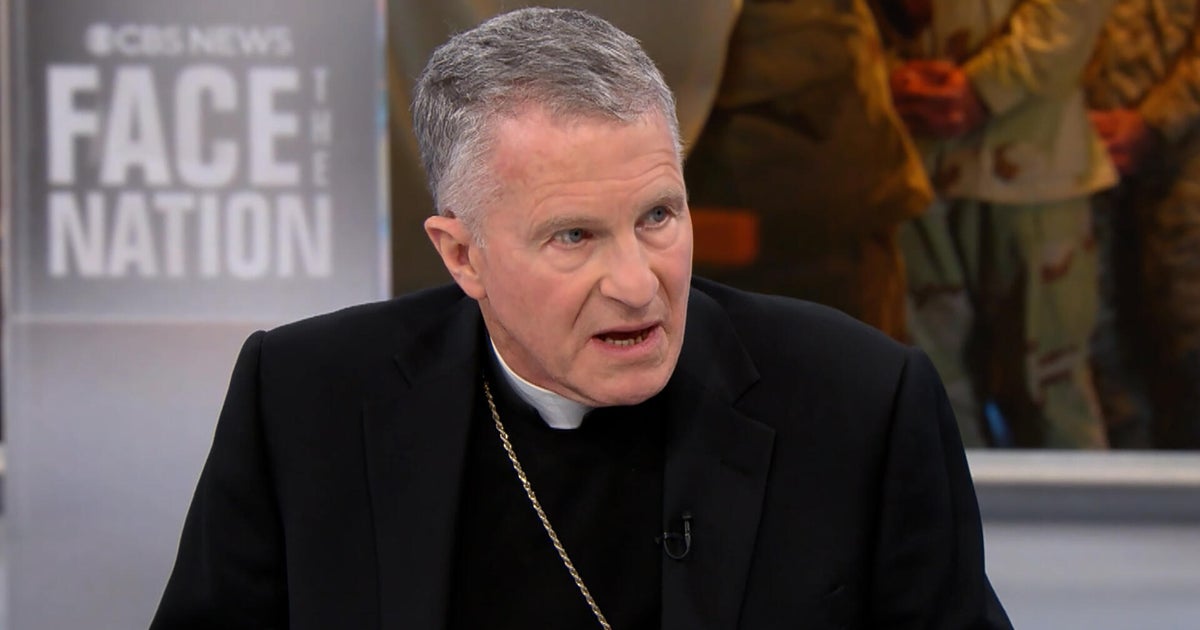
Archbishop Timothy Broglio holds one of the most distinctive positions in the Catholic Church. Unlike traditional bishops who oversee geographic dioceses with cathedrals and parish properties, Archbishop Broglio leads the Archdiocese for the Military Services U.S.A., a ministry that extends wherever American service members are stationed. His congregation isn’t found in pews on Sunday mornings in quiet neighborhoods—they’re on military bases, deployed aboard ships, and serving in conflict zones around the world. With over 200 Catholic priests serving as military chaplains under his spiritual guidance, Broglio’s ministry moves with the rhythm of military operations, following American troops from training exercises to active battlefields. In a revealing interview with Ed O’Keefe ahead of Easter 2026, the Archbishop opened up about the profound challenges facing both his chaplains and the service members they serve, particularly as American forces remain engaged in active combat operations in the Middle East and elsewhere. His words paint a picture of a church leader wrestling with timeless questions about faith, morality, and the terrible human cost of war—questions that have taken on renewed urgency as the United States finds itself in another conflict, this time with Iran.
The Realities of Ministry in a Time of War
When asked about providing spiritual guidance to service members during the current Middle East operations, Archbishop Broglio described a ministry in constant flux. The situation on the ground changes rapidly, and chaplains must adapt accordingly. In some areas, military families and dependents have been evacuated to Europe or back to the United States, leaving chaplains ministering to a dramatically reduced and transient flock. The faithful who once attended regular services have scattered—some relocated entirely, others temporarily housed in hotels awaiting their next orders. This creates what the Archbishop called “a whole different reality” for priests accustomed to building sustained pastoral relationships with their communities. Meanwhile, other chaplains have deployed alongside combat troops, where their ministry takes on a more “regular” pattern despite the challenging circumstances. These priests celebrate Mass in makeshift chapels, hear confessions in tents, and provide comfort to young men and women facing the possibility of death or the moral weight of taking another’s life. It’s ancient work—the church has sent priests to minister to soldiers for centuries—but it never becomes routine, especially when the moral justification for the conflict itself remains a matter of serious debate.
Applying Just War Theory to the Conflict With Iran
The heart of the interview addressed a question that has profound implications both for Catholic teaching and for the conscience of individual service members: Is the current war with Iran morally justified? This question isn’t academic for Archbishop Broglio or the thousands of Catholic troops under his spiritual care. The Catholic Church has long relied on “just war theory,” primarily developed by St. Augustine and refined by later theologians, which establishes strict criteria for when warfare can be considered morally acceptable. According to this framework, war must be waged only as a last resort, with the goal of establishing peace, using proportional force, and protecting innocent life. When pressed on whether the Iran conflict meets these standards, Archbishop Broglio offered a carefully considered but ultimately troubling assessment. He suggested that the war likely does not meet the criteria for a just war because it appears to be a preemptive strike—an attempt to neutralize a nuclear threat before that threat has actually materialized. While acknowledging that the perceived danger from Iranian nuclear weapons development is real, the Archbishop aligned himself with Pope Leo’s consistent calls for negotiation rather than military action. He conceded that determining who to negotiate with poses genuine difficulties, but emphasized that these diplomatic challenges don’t override the fundamental moral concern: lives are being lost on both sides, including among American troops, in a conflict that may not meet the church’s standards for justified warfare.
The Impossible Position of the Catholic Service Member
This theological assessment creates an agonizing dilemma for Catholic men and women in uniform. If the Archbishop is suggesting the war doesn’t meet the moral standards of their faith, what should a believing Catholic service member do when ordered into combat? This isn’t a hypothetical concern—it’s a real question that chaplains are hearing from troubled service members. Archbishop Broglio acknowledged the complexity with evident sympathy. The current structure of conscientious objection in the American military only recognizes absolute pacifism—opposition to all warfare—not selective objection to a particular conflict deemed unjust. This means a Catholic who comes to believe the Iran war is immoral cannot simply refuse to participate without facing serious consequences, potentially including court-martial. The Archbishop’s guidance depended on rank and position. For an enlisted Marine receiving direct orders in a combat situation, he suggested there’s little practical room for resistance unless an order is “clearly immoral”—such as a direct command to kill civilians. For such troops, the best counsel is to seek guidance from chaplains and follow the chain of command while trying to “do as little harm as you can” and “preserve innocent lives.” For higher-ranking officers—generals and admirals—there might theoretically be more space to question strategy or suggest alternatives, but the Archbishop noted that in conversations with such leaders, he’s found they face similar constraints and feel trapped by the same dilemmas.
Moral Injury and the Long Shadow of War
Beyond the immediate question of whether participation in this particular war is justified, Archbishop Broglio addressed a deeper, more universal wound that warfare inflicts on those who fight: moral injury. This concept, which the Archdiocese for the Military Services has devoted considerable attention to, recognizes that even when a service member follows legitimate orders and acts within the rules of engagement, the experience of killing another human being leaves psychological and spiritual scars. A soldier might be legally and even morally justified in taking an enemy combatant’s life to protect fellow troops, but that doesn’t erase the profound impact such an act has on the soul. The Archbishop described the church’s efforts to create “structures” and support systems to help service members heal from these experiences. This isn’t about assigning blame or making judgments about whether specific actions were right or wrong. Instead, it’s pastoral care aimed at helping individuals process and eventually find peace with traumatic experiences that, in many cases, will haunt them for the rest of their lives. This focus on moral injury represents the church meeting veterans where they are—acknowledging that even justifiable violence damages those who must commit it, and that healing requires more than simply being told they followed orders or did their duty. It requires patient, compassionate spiritual accompaniment through what may be a lifelong journey of reconciliation with the darkest moments of their service.
Faith, Rhetoric, and the Sanctification of War
The interview also touched on the controversial religious rhetoric surrounding the Iran conflict, particularly from Secretary of Defense Pete Hegseth, who has repeatedly invoked Jesus Christ when discussing military operations and has publicly prayed for American troops from the Pentagon press room. Archbishop Broglio chose his words carefully here, acknowledging everyone’s right to pray publicly while expressing concern about attempts to cast the war as something Christ would endorse. “The Lord Jesus certainly brought a message of peace,” the Archbishop noted, adding that war should always be a last resort. While he refrained from directly judging the Secretary’s motives or suggesting he lacks access to classified information that might have driven military decisions, the Archbishop was clear: “It’s hard to cast this war as something that would be sponsored by the Lord.” This measured critique aligns with recent statements from the current Pope, who declared that “God does not listen to the prayers of those who wage war, but rejects them”—a stark theological claim that puts him at odds with much of the triumphalist rhetoric surrounding the conflict. Archbishop Broglio evoked the memory of Pope Paul VI’s dramatic 1965 appearance at the United Nations, where he proclaimed “Never again war! Never again war!” The fact that nearly sixty years later, humanity remains mired in conflict speaks to both the persistence of war as a tool of statecraft and the church’s consistent, if often unheeded, prophetic witness against it. As Easter 2026 approached, with Passover underway and Ramadan recently concluded, the Archbishop reflected on the interfaith dialogue among military chaplains. Despite theological differences, he described a “genuine spirit of collaboration” among Catholic, Protestant, Jewish, and other faith leaders in uniform, united by their shared mission to provide spiritual care to troops. In a time of division and conflict, this unity of purpose among military chaplains offers a small but meaningful sign of hope—a reminder that people of different faiths can work together in service of something greater than themselves, even amid the chaos and moral complexity of war.