


NATO Chief Defends U.S. Military Action Against Iran Amid Alliance Tensions
Iran’s Growing Missile Threat Raises European Alarm
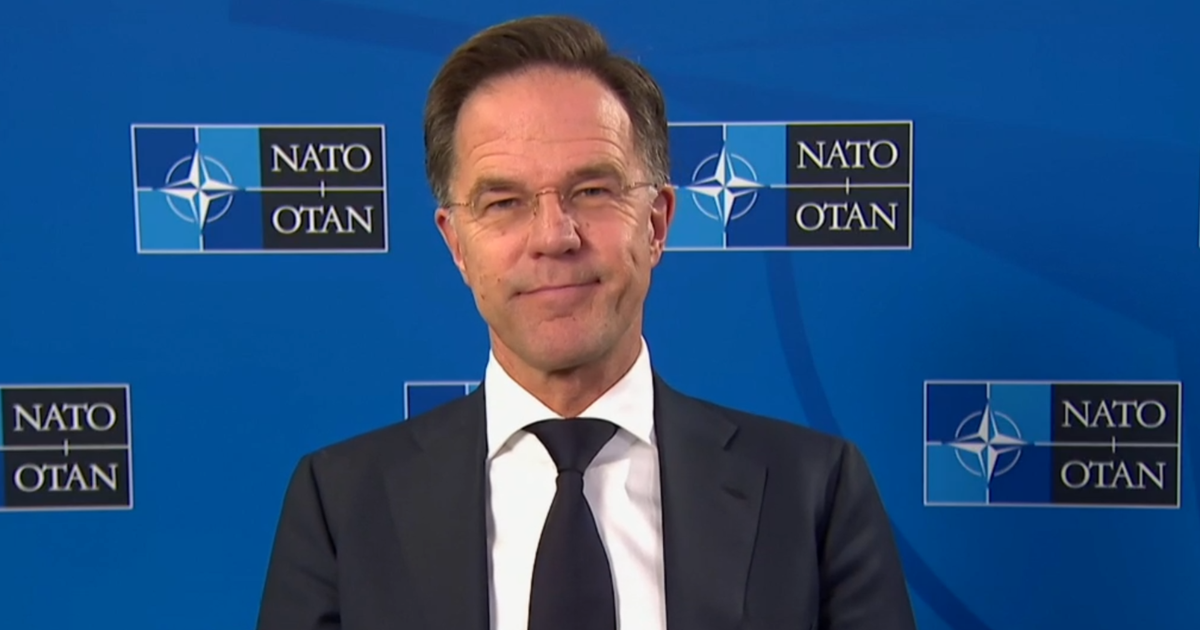
In a revealing interview on “Face the Nation,” NATO Secretary General Mark Rutte addressed mounting concerns about Iran’s expanding missile capabilities following a significant escalation in the Middle East. The discussion centered on Iran’s recent launch of two missiles at Diego Garcia, a remote island in the Indian Ocean that hosts a joint U.S.-UK military base. What makes this attack particularly alarming is the distance involved—approximately 4,000 kilometers from Iranian territory, representing the furthest reach Iran has ever demonstrated with its missile program. Israeli intelligence has assessed that these were intercontinental ballistic missiles capable of reaching major European capitals including Berlin, Paris, and Rome. While Rutte acknowledged that NATO cannot definitively confirm the Israeli assessment at this time, he emphasized that Iran is either already in possession of such capability or dangerously close to achieving it. The Secretary General drew a stark parallel to North Korea, warning that prolonged negotiations without decisive action could allow Iran to cross a threshold from which there’s no return. He argued that if Iran develops both nuclear and long-range missile capabilities, it would pose an existential threat not only to Israel and the Middle East but to Europe and global stability as a whole. This is precisely why Rutte strongly supports President Trump’s current military campaign to degrade Iran’s ballistic missile and nuclear programs, describing the operation as “crucial” for making the world safer. Despite potentially unpopular polling numbers in the United States, the NATO chief expressed hope that Americans would stand behind their president’s decision, framing it as necessary action to prevent Iran from becoming an “exporter of chaos” on a global scale.
Presidential Frustration With NATO Allies Boils Over
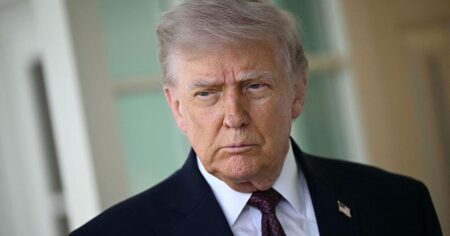
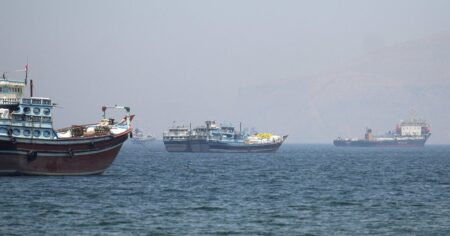
The interview also addressed the considerable tension that has emerged between President Trump and European NATO members regarding their response to the Iran crisis. Trump has publicly criticized NATO as a “paper tiger without the US” and specifically called out European nations for complaining about rising oil prices resulting from the conflict while simultaneously refusing to help secure the Strait of Hormuz, one of the world’s most critical oil shipping chokepoints. In particularly harsh language, the president labeled these allies as “cowards” and ominously promised, “We will remember.” Rutte attempted to contextualize this frustration by explaining the operational constraints that prevented early European involvement. According to the Secretary General, the United States spent weeks planning “Epic Fury”—the codename for the initial strike operation against Iran—but couldn’t share details with European allies or partner nations for security reasons. Revealing the plans prematurely would have compromised the element of surprise and jeopardized the effectiveness of the first attack. Rutte argued it was “only logical” that European countries needed several weeks after the operation began to organize their response and determine how they could contribute. The good news, according to Rutte, is that since the previous Thursday, twenty-two countries have come together to coordinate support for the operation. This coalition includes most NATO members along with important Asia-Pacific partners like Japan, South Korea, Australia, and New Zealand, as well as Middle Eastern nations Bahrain and the UAE. These countries are now working through three fundamental questions: what resources are needed, when they’re needed, and where they should be deployed to secure free navigation through the Strait of Hormuz.
Timeline Confusion and Combat Deployment Questions
A significant point of uncertainty discussed in the interview concerns the timeline for military operations and exactly when allied support will be required. President Trump has publicly stated that combat operations would last four to six weeks, which would place the conclusion sometime in early April. However, the president is simultaneously sending additional U.S. troops to the region and potentially requesting more funding from Congress, creating some confusion about the actual scope and duration of American involvement. Margaret Brennan pressed Rutte on this discrepancy, noting that her sources indicate European nations are reluctant to send forces during active combat operations. The Secretary General declined to discuss specific operational details on a program broadcast internationally, citing security concerns, but assured viewers that military planners from the coalition nations are working together on the crucial question of timing. He highlighted that the United Kingdom, under Prime Minister Keir Starmer’s leadership, is at the forefront of coordinating the European contribution. Rutte mentioned participating in a conference call with both Prime Minister Starmer and French President Emmanuel Macron, which led to the formation of the twenty-two-nation coalition. The emphasis, according to Rutte, is on ensuring readiness to secure the Strait of Hormuz, recognizing its critical importance to the global economy. This waterway handles roughly one-fifth of the world’s oil supply, making its security vital not just for regional stability but for economic stability worldwide.
NATO’s Article 5 Obligations and Defensive vs. Offensive Operations
The interview touched on a fundamental tension within NATO regarding the nature of the alliance itself. President Trump suggested that the European response—or lack thereof—to the Iran situation makes him question whether NATO would ever support the United States when needed, calling it “a great test” of the alliance. Brennan noted that some NATO members have privately expressed that NATO is fundamentally a defensive alliance, not an offensive one, and that they didn’t sign up for the kind of operation President Trump is currently conducting in Iran. This raises complex questions about the scope of NATO obligations and what member nations owe each other beyond the collective defense commitment enshrined in Article 5 of the NATO treaty. Rutte responded by emphasizing NATO’s history of successful cooperation under Trump’s leadership, pointing to the recent summit in The Hague where allies agreed to spend five percent of their GDP on defense. This landmark agreement represents the first time since the Eisenhower administration that European defense spending has equalized with American contributions—a long-standing goal of Trump dating back to his first term as president. Rutte argued this achievement serves the dual purpose of creating fairer burden-sharing within the alliance while also building the military capacity necessary to counter threats from Russia and other adversaries. The Secretary General expressed confidence that despite the current tensions, NATO allies always ultimately come together, though he acknowledged understanding the president’s frustration with the time required for European nations to organize their contribution to the Iran operation.
Russian Sanctions and the Ukraine Complication
Adding another layer of complexity to the transatlantic relationship, the interview addressed the controversial U.S. decision to lift sanctions on Russian oil exports. President Trump made this move to help control the spike in oil prices triggered by the Iran conflict, but it has caused significant concern in Europe. The President of the European Council publicly stated that this decision impacts European security, given that oil revenue directly funds Russia’s military capabilities and ongoing war in Ukraine. Treasury Secretary estimates suggest this policy change will provide approximately $2 billion to Russia, though Ukrainian President Volodymyr Zelenskyy has claimed the figure is closer to $10 billion. When Brennan confronted Rutte with the obvious question of whether this benefits Russian President Vladimir Putin, the NATO chief offered a diplomatic response that acknowledged the difficult balancing act facing President Trump. Rutte explained that the administration, including senior advisors Jared Kushner and Steve Witkoff along with Secretary of State Marco Rubio, is constantly working with Ukrainian officials to maintain maximum pressure on Russia to reach a negotiated settlement. He noted that he had recently spent an hour and a half with President Zelenskyy in London and confirmed that the Ukrainian leader wants to reach a deal to end the war. However, Rutte avoided directly answering whether the sanctions relief undermines the pressure campaign against Putin, instead emphasizing that the president must balance multiple competing interests simultaneously.
The Broader Question of American Commitment to European Security
The interview revealed deeper anxieties about the future of the transatlantic relationship and whether the Iran conflict represents a turning point in how the United States views its security commitments to Europe. President Trump explicitly connected European support for the Iran operation with his willingness to continue supporting European priorities, specifically mentioning Ukraine and framing the situation as a reciprocal arrangement: “I help Europe with Ukraine. Why aren’t they helping me?” This transactional approach to alliance relationships represents a significant departure from the traditional understanding of NATO as a community of shared values and mutual interests that transcend immediate quid pro quo calculations. Rutte attempted to reassure American audiences that NATO remains a vital and functional alliance, pointing to continued cooperation on Ukraine where the U.S. provides critical intelligence support and weapons while working alongside European nations to ensure Ukraine has what it needs to defend itself against Russian aggression. However, the underlying tension remains unresolved—European nations developed their defense and foreign policies over decades based on the assumption of reliable American security guarantees, while American political leaders increasingly question why the United States should bear disproportionate costs for defending allies who they perceive as unwilling to reciprocate when American interests are at stake. As the interview concluded, it was clear that while NATO’s institutional machinery continues to function and produce results like the twenty-two-nation coalition supporting Strait of Hormuz security, the political foundation of the alliance faces serious questions that won’t be easily resolved, regardless of how the Iran situation ultimately unfolds.