
Lebanon Crisis Deepens as Hezbollah Calls for End to Israeli Negotiations
Abandoning Appeasement Amid Escalating Violence
The fragile peace efforts between Lebanon and Israel appear to be crumbling as a prominent Hezbollah lawmaker has publicly called for an end to negotiations with Israel. Hassan Fadlallah, speaking on behalf of the Iranian-backed militant group that holds significant political power in Lebanon, told independent news outlet Al-Markazia that Lebanese authorities “must immediately abandon their appeasement options.” His stark comments came as Israeli strikes and ground operations continue in southern Lebanon, despite a ceasefire agreement signed in mid-April that was supposed to bring an end to the fighting. The ceasefire, which was later extended, has failed to stop the violence, with both sides repeatedly accusing each other of violations. This breakdown in diplomacy signals a dangerous new phase in a conflict that has already claimed thousands of lives and displaced communities across the region.
The humanitarian toll of the conflict has been staggering. According to Lebanon’s health ministry, more than 2,530 people have been killed since Israel launched major military operations against Hezbollah on March 2nd. The Israeli offensive came in response to Hezbollah firing rockets and drones at Israel in solidarity with Iran, creating a volatile three-way conflict that has drawn in regional powers. Recent strikes have been particularly deadly for civilians and emergency workers. Just this week, Lebanese health officials reported that an Israeli strike killed three rescue workers, compounding the tragedy from Sunday’s attacks that killed 14 people, including two children and two women. The violence isn’t one-sided—in Israel, the combined conflicts with Iran and Lebanon have resulted in at least 40 deaths, according to the independent Institute for National Security Studies. These numbers represent real families torn apart, communities devastated, and a region pushed further toward the brink of all-out war.
Iran Issues Stark Military Warnings Over U.S. Blockade
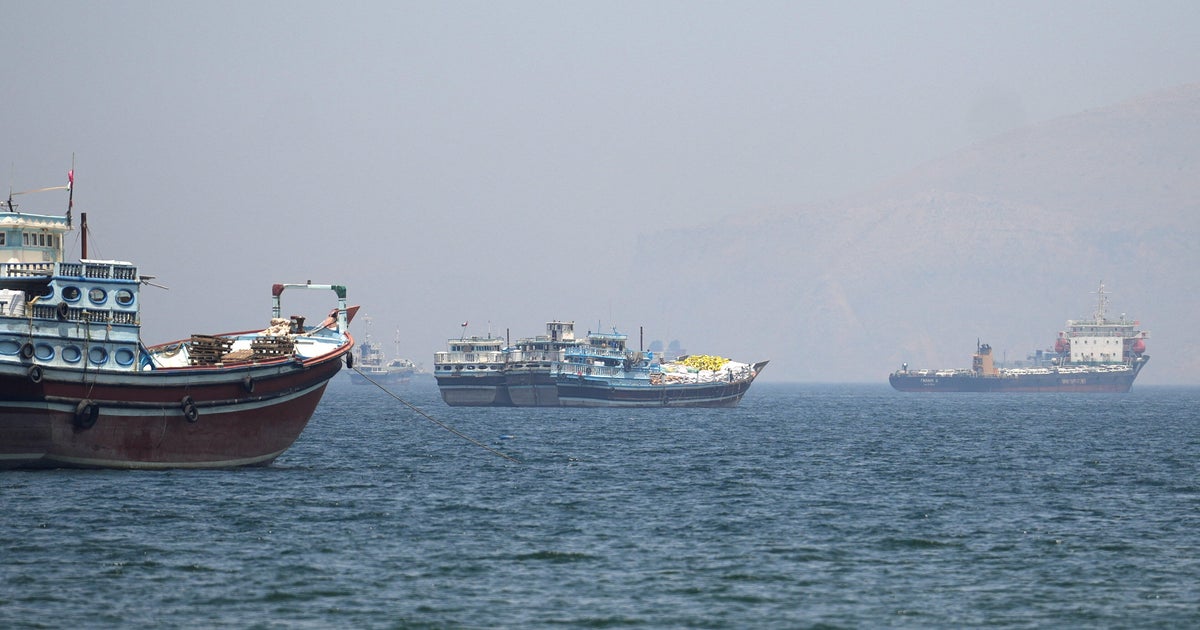
As the situation in Lebanon deteriorates, tensions between Iran and the United States have reached a critical point over the ongoing naval blockade of Iranian ports. Iran’s state-run Press TV delivered an ominous warning on Wednesday, citing an unnamed “high-ranking security source” who said that if the U.S. maintains its blockade, it will draw “practical and unprecedented military action” in response. The Iranian leadership’s “patience has limits,” according to the report, and a “punishing response is necessary” if the blockade continues. The U.S. military has successfully forced 39 vessels attempting to access Iranian ports to turn around, creating significant economic pressure on the Islamic Republic. The blockade has focused particularly around the Strait of Hormuz, one of the world’s most critical chokepoints for global energy supplies, through which roughly a fifth of the world’s oil passes.
The Iranian threats extend beyond just the Strait of Hormuz. A senior Iranian lawmaker renewed Tehran’s warning that it could ask its allies in Yemen—the well-armed Houthi rebel movement—to target shipping in the Bab el-Mandeb strait if the blockade isn’t lifted. Alaaeddin Boroujerdi, Deputy Head of Iran’s National Security Committee, emphasized that “the importance of Bab el-Mandeb may be no less than that of the Strait of Hormuz.” Like Hormuz, the Bab el-Mandeb is a crucial passage for global energy supplies in the Middle East, and the Houthis have attacked ships in the region before. The Houthis’ proven capability to disrupt shipping makes this threat credible and concerning for international commerce. Boroujerdi also claimed Iran could “easily respond” to the U.S. blockade by seizing ships in the region, noting that “we have not yet revealed our new cards.” He dismissed President Trump’s threats as “endless” and “empty,” insisting that “we still hold the upper hand” and that Iran “will never relinquish its control over the Strait of Hormuz.”
Economic Consequences Ripple Across the Globe
The economic fallout from the Middle East conflict is being felt worldwide, particularly at gas pumps across America and in Iran’s collapsing currency markets. Oil prices continued their upward climb on Wednesday, with international benchmark Brent Crude edging close to $115 per barrel in early morning trading—a dramatic increase from the roughly $70 per barrel before the war began in late February. Since oil accounts for 51% of the cost of a gallon of gasoline, American consumers are feeling the pinch directly. The average cost of gasoline in the U.S. hit a record $4.18 per gallon on Tuesday, then climbed again to $4.23 on Wednesday—an increase of $1.25 per gallon since the U.S. and Israel first attacked Iran on February 28th. There had been a brief period of relief when prices eased after hitting $4.17 on April 9 as peace talks showed promise, but negotiations have since lost momentum, dashing hopes for a quick resolution and sending oil prices higher once again.
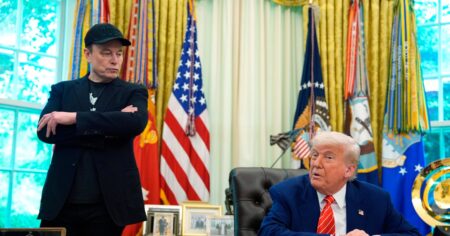
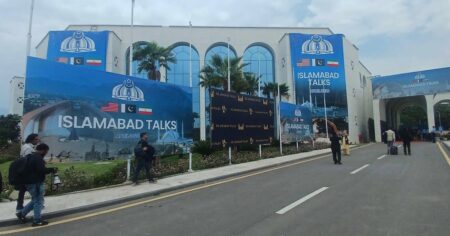
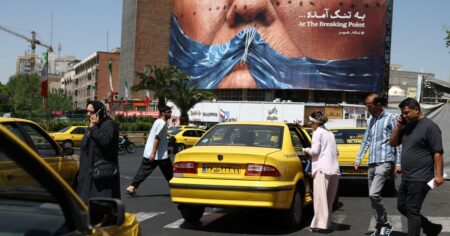
Meanwhile, in Iran, the economic situation has become desperate. The Iranian currency, the rial, plummeted to a record low against the dollar on Wednesday, trading at around 1.80 million rials to the dollar on the black market—a significant drop from the 1.70 million rials per dollar rate when the war began two months ago. President Trump has suggested that this economic pressure from the ongoing blockade should force Iran to accept a deal to end the war on his terms, posting on Truth Social that the Iranian regime needs to “get smart soon,” accompanied by an AI-generated photo of himself holding a rifle in front of explosions with the caption “NO MORE MR. NICE GUY!” The economic warfare strategy appears designed to bring Iran to the negotiating table, though so far Tehran has remained defiant. Pakistan’s Prime Minister Muhammad Shehbaz Sharif, who along with other Pakistani officials has served as the main communication channel between Washington and Tehran, told his cabinet that efforts to broker a peace deal “are still ongoing,” but acknowledged that “due to the war, our journey of economic development has come to a halt; petroleum prices are soaring to the skies.”
Humanitarian Crisis Deepens in Lebanon
Beyond the immediate casualties of warfare, Lebanon faces a looming humanitarian catastrophe that could affect more than a quarter of its population. A U.N.-backed report released Wednesday painted a grim picture: more than 1.2 million people in Lebanon are expected to face acute hunger due to the latest war between Israel and Hezbollah. The joint statement from the UN’s Food and Agriculture Organization, the World Food Program, and Lebanon’s agriculture ministry revealed that “1.24 million people—nearly one in four of the population analyzed—are expected to face food insecurity” at crisis levels or worse between April and August 2026. This represents a “significant deterioration” from before the war erupted in March, when an estimated 874,000 people, roughly 17 percent of the population, were experiencing acute food insecurity. The worsening situation is attributed to “conflict, displacement and economic pressures,” according to the statement, with the ongoing fighting disrupting agricultural production, supply chains, and the ability of families to earn income to purchase food.
The humanitarian implications extend beyond just food insecurity. Displacement has forced hundreds of thousands of Lebanese citizens from their homes, creating refugee camps and overwhelming social services. Healthcare facilities have been damaged or destroyed in the fighting, making it difficult for civilians to access medical care even as casualties mount. Schools have been closed or converted to shelters, interrupting education for an entire generation of children. The international community’s ability to provide humanitarian assistance has been hampered by the ongoing conflict, with aid workers themselves becoming targets—as evidenced by the three rescue workers killed in an Israeli strike this week. Lebanon, already struggling with a severe economic crisis before this latest conflict began, now faces the possibility of complete state failure if the fighting continues and international assistance doesn’t materialize quickly enough to prevent mass starvation and disease.
Nuclear Concerns and International Diplomatic Efforts
The nuclear dimension of the Iran crisis remains a central concern for international observers and negotiators. Rafael Grossi, head of the International Atomic Energy Agency (IAEA), told the Associated Press that the majority of Iran’s highly enriched uranium is likely still at its Isfahan nuclear complex, which was bombarded by airstrikes last year and faced additional attacks in this year’s U.S.-Israeli war. The IAEA has satellite images showing the effects of the latest strikes, but inspections ended at Isfahan when Israel launched a 12-day war in June that saw the United States bomb three Iranian nuclear sites. Grossi explained that satellite images showed a truck loaded with 18 blue containers—believed to contain highly enriched uranium—entering a tunnel at the Isfahan Nuclear Technology Center on June 9, 2025, just before the June war began, and those containers likely remain there. The IAEA hasn’t been able to inspect the site or verify that its seals remain intact, leaving the international community essentially blind to Iran’s nuclear activities at a critical moment.
President Trump indicated that King Charles of Britain agrees with the U.S. position that Iran shouldn’t have nuclear weapons, stating at a White House state dinner that “Charles agrees with me even more than I do. We’re never gonna let that opponent have a nuclear weapon.” However, Britain’s Ambassador to the U.S., Sir Christian Turner, reportedly told British students in February that the “only country” with a “special relationship” with the U.S. was “probably Israel,” a comment that raised eyebrows given the traditional understanding of the U.S.-U.K. alliance. Defense Secretary Pete Hegseth faces his first congressional grilling since the war began, appearing before the House Armed Services Committee to discuss the administration’s proposed $1.5 trillion defense budget for 2027—a historic increase that reflects the massive costs of the ongoing conflict. Democrats are expected to challenge him on the war’s escalating expenses, the depletion of critical U.S. munitions stockpiles, and controversial incidents like the bombing of a school that killed children. The hearing represents an important accountability moment for an administration that launched the war without explicit congressional approval, and lawmakers will likely demand answers about both the military strategy and the path toward a diplomatic resolution that currently seems frustratingly out of reach.