

Trump Orders Payment for Homeland Security Employees During Extended Shutdown
Presidential Action Amid Security Concerns
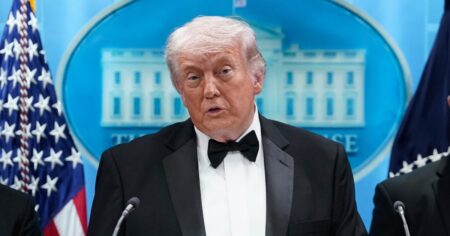
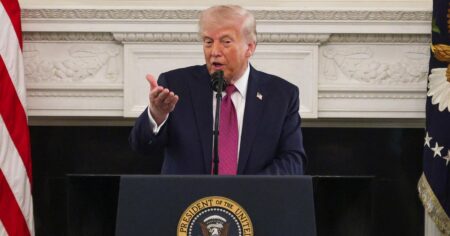
In a significant move on Friday, President Trump issued a directive aimed at ending the financial hardship faced by thousands of Department of Homeland Security employees who have been working without pay for nearly two months. The presidential memo instructs DHS Secretary Markwayne Mullin and Office of Management and Budget Director Russell Vought to identify and utilize available funds that have what the order describes as “a reasonable and logical nexus” to DHS operations. While the directive makes clear the president’s intention to compensate all affected workers, it notably leaves out specific details about which funding sources will be tapped or the precise legal mechanisms that will be employed to redirect those funds. This approach has raised questions among budget experts and legal scholars about the executive branch’s authority to move money without explicit congressional approval, though the administration appears confident in its legal standing to take this emergency action.
The Human Cost of Political Deadlock
The impact of this prolonged shutdown has been devastating for the dedicated public servants who keep America safe. According to estimates provided in the presidential memo, more than 35,000 DHS employees have been left without their regular paychecks, creating real financial emergencies for families across the country. Among those affected are civilian employees of the Coast Guard, who patrol our waters and conduct dangerous rescue operations; staff at the Federal Emergency Management Agency, who respond to natural disasters and help communities rebuild; and workers at the Cybersecurity and Information Security Agency, who defend our nation’s digital infrastructure from constant threats. These aren’t abstract numbers on a budget spreadsheet—they’re real people with mortgages to pay, children to feed, and bills piling up on their kitchen tables. Many have been forced to make impossible choices between paying rent and buying groceries, while still showing up to work each day to protect their fellow Americans.
Patchwork Solutions and Growing Frustrations
The Trump administration has been scrambling to address the payroll crisis through various stopgap measures, creating an uneven situation where some DHS employees have received paychecks while their colleagues continue to go without. Secret Service agents, who protect the president and other high-level officials, have been paid, as have active-duty Coast Guard military personnel. Employees at Immigration and Customs Enforcement and Customs and Border Protection received funding through last year’s One Big Beautiful Bill Act. Just last week, facing a crisis of Transportation Security Administration officers calling out sick and creating hours-long airport security lines that disrupted travel nationwide, President Trump ordered that TSA workers be compensated through emergency funding mechanisms. This piecemeal approach, while providing relief to some, has created understandable resentment among those still waiting for their paychecks and highlighted the dysfunction of allowing critical security agencies to operate under such uncertain conditions. The situation has put enormous stress on the workforce and raised serious questions about whether the nation can maintain its security readiness when the people responsible for protecting it are worrying about their own financial survival.
The Political Standoff Behind the Crisis
The roots of this crisis extend back to mid-February and a tragic incident that crystallized long-standing tensions over immigration enforcement. After two Americans were fatally shot by immigration agents in Minneapolis in a case that shocked the nation, congressional Democrats drew a line in the sand, refusing to approve funding for ICE and CBP without significant policy reforms to how these agencies operate and ensure accountability. Republicans, meanwhile, have insisted that immigration enforcement agencies need robust funding to carry out what they view as essential border security and interior enforcement operations. This fundamental disagreement over immigration policy has held hostage the funding for the entire Department of Homeland Security, an agency whose responsibilities extend far beyond immigration to include disaster response, cybersecurity, transportation security, and protecting the nation’s borders from all threats. The president’s memo places blame squarely on Democrats for what he characterizes as “callous treatment” of DHS employees, while Democrats counter that they’re fighting for necessary reforms to prevent future tragedies.
A Potential Path Forward Emerges
After weeks of seemingly intractable deadlock, signs of a possible compromise have begun to emerge from Capitol Hill. The Senate, in a rare display of bipartisan cooperation, approved legislation that would fund the vast majority of DHS operations while carving out ICE and portions of CBP for separate consideration. This approach would allow essential agencies like FEMA, the Coast Guard, TSA, and cybersecurity operations to reopen and their employees to receive back pay, while lawmakers continue negotiating the more contentious immigration enforcement components. Initially, House Republicans rejected this compromise, but political pressure from constituents concerned about both national security and the treatment of federal workers appears to have shifted the dynamics. Earlier this week, Republican leadership in both chambers signaled they’re prepared to move forward with the Senate’s plan, which would involve passing the bulk of DHS funding through regular order and then addressing ICE and CBP funding separately through the Senate’s reconciliation process—a parliamentary procedure that allows certain spending bills to pass with a simple majority, without needing Democratic votes. However, despite these promising signals, the House has yet to actually vote on the Senate’s bill, leaving tens of thousands of workers in continued uncertainty.
Looking Ahead: Security and Stability at Stake
President Trump’s declaration that the funding crisis constitutes “an emergency situation compromising the Nation’s security” reflects growing recognition across the political spectrum that this situation cannot continue. National security experts from both parties have warned that forcing critical security personnel to work without pay degrades morale, damages recruitment and retention, and creates vulnerabilities that adversaries might exploit. The president previewed his action on social media Thursday, promising to “soon sign an order to pay ALL of the incredible employees at the Department of Homeland Security,” acknowledging both their dedication and the unsustainability of the current situation. While the executive action to find funding represents a temporary solution to an immediate crisis, it doesn’t resolve the underlying political dispute that caused the shutdown in the first place. The real test will come in whether Congress can move quickly to pass the compromise legislation and establish a stable funding framework going forward. The thousands of DHS employees who have continued reporting to work despite missing paychecks—protecting borders, screening airline passengers, responding to emergencies, and defending against cyber attacks—deserve better than to be caught in the middle of political battles. Their dedication and professionalism during this crisis stands as a testament to their commitment to public service, but it also highlights the urgent need for elected officials to fulfill their responsibility to fund the government and ensure that those who protect the nation can also provide for their own families.