
Trump’s Mysterious Call: Former Presidents Deny Recent Contact Over Iran Policy
The Unverified Conversation
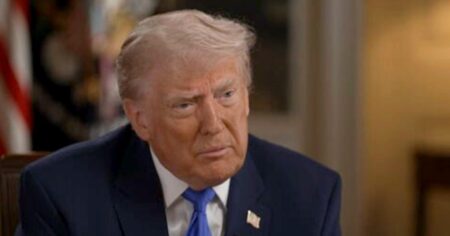
President Donald Trump made a curious claim on Monday, asserting not once but twice that he had spoken with a former U.S. president who allegedly confessed to regretting not taking military action against Iran during their own time in office. According to Trump, this unnamed predecessor expressed that they “wished” they had pursued the same aggressive approach Trump has been implementing over the past two weeks. However, this claim quickly unraveled when representatives for all four living former presidents—Bill Clinton, George W. Bush, Barack Obama, and Joe Biden—categorically denied that any such recent conversation had taken place. The incident raises questions about the nature of presidential communications and the accuracy of Trump’s public statements during a sensitive period of escalating tensions with Iran. When pressed by reporters to identify which former president had supposedly made these admissions, Trump repeatedly declined, stating he didn’t want to “embarrass” the individual or harm their career, adding somewhat paradoxically that the person in question “has no career” anymore.
Trump’s Account of Presidential Courage
The president first shared this anecdote during a Kennedy Center board of trustees meeting held at the White House, where he serves as chairman. In his characteristically expansive style, Trump framed his Iran policy as a long-overdue correction to decades of presidential inaction. “Look, for 47 years, no president was willing to do what I’m doing, and they should have done it a long time ago,” Trump declared, positioning himself as uniquely courageous among American leaders. “It would have been a lot easier. There’s no president that wanted to do it,” he continued, suggesting that while other presidents may have recognized Iran as a threat, they lacked the resolve to act decisively. Trump then elaborated on his alleged conversation: “I’ve spoken to a certain president, who I like, actually, a past president, a former president. He said, ‘I wish I did it, I wish I did,’ but they didn’t do it. I’m doing it.” This narrative served Trump’s broader message that he alone possesses the determination to address threats that previous administrations supposedly acknowledged but avoided confronting, painting his Iran strategy as both vindication and correction of past presidential failures.
The Denial and the Mystery Deepens
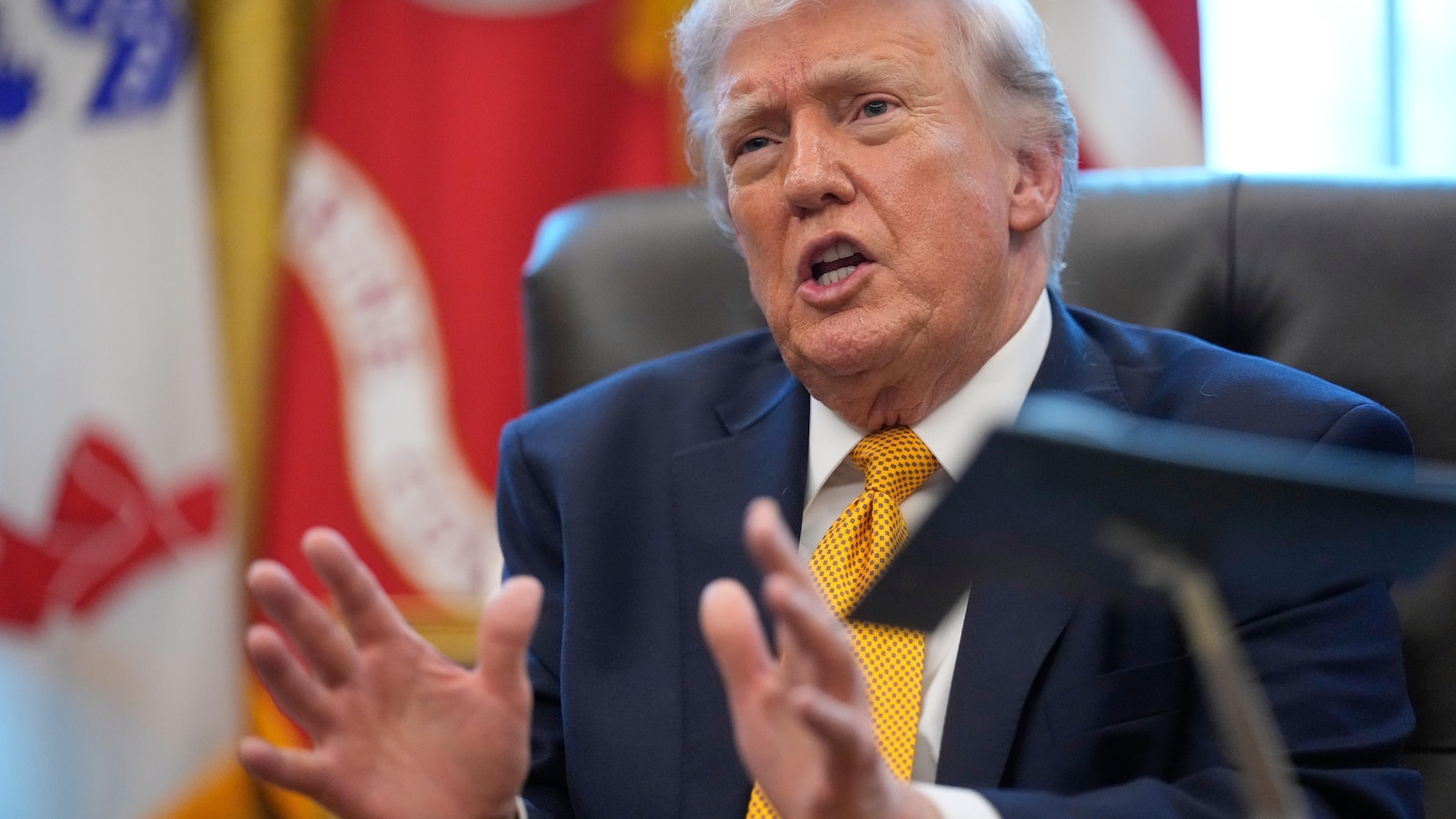
When reporters naturally sought to identify which former president Trump had supposedly consulted, representatives for Clinton, Bush, Obama, and Biden all confirmed—speaking on condition of anonymity because they were not authorized to discuss the former presidents’ private conversations—that none had been in recent contact with Trump. This blanket denial from all four living former presidents creates a significant credibility problem for Trump’s account. The White House did not respond to requests for comment after being informed that none of the former presidents acknowledged such a conversation. Trump’s repeated refusal to identify his source, while simultaneously providing tantalizing hints, only deepened the mystery. During a later appearance in the Oval Office where he announced Vice President JD Vance would lead a task force on federal benefit fraud, reporters continued pressing for the identity. “Was it George W. Bush?” one asked. “No,” Trump replied. “Was it Bill Clinton?” came the follow-up. “I don’t want to say. I don’t want to say,” Trump responded, before adding that “it’s somebody that happens to like me. And I like that person, who’s a smart person. But that person said, ‘I wish I did it,’ OK, but I don’t want to get into who, OK. I don’t want to get them into trouble.”
Context of Presidential Relationships
The last time Trump and all four living former presidents were together was at Trump’s inauguration on January 20, 2025—well before the current escalation with Iran. Trump’s relationships with these predecessors have been notably varied and complex. He has been particularly harsh toward Biden and Obama, frequently declaring Biden the “worst president in the history of our country” and criticizing Obama for negotiating what Trump called a “horrible deal” with Iran regarding its nuclear program. Trump withdrew the United States from that agreement during his first term in office, a decision that fundamentally reshaped America’s relationship with Iran and the broader Middle East. However, Trump has recently expressed surprisingly warm sentiments toward Bill Clinton, stating in a February 4 NBC News interview that “I liked Bill Clinton. I still like Bill Clinton. I liked his behavior toward me. I thought he got me, he understood me.” These comments came in the context of Trump saying it “bothers” him that Clinton had been called to give a congressional deposition regarding his friendship with convicted sex offender Jeffrey Epstein. This relatively sympathetic stance toward Clinton has led some observers to speculate that Clinton might have been the former president Trump referenced, though Clinton’s representatives firmly denied any recent conversation.
Implications for Presidential Credibility
This episode raises important questions about presidential communication and truthfulness during a period of significant international tension. When a sitting president makes claims about private conversations with predecessors regarding matters of war and peace, the accuracy of those statements carries substantial weight. Trump’s assertion served a clear rhetorical purpose: to bolster his own decision-making by suggesting that even a political opponent or predecessor now regrets not taking similar action. However, the universal denial from all former presidents’ representatives undermines this narrative and raises concerns about whether the conversation occurred as described, occurred at all, or perhaps happened so long ago—possibly even before Trump’s current term—that representatives could honestly say there had been no “recent” contact. The careful wording from the former presidents’ camps—that they had not spoken with Trump “recently”—leaves some room for interpretation, though it effectively contradicts Trump’s implication that this was a current consultation relevant to his ongoing Iran policy. The incident also highlights the unusual nature of Trump’s public communication style, which frequently includes unverifiable anecdotes, unnamed sources, and claims that remain impossible to confirm or definitively refute.
The Broader Context of Iran Policy
Beyond the question of whether this conversation actually occurred lies the more substantive issue of America’s approach to Iran. Trump’s characterization of 47 years of presidential inaction oversimplifies a complex history of U.S.-Iran relations that has included diplomatic engagement, sanctions, covert operations, and military actions of various kinds. Different presidents have pursued different strategies based on their assessments of American interests, regional stability, and the effectiveness of military versus diplomatic approaches. Trump’s suggestion that his predecessors all knew they should have acted more aggressively but lacked courage ignores the legitimate policy debates about whether military escalation serves long-term American interests or creates more problems than it solves. By claiming that an unnamed former president now regrets not pursuing Trump’s approach, the current president attempts to position his strategy as obviously correct in hindsight—a claim that would carry more weight if it could be verified. As tensions with Iran continue and the consequences of Trump’s approach become clearer, the question of whether previous presidential restraint represented weakness or wisdom will likely remain contested, regardless of whether any former president actually expressed regret to Trump about their own Iran policies or whether this conversation existed only in the president’s imagination or recollection of some earlier, different exchange.