


President Trump’s Careful Word Choice: Why He Won’t Call the Iran Conflict a “War”
The Semantics of Military Action
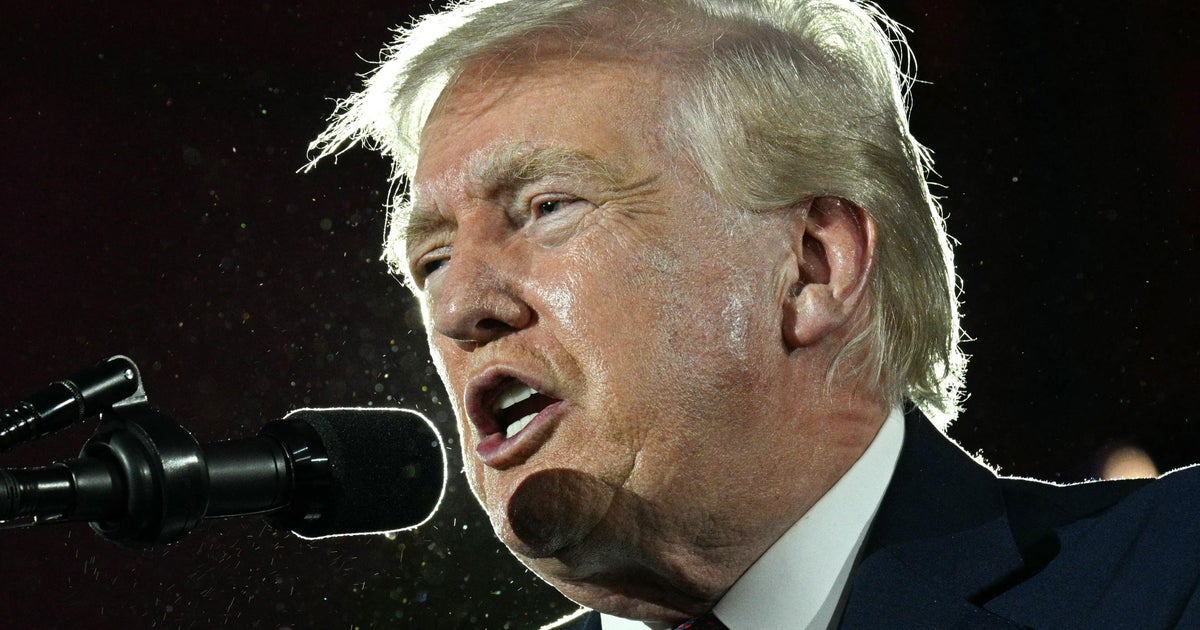
President Trump made headlines late Wednesday evening when he openly acknowledged his deliberate avoidance of the word “war” to describe the ongoing military conflict with Iran. Speaking candidly at a fundraising event for House Republicans, the president revealed the strategic reasoning behind his careful word choice. “I won’t use the word ‘war’ because they say, if you use the word war, that’s maybe not a good thing to do,” Trump explained to the assembled audience. Instead, he’s opted for the phrase “military operation,” which he believes more accurately describes what’s happening while sidestepping potential legal complications. This linguistic dance isn’t new for the president, who has been consistently avoiding the term throughout the conflict. Earlier in the week, he noted that “people don’t like me using the word ‘war,’ so I won’t,” while pointing out that Democrats have been calling it a war. In one particularly telling moment earlier in the month, Trump described the situation as “an excursion that will keep us out of a war,” framing the military action as a preventative measure rather than full-scale warfare. The president has repeatedly emphasized his belief that this is a short-term engagement that will conclude quickly, though he has occasionally slipped up and used the word “war,” including during the same Wednesday speech where he claimed “the war essentially ended a few days after we went in.”
The Constitutional Question at the Heart of the Debate
Behind President Trump’s careful language lies a complex constitutional and legal question that has plagued American presidents for decades: does the commander-in-chief need Congress’s approval before launching military strikes? The U.S. Constitution explicitly grants Congress the power to declare war, recognizing the gravity of committing the nation to armed conflict. However, it simultaneously designates the president as the commander-in-chief of the armed forces, giving the executive branch direct control over military operations. This constitutional tension has created ongoing debates about presidential war powers since the founding of the republic. The situation became more formally structured with the passage of the War Powers Act in the 1970s, legislation born out of concerns about presidential overreach during the Vietnam War. This law generally limits military hostilities to 60 days unless Congress specifically authorizes the use of military force, creating a legal framework meant to balance executive action with legislative oversight. However, presidents from both political parties have repeatedly tested and challenged the boundaries of this law, with Trump going so far as to argue that the War Powers Act itself is unconstitutional, rejecting its constraints on his authority as commander-in-chief.
Democratic Opposition and Congressional Gridlock
Democratic lawmakers have been vocal in their criticism of President Trump’s actions, arguing that he has operated without proper legal authority by launching strikes against Iran without first seeking congressional authorization. They’ve raised serious questions about whether Iran actually posed an “imminent” threat to the United States, the standard typically required to justify unilateral military action without congressional approval. This skepticism has translated into concrete legislative action, with Senate Democrats attempting to rein in the president’s military powers through multiple votes. Since the conflict began, Senate Democrats have held three separate votes aimed at ending the U.S. offensive in Iran unless Congress specifically gives permission for it to continue. However, these efforts have consistently fallen short, blocked primarily by Republican opposition who have stood behind the president’s actions. The most recent vote on Tuesday illustrated the stark partisan divide on this issue: every Democrat except Senator John Fetterman of Pennsylvania voted to limit Trump’s war powers in Iran, while every Republican except Senator Rand Paul of Kentucky voted against the measure. Senator Chris Murphy of Connecticut, who sponsored the war powers resolution, expressed his frustration ahead of Tuesday’s procedural vote, stating: “I don’t think we have had a moment like this, where the United States has been unquestionably at war with a foreign power, where American soldiers are dying as we speak, and it is being hidden actively from the public by the Congress.” His words captured the deep concern among Democrats that the conflict represents a dangerous precedent for executive overreach.
The Administration’s Legal Justification
The Trump administration and their Republican allies in Congress have mounted a robust defense of the military action, arguing that the conflict is both legally and constitutionally justified based on the threat posed by Iranian missiles and military capabilities. In an official notice to Congress submitted after military operations began, President Trump outlined his legal reasoning for the strikes. “I acted pursuant to my constitutional authority as Commander in Chief and Chief Executive to conduct United States foreign relations,” Trump wrote, asserting his inherent presidential powers as sufficient justification. The president further explained his rationale by describing the diplomatic efforts that preceded military action: “Despite my Administration’s repeated efforts to achieve a diplomatic solution to Iran’s malign behavior, the threat to the United States and its allies and partners became untenable.” This framing presents the military strikes not as a choice of first resort, but as a necessary response after diplomatic channels had been exhausted and the security threat had become too severe to ignore. The administration’s position relies on a broad interpretation of presidential authority, arguing that the commander-in-chief has inherent powers to protect American interests and respond to threats without waiting for congressional approval, especially when timing is critical to national security.
Republican Lawmakers Echo the President’s Framing
Congressional Republicans have largely aligned themselves with President Trump’s careful language and framing of the conflict, echoing his preference for terms other than “war.” House Speaker Mike Johnson exemplified this approach in a press conference held shortly after the United States and Israel began striking targets in Iran. “We’re not at war right now,” Johnson told reporters. “We’re four days into a very specific, clear mission.” This characterization emphasizes the limited scope and defined objectives of the military operation, suggesting a targeted action with clear endpoints rather than an open-ended conflict. By describing it as a “very specific, clear mission,” Republican leaders are attempting to distinguish this operation from previous lengthy military engagements that have stretched American resources and public patience. This messaging strategy serves multiple purposes: it minimizes concerns about another protracted Middle Eastern conflict, it supports the president’s assertion that congressional authorization isn’t necessary for limited operations, and it reassures the public that there’s a plan with defined goals rather than mission creep. The Republican framing presents the Iran strikes as fundamentally different from traditional warfare, more akin to a surgical strike or counter-terrorism operation than a declaration of war requiring congressional debate and authorization.
Historical Precedent and the Long Debate Over Presidential War Powers
The current controversy over whether to call the Iran conflict a “war” isn’t unprecedented in American political history—it’s actually the latest chapter in a long-running debate about presidential authority and military engagement. A particularly relevant historical parallel occurred during the Obama administration in 2011, when then-President Barack Obama authorized airstrikes against Libyan dictator Muammar Gaddafi without seeking congressional authorization. At that time, Obama administration officials engaged in similar linguistic gymnastics to avoid characterizing the military action as a “war” that would require congressional approval. Deputy National Security Advisor Ben Rhodes offered a detailed explanation that sounds remarkably similar to current arguments: “I think what we are doing is enforcing a resolution that has a very clear set of goals, which is protecting the Libyan people, averting a humanitarian crisis and setting up a no-fly zone,” Rhodes told reporters, referring to a United Nations Security Council resolution. He acknowledged that “obviously that involves kinetic military action, particularly on the front end,” but insisted that “the nature of our commitment is that we are not getting into an open-ended war, a land invasion in Libya.” This historical example demonstrates that the tension between presidential authority and congressional war powers transcends party lines, with executives from both parties seeking maximum flexibility to respond to international crises while lawmakers from both parties periodically asserting congressional prerogatives. The fundamental constitutional question remains unresolved: in an era of rapidly evolving threats and the need for quick military responses, how do we balance the practical need for presidential decisiveness with the constitutional requirement for congressional oversight of war-making powers? As the Iran situation continues to develop, this age-old debate takes on renewed urgency with real consequences for American service members, regional stability, and the constitutional balance of powers that has guided American governance for over two centuries.