


Ukraine Emerges as Defense Partner While U.S. Grapples with Weapons Shortages
A Shifting Dynamic in Global Defense Support
The world of international defense assistance is experiencing a dramatic reversal that few could have predicted just months ago. President Trump has returned to Congress with an extraordinary request: at least $200 billion in additional funding for the war in Iran. What makes this development particularly striking is the reason behind it—according to the President, U.S. weapons stockpiles have been significantly depleted, partly due to the extensive military aid provided to Ukraine as it continues defending itself against Russia’s full-scale invasion. “This is a very volatile world,” Trump explained on Thursday. “We want to have vast amounts of ammunition, which we have right now—we have a lot of ammunition, but it was taken down by giving so much to Ukraine.” This statement reflects an ongoing concern throughout Trump’s second term about America’s ability to maintain adequate defense reserves while supporting allies abroad. The administration has consistently criticized previous decisions to provide Ukraine with armaments that the U.S. defense industry struggled to replace quickly enough. The tension between supporting Ukraine and maintaining America’s own military readiness came to a head last summer when, following a comprehensive review of weapons stockpiles, the U.S. temporarily halted shipments of certain weapons systems to Ukraine. Though these transfers eventually resumed under a restructured arrangement where NATO allies shoulder more of the financial burden, the pause sent a clear message: the White House views support for Ukraine’s defense as potentially compromising America’s ability to respond to future conflicts.
Ukraine Transforms from Recipient to Defense Industry Partner
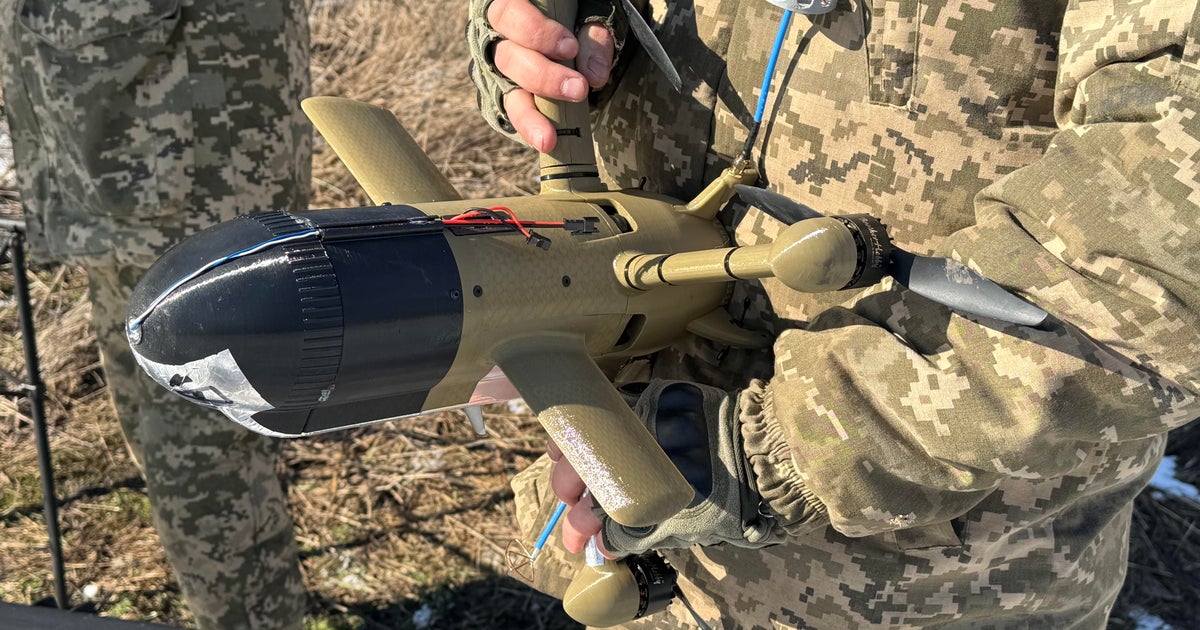
In a remarkable turn of events, Ukraine is now positioned to help address the very concerns its defenders once raised about depleted U.S. weapons stocks. As the conflict in Iran rapidly consumes America’s supply of interceptor missiles, Ukrainian officials have stepped forward with proposals to help replenish these critical defensive systems. This weekend marked a significant milestone when Ukrainian representatives met with Trump administration officials to discuss several collaborative initiatives, including a deal for the joint production of drones and drone interceptors. President Volodymyr Zelenskyy has indicated that this agreement alone could be valued between $35 billion and $50 billion—a substantial economic opportunity for both nations. Furthermore, Zelenskyy has revealed that several additional deals are being negotiated with America’s Persian Gulf allies, whose desperate need for Ukrainian drone interception technology has become increasingly public as Iran continues its relentless aerial attacks. Defense experts analyzing these emerging partnerships suggest their significance extends far beyond addressing immediate air defense requirements in the Middle East. These agreements could establish the foundation for long-term U.S.-Ukraine defense industrial collaborations that fundamentally reshape both countries’ military manufacturing capabilities and strategic relationships. What began as a one-way assistance relationship is evolving into a genuine partnership where Ukraine brings valuable expertise, innovation, and production capacity to the table.
The Patriot Missile Crisis and Iran’s Appetite for Interceptors
When the United States began drawing down its own weapons arsenals to support Ukraine in 2022, concerns quickly emerged about the American defense industry’s capacity to replace these systems in a timely manner. Among the most worrying potential shortages were the Patriot Advanced Capability-3 (PAC-3) interceptor missiles, which rank among the most effective weapons available for shooting down incoming ballistic missiles. Matt Tavares, a defense analyst who has advised the Pentagon across multiple administrations, explained to CBS News: “We realized that we now had a defense industrial base with no excess capacity to ramp up for wartime requirements. Some of the equipment that we gave to the Ukrainians could not be immediately backfilled by the defense industry.” Upon President Trump’s return to power in 2025, his administration committed to accelerating production of air defense munitions while exercising greater discretion in distributing them to allies. Starting last summer, some military shipments were redirected—notably, 20,000 anti-drone missiles originally designated for Ukraine were instead sent to U.S. Air Force units deployed in the Middle East. In January, the Pentagon announced an agreement with Lockheed Martin to triple the production rate of Patriot interceptors, a clear acknowledgment of the shortage crisis. However, the outbreak of war with Iran has dramatically complicated these weapons conservation efforts and exposed just how quickly modern conflicts can consume expensive defensive munitions.
The Staggering Consumption Rate in the Middle East
The numbers tell a startling story about the intensity of the Iranian conflict compared to Ukraine’s defensive needs. According to President Zelenskyy, America’s Middle East allies expended approximately 800 Patriot interceptors during just the first week of the Iran war as they defended against Tehran’s retaliatory strikes. To put this in perspective, Ukraine has used only 600 Patriot interceptors over four full years of war with Russia—meaning America’s Gulf allies consumed more of these critical missiles in seven days than Ukraine has used in 1,460 days of conflict. This extraordinary consumption rate is likely a major factor driving the White House’s request for an additional $200 billion from Congress—a sum nearly four times larger than the $70 billion in military aid provided to Ukraine since 2022. Thomas Karako, who directs the Missile Defense Project at the Center for Strategic and International Studies in Washington D.C., emphasized this point when speaking with CBS News: “To the extent that U.S. stockpiles are being depleted, it has much more to do with what has been going on in the Middle East over the last nine months than what has happened in Ukraine.” This observation fundamentally challenges the narrative that supporting Ukraine has been the primary drain on American weapons reserves. Instead, it’s the sudden and intense demands of the Iran conflict that have created the current crisis, revealing vulnerabilities in the U.S. defense industrial base that were perhaps masked when support to Ukraine was more carefully managed and distributed over time.
Ukraine’s Drone Expertise Becomes a Strategic Asset
As the Iran war continues to deplete interceptor stockpiles at an alarming rate, both the United States and its Gulf allies have increasingly turned to Ukraine for its hard-won expertise in drone defense—knowledge gained through years of defending against Russian attacks. President Zelenskyy revealed last week that Ukraine has deployed more than 200 drone specialists to the Middle East to help protect military installations and civilian population centers from Iranian drone attacks. This represents a significant contribution to regional defense efforts and demonstrates Ukraine’s transformation from aid recipient to security provider. In exchange for this expertise and assistance, Ukrainian officials hope to receive increased shipments of the Western interceptor missiles that have proven so crucial to their own air defense network. When journalists in Kyiv pressed Zelenskyy last week about whether missile shipments from the U.S. and Europe to Ukraine might be further disrupted due to the Iran war, he candidly acknowledged that “the risk is very high” and stressed that obtaining more Patriot missiles remains “our priority.” However, the defense cooperation agreements currently being negotiated between Kyiv and Washington, as well as between Kyiv and various Gulf states, are unlikely to result in simple direct exchanges of armaments that would immediately bolster Ukrainian or Middle Eastern air defenses. As Dara Massicot, a senior fellow at the Carnegie Endowment for International Peace, explained to CBS News: “The problem is how quickly we can actually produce Patriot interceptors. I would imagine that the Gulf, right now, they want to hold onto all of their interceptor stocks because they don’t know when they’ll be backfilled.”
Building Long-Term Strategic Partnerships Beyond Immediate Needs
While Ukraine may not see immediate returns in the form of additional defensive weapons, the long-term strategic benefits of these emerging partnerships could be substantial. Massicot suggested that for Ukraine, the value lies in future capabilities: “There is a way here where they could partner on drones, get that capital investment, and then that money that flows into the defense sector can be used to develop niche things like long-range strike or air defense know-how.” This approach would establish Ukraine not just as a recipient of Western military aid but as an integrated partner in the broader Western defense industrial ecosystem. The political benefits for Ukraine could prove equally valuable, even if the immediate military advantages are limited. Thomas Karako noted this potential when he observed: “This could be a moment where the Ukrainians helping out here elicit some good will on the part of the United States, and show that they are a contributor, and not merely a drain on security resources.” This shift in perception—from Ukraine as a burden on Western defense resources to Ukraine as a contributor to Western security—could fundamentally alter the political dynamics surrounding continued support for Ukrainian defense efforts. By demonstrating its capacity to provide valuable defense expertise, technology, and production capabilities, Ukraine is establishing itself as a strategic asset rather than merely a strategic obligation. These developments represent a remarkable evolution in international defense cooperation, born from the harsh lessons of modern conflicts that consume advanced munitions at rates that peacetime production simply cannot match.