
Trump Threatens Iranian Forces While Announcing Major Military Operation
U.S. and Israeli Forces Launch Coordinated Strikes on Iran
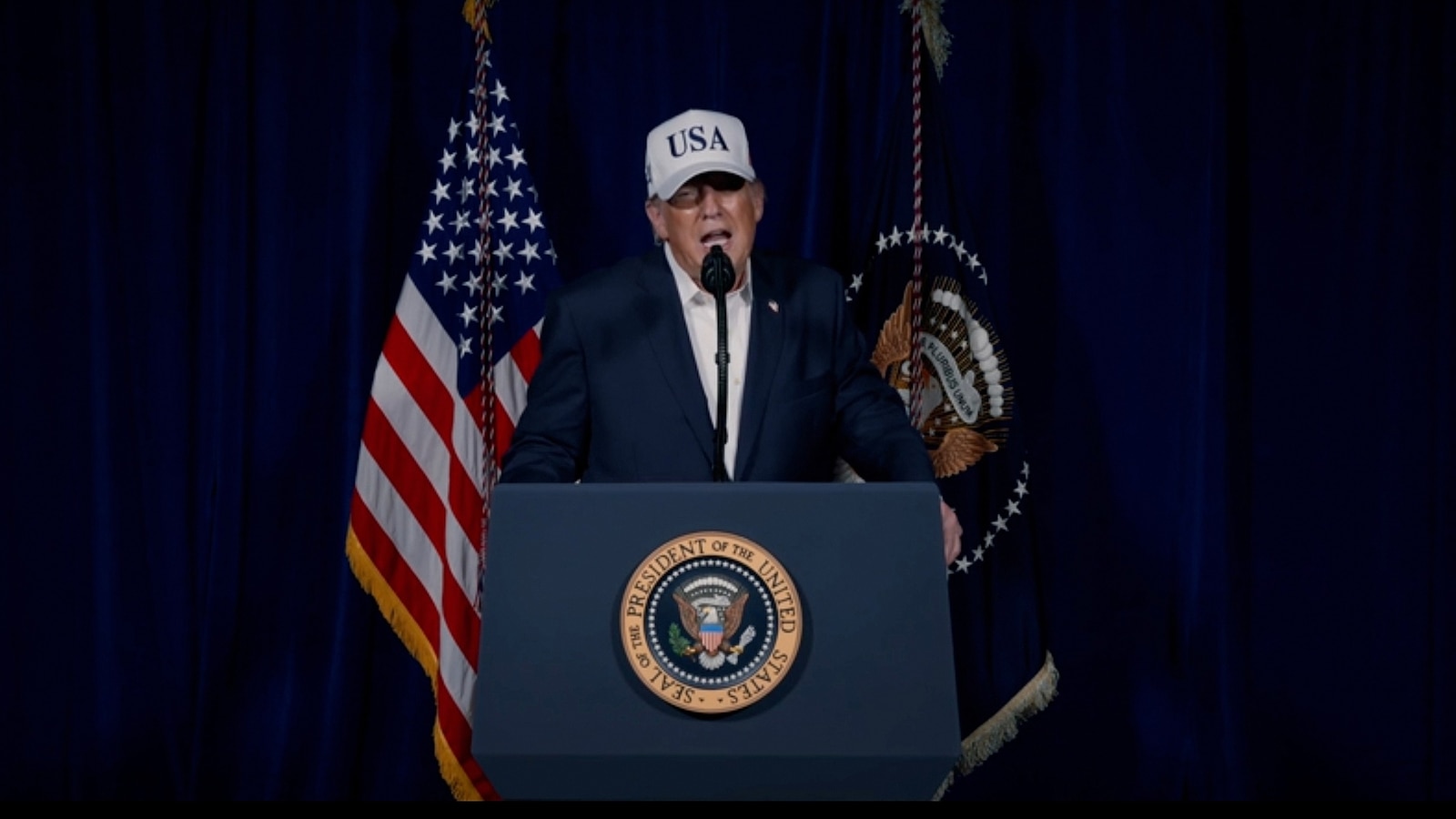
In a dramatic overnight video address, President Donald Trump announced a “massive and ongoing operation” against Iran and its regional allies, warning elite Iranian forces of “certain death” unless they immediately surrender their weapons. The coordinated U.S.-Israeli military campaign began early Saturday morning, marking a significant escalation in tensions between Washington and Tehran. Trump’s stark message to members of the Islamic Revolutionary Guard, Iran’s armed forces, and police personnel offered a choice between total immunity if they lay down their arms or face lethal consequences if they continue to resist. The president framed the operation as a liberation effort, telling the Iranian people that “the hour of your freedom is at hand” and encouraging them to seize control of their government once American forces complete their mission. He characterized this moment as a potentially once-in-a-generation opportunity for the Iranian people to reclaim their country from what he described as a radical dictatorship.
The military strikes targeted multiple Iranian facilities, with explosions and rising smoke plumes visible across Tehran’s skyline as residents watched in shock. Iranian Foreign Minister Abbas Araghchi quickly condemned the attacks as “wholly unprovoked, illegal, and illegitimate,” reflecting the regime’s position that the strikes violated international law. Trump did not provide specific intelligence or evidence explaining what immediate threat necessitated the military action at this particular moment, though he referenced Iran’s continued nuclear development and regional activities as ongoing concerns. The president acknowledged the grave nature of the operation in sobering terms, warning the American people that “courageous American heroes may be lost” and that casualties are likely. Despite this grim reality, Trump insisted the operation serves a noble purpose, emphasizing that “we’re doing this not for now, we’re doing this for the future,” suggesting the administration views the campaign as essential for long-term national security rather than addressing an immediate crisis.
Nuclear Ambitions and Failed Diplomacy Drive Military Action
Trump pointed to Iran’s persistent pursuit of nuclear capabilities as a primary justification for the military operation, explaining that diplomatic efforts to negotiate a verifiable agreement had failed. According to the president, Iran repeatedly refused to abandon its nuclear ambitions despite multiple opportunities for a peaceful resolution. While Iranian officials have consistently stated they do not seek nuclear weapons and only want nuclear power for civilian purposes, Trump’s administration clearly did not accept these assurances. The current situation represents a continuation of tensions that have defined U.S.-Iran relations for years, particularly since Trump withdrew from the Obama-era nuclear deal during his first presidential term. That agreement, formally known as the Joint Comprehensive Plan of Action, had placed strict limitations on Iran’s nuclear program in exchange for sanctions relief, but Trump argued it was fundamentally flawed and failed to adequately protect American interests.
The president revealed that after conducting limited strikes on Iranian nuclear facilities in June 2025 during “Operation Midnight Hammer,” the regime simply continued rebuilding its nuclear infrastructure rather than changing course. This pattern of destruction and reconstruction apparently convinced Trump’s administration that diplomatic pressure and limited military strikes were insufficient to address the threat. Trump stated emphatically that “we can’t take it anymore,” suggesting a breaking point had been reached where more decisive action became necessary. Beyond the nuclear concerns, Trump highlighted Iran’s development of long-range missile technology capable of threatening U.S. allies throughout Europe and American troops stationed at overseas bases. Perhaps most alarming to American audiences, the president warned that these missiles “could soon reach the American homeland,” framing the operation as defensive in nature and necessary to protect U.S. territory from potential future attacks.
Comprehensive Strategy Targets Iran’s Military Capabilities
The scope of the military operation extends far beyond Iran’s nuclear facilities, encompassing a comprehensive effort to degrade the country’s offensive capabilities across multiple domains. Trump outlined an ambitious list of targets, promising to “destroy their missiles and raise their missile industry to the ground” until it is “totally obliterated.” The operation also aims to “annihilate” Iran’s Navy, which has long been a source of concern due to its ability to disrupt shipping through the strategically vital Strait of Hormuz, through which a significant portion of the world’s oil supply passes. Additionally, Trump stated the operation would eliminate the capabilities of Iran’s regional proxy forces, which have destabilized various parts of the Middle East and attacked U.S. forces stationed in countries like Iraq and Syria. By targeting these proxy networks, the administration hopes to reduce Iran’s ability to project power throughout the region and threaten American personnel.
Military analyst and ABC News contributor Steve Ganyard, a retired Marine Corps colonel with extensive national security experience, assessed that the operation would likely continue for several days rather than concluding quickly. Ganyard emphasized that Trump’s remarks suggested “a long-term effort” rather than a brief, limited strike. The list of targets appears significantly more extensive than those hit during previous operations like “Operation Midnight Hammer,” indicating a qualitative escalation in American military engagement with Iran. Ganyard noted the strategic importance of the targets, explaining that by hitting nuclear sites, missile facilities, and naval installations, the United States is attempting to eliminate Iran’s ability to affect global stability. The inclusion of naval targets is particularly significant given Iran’s strategic position along critical waterways that could impact the global economy if disrupted, making this operation relevant not just to regional security but to worldwide economic interests.
Regional and Global Implications
The coordinated nature of the strikes, with Israel participating alongside American forces, reflects the shared concerns between Washington and Jerusalem regarding Iran’s regional activities and nuclear program. Israel has long viewed Iran’s nuclear ambitions as an existential threat and has conducted its own limited strikes on Iranian facilities and proxy forces in the past. The joint operation demonstrates a level of coordination and shared strategic objectives between the two allies that goes beyond previous collaborative efforts. Trump’s characterization of Iran’s activities as directly endangering “the United States, our troops, our bases overseas and our allies throughout the world” places the operation within a framework of collective security, suggesting that American action serves broader allied interests rather than purely national ones.
The international community will likely respond with mixed reactions to the military campaign. While some U.S. allies may privately welcome efforts to curtail Iran’s nuclear program and regional influence, the scale and intensity of the operation may generate concern about escalation and regional stability. Iran maintains relationships with major powers including Russia and China, both of which have economic and strategic interests in maintaining Iran’s government and may view American military action unfavorably. The operation also raises questions about the legal justification under international law, particularly given Iran’s characterization of the strikes as “unprovoked” and Trump’s lack of specific explanation about imminent threats that would justify preemptive military action under traditional just war theory or the United Nations Charter framework.
Uncertain Path Forward
The ultimate outcome of this military operation remains highly uncertain, with numerous potential scenarios ranging from rapid Iranian capitulation to extended conflict and regional escalation. Trump’s appeal for Iranian military and security forces to surrender their weapons represents an attempt to create fractures within the regime’s power structure, betting that individual members may prioritize personal survival over loyalty to the government. Whether this approach will succeed depends on numerous factors, including the cohesion of Iran’s command structure, the regime’s ability to maintain control over its forces, and the Iranian population’s response to the crisis. Trump’s encouragement for the Iranian people to “take over your government” after American forces finish their operation suggests the administration harbors hopes for regime change, though previous American experiences with military interventions aimed at transforming governments have produced mixed results at best.
The president’s acknowledgment that American casualties are likely adds a sobering dimension to the operation that may affect domestic political support as the campaign unfolds. Public tolerance for military operations typically correlates with perceived necessity and the costs incurred, meaning that if casualties mount significantly or the operation extends beyond initial expectations, political pressure to conclude or modify the mission may intensify. The coming days will prove critical in determining whether Iran’s military infrastructure can be sufficiently degraded to achieve American objectives, whether the regime maintains internal cohesion or begins to fracture, and whether regional actors intervene in ways that either contain or expand the conflict. What began as a Saturday morning operation has the potential to reshape the Middle Eastern strategic landscape for years to come, with consequences that extend far beyond the immediate military objectives outlined in Trump’s overnight address.