
Operation Epic Fury: America’s Controversial Strike Against Iran Sparks Fierce Political Divide
Trump Launches Major Military Action with Bold Regime Change Rhetoric
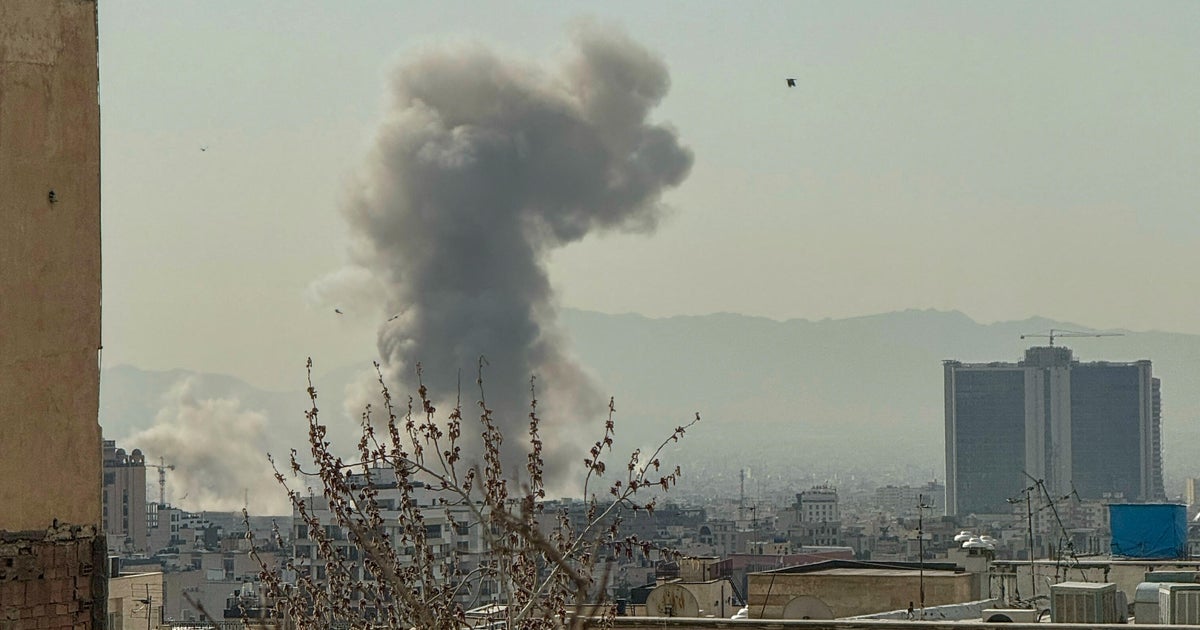
In the early hours of Saturday morning, President Donald Trump announced a massive military operation against Iran that has sent shockwaves through Washington and the international community. Dubbed “Operation Epic Fury,” the assault was revealed by Trump through a video posted on his Truth Social platform, where he made the extraordinary call for Iranian military forces to surrender their weapons and urged Iranian civilians to rise up against their own government. Speaking to the Washington Post, Trump framed the operation as a mission to bring freedom and safety to the Iranian people, positioning the military action not merely as a strike against hostile infrastructure but as a broader effort toward regime change. The announcement marks a dramatic escalation in U.S.-Iran tensions that have been building for weeks, and represents one of the most significant American military actions in the Middle East in years. The operation’s name itself—”Epic Fury”—signals the scale and intensity of what the administration envisions, while Trump’s direct appeal to Iranian citizens reveals an ambition that extends far beyond limited military objectives to the fundamental transformation of Iran’s political system.
Republican Leadership Rallies Behind the President’s Decision
The Republican response to Operation Epic Fury has been overwhelmingly supportive, with party leaders framing the action as both necessary and long overdue. House Speaker Mike Johnson characterized the operation as Iran facing “the severe consequences of its evil actions,” and revealed that the Gang of Eight—the select group of congressional leaders legally entitled to classified intelligence briefings—had been informed earlier in the week that military action might become necessary to protect American troops and citizens in Iran. Johnson defended the administration’s path to war, stating that Trump had “made every effort to pursue peaceful and diplomatic solutions” before resorting to military force, pointing to Iran’s nuclear ambitions, support for terrorism, and the killing of Americans as justification. Senator Roger Wicker of Mississippi, who chairs the Senate Armed Services Committee, described the operation as “pivotal and necessary” while asserting that the Iranian regime “has never been weaker.” Perhaps the most enthusiastic endorsement came from Senator Lindsey Graham, a close Trump ally, who declared the operation “well-planned” and predicted it would be “violent, extensive and I believe, at the end of the day, successful.” Graham went so far as to suggest that the fall of the ayatollah’s regime would represent “the biggest change in the Middle East in a thousand years,” offering prayers for those participating while promising the effort would make America “more safe and eventually more prosperous.” Senator Tom Cotton of Arkansas added that “the butcher’s bill has finally come due for the ayatollahs,” listing Iran’s alleged crimes as justification for the assault.
Democrats Sound Alarm Over Echoes of Iraq War
The Democratic response stands in stark contrast to Republican enthusiasm, with party members expressing deep concern about repeating the catastrophic mistakes of the Iraq War. Senator Mark Warner of Virginia, the Democratic vice chair of the Intelligence Committee, acknowledged Iran’s support for terrorism and regional destabilization but warned that Operation Epic Fury represents “a deeply consequential decision that risks pulling the United States into another broad conflict in the Middle East.” Warner’s statement cut to the heart of Democratic concerns, noting that “the American people have seen this playbook before—claims of urgency, misrepresented intelligence, and military action that pulls the United States into regime change and prolonged, costly nation-building.” He demanded clear answers from the president regarding the operation’s objective, the strategy to prevent escalation, and how exactly this makes Americans safer. Representative Jim Himes, a ranking member of the Intelligence Committee and Gang of Eight member who was briefed before the operation began, called it “a war of choice with no strategic endgame.” Himes revealed that he had warned Secretary of State Marco Rubio during the briefing that “military action in this region almost never ends well for the United States, and conflict with Iran can easily spiral and escalate in ways we cannot anticipate.” The congressman’s blunt assessment was that “it does not appear that Donald Trump has learned the lessons of history,” a sentiment echoed by Senator Ruben Gallego of Arizona, an Iraq War veteran who lost friends in that conflict. Gallego’s emotional statement cut through political rhetoric: “Young working-class kids should not pay the ultimate price for regime change and a war that hasn’t been explained or justified to the American people.”
Constitutional Crisis Looms Over War Powers
Beyond concerns about strategy and historical lessons, a significant portion of the opposition centers on constitutional questions about presidential war powers. Representative Thomas Massie, a frequent Trump critic, characterized the operation as “acts of war unauthorized by Congress,” highlighting the fundamental constitutional requirement that Congress, not the president alone, has the power to declare war. Massie had introduced a resolution in June 2025 directing the president to terminate the use of armed forces against Iran without congressional authorization, and now that theoretical concern has become an urgent crisis. Representative Ro Khanna joined Massie in demanding that Congress “must convene on Monday” to vote on a war powers resolution “to stop this,” calling on members to publicly declare their voting intentions over the weekend. Khanna’s video statement pulled no punches: “Donald Trump has launched a war on Iran… Trump says his goal is to topple the Iranian regime. But the American people are tired of regime change, wars that cost us billions of dollars and risk our lives. We don’t want to be at war with a country of 90 million people in the Middle East.” Senator Tim Kaine echoed these constitutional concerns, calling for the Senate to “immediately return to session” and vote on a bipartisan war powers resolution to block the use of forces against Iran. Kaine’s statement also raised questions about Trump’s mental capacity and decision-making, noting that “we had a diplomatic agreement with Iran that was keeping its nuclear program in check, until he ripped it up during his first term.” The Virginia senator reminded his colleagues that “for months, I have raised hell about the fact that the American people want lower prices, not more war—especially wars that aren’t authorized by Congress, as required by the Constitution, and don’t have a clear objective.”
The Stakes: Regional Stability and American Lives
At the core of this political battle lies a fundamental disagreement about America’s role in the Middle East and the consequences of military intervention. Supporters of Operation Epic Fury see Iran as a decades-long threat that has funded terrorism through groups like Hamas and Hezbollah, pursued nuclear weapons in defiance of international pressure, killed Americans both at home and abroad, and brutally repressed its own population’s desires for freedom and democracy. From this perspective, the operation represents not reckless adventurism but a necessary reckoning with a regime that has escaped accountability for too long. The argument holds that a weakened Iranian government presents a unique opportunity to fundamentally reshape Middle Eastern power dynamics in favor of American interests and allies, potentially eliminating a major source of regional instability and terrorism funding. Representative Nancy Mace articulated this view when she declared that “President Trump understood what the weak could not bring themselves to say: that peace is not found in appeasement—it is won. The Iranian people have bled for their freedom. Their cries did not fall on deaf ears. Not on Trump’s watch.” This framing positions the operation as a moral imperative and strategic necessity that weak-willed politicians have avoided for too long.
A Nation Divided Faces Uncertain Future
As Operation Epic Fury unfolds, America finds itself deeply divided over questions that will define this era: What are the limits of presidential power in committing the nation to war? When does pursuing national security interests justify military action without clear congressional authorization? Can the United States successfully engineer regime change in a nation of ninety million people without repeating the disasters of Iraq and Afghanistan? And fundamentally, what do the American people actually want from their government—lower grocery prices and domestic focus, or continued military engagement in the Middle East to reshape the region according to American values and interests? The coming days will reveal whether Congress asserts its constitutional war powers or acquiesces to the president’s decision, whether Operation Epic Fury achieves its stated objectives or spirals into prolonged conflict, and whether the American public rallies behind the flag or demands an end to what critics call yet another war of choice. What remains clear is that this operation represents a pivotal moment that will have consequences far beyond the immediate military outcomes, shaping America’s relationship with the Middle East, the balance of power between executive and legislative branches, and the nation’s willingness to engage in military interventions for years to come. The ghosts of Iraq hover over every debate, every statement, every vote—a reminder that military action, once begun, rarely follows the optimistic scripts written by its architects.