

Trump Administration Reverses Critical Climate Health Protections: What It Means for Americans
A Historic Rollback of Environmental Safeguards
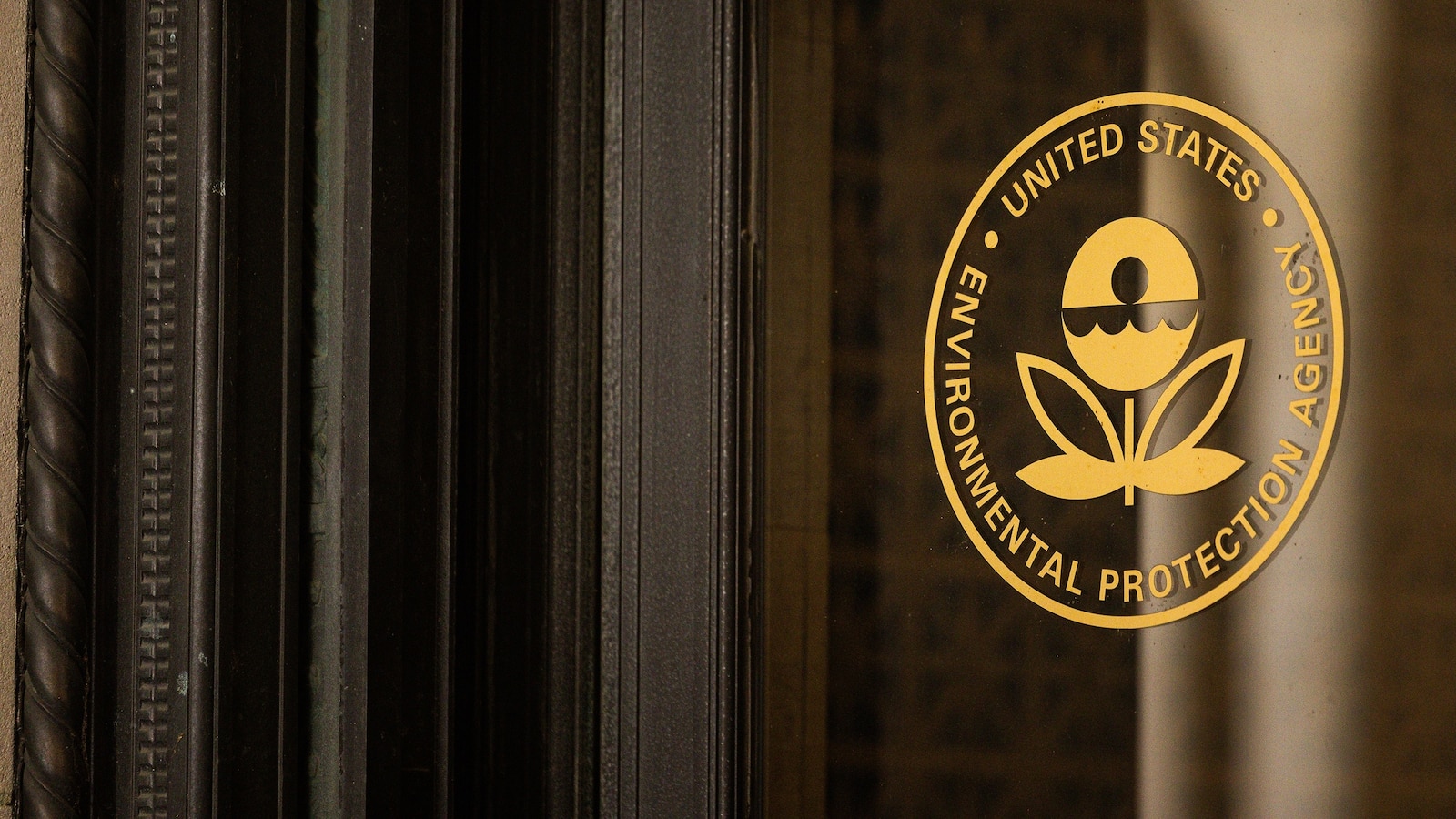
In a move that President Donald Trump has called “the single largest deregulatory action in American history,” the Environmental Protection Agency has reversed a cornerstone of America’s climate policy. The EPA announced it was rescinding the 2009 endangerment finding—a critical determination that officially recognized six major greenhouse gases as threats to human health and well-being. This decision didn’t emerge from a vacuum; it was the result of a 2007 Supreme Court case, Massachusetts v. EPA, which established that the EPA had the authority and responsibility to regulate greenhouse gases from vehicles under the Clean Air Act of 1970, since these gases qualify as air pollutants. For over a decade, this finding has been the legal foundation supporting federal regulations on everything from the emissions coming out of car tailpipes to the pollutants released by power plants and other major industrial sources. President Trump defended the reversal by claiming the original endangerment finding had “no basis in fact” and “no basis in law,” framing the action as a necessary correction rather than a controversial rollback of environmental protections that many scientists and public health experts consider vital to protecting American lives.
The Scientific Community Responds with Alarm
Environmental scientists and public health experts have expressed serious concerns about this policy reversal, emphasizing that it contradicts decades of rigorous, peer-reviewed research demonstrating the clear connection between greenhouse gas emissions, climate change, and human health impacts. Dr. Ana Navas-Acien, who chairs the department of environmental health sciences at Columbia University’s Mailman School of Public Health, didn’t mince words when she told ABC News that “the evidence is so overwhelming.” She emphasized that the scientific foundation linking greenhouse emissions to climate change and related health effects is not just substantial but massive, having been reviewed and validated by independent organizations across the globe. The sheer volume and quality of this research, she argues, demonstrates the rigorous scientific process that has established these connections beyond reasonable doubt. Dr. Kai Chen, an associate professor of epidemiology at Yale School of Public Health and faculty director of the Yale Center on Climate Change and Health, echoed these concerns, noting that the scientific evidence hasn’t weakened over time—it has actually grown much stronger. The consensus among these experts is clear: this policy rollback threatens the health and lives of millions of Americans by removing critical protections against pollutants that demonstrably harm human health.
Understanding How Greenhouse Gases Harm Human Health
The mechanisms by which greenhouse gases damage human health are well-documented and multifaceted. Gases like carbon dioxide and nitrous oxide drive climate change, which in turn exposes people to a cascade of health hazards including wildfire smoke inhalation, extreme heat events, flooding, and waterborne diseases. Rising temperatures place direct stress on the human body, increasing dehydration risk and straining the cardiovascular system in ways that can be fatal. Research from Yale School of the Environment published in 2024 found that during heat waves, the risk of dying from a heart attack jumps by an alarming 64%. Another Yale study from 2025 calculated that between 2000 and 2020, more than 3,400 preventable deaths occurred in the contiguous United States specifically due to high temperatures. Looking forward, the World Health Organization projects an estimated 250,000 additional deaths globally each year from 2030 to 2050 due to climate change-related heat exposure alone. But the health impacts extend far beyond the cardiovascular system. Recent studies have shown that extreme heat negatively affects both the quality and quantity of sleep, which elevates cortisol levels in the body and creates a domino effect of health problems. Mental health also suffers, with extreme heat exacerbating conditions like depression and anxiety. A 2023 meta-analysis revealed that even slight increases in average monthly temperature can lead to measurable increases in suicide rates and suicidal behavior, demonstrating that heat’s reach extends into every aspect of human wellbeing.
The Wildfire and Air Quality Connection
Climate change has fundamentally altered the landscape of wildfire risk in America, particularly in the western states. According to the federal government’s Fifth National Climate Assessment, wildfires have become larger, more intense, and more destructive in recent decades due to a combination of human-amplified climate change and rapid urbanization. These increasingly severe fires degrade air quality across vast regions through wildfire smoke—a dangerous mixture of gases, water vapor, air pollutants, and fine particulate matter known as PM2.5. These particles are particularly concerning because they’re at least 30 times smaller in diameter than a human hair, making them invisible to the naked eye yet capable of penetrating deep into the human body. PM2.5 particles easily enter through the nose and throat, travel to the lungs, and can even circulate in the bloodstream, carrying their toxic payload throughout the body. For healthy people, short-term exposure causes irritation of the eyes, nose, and throat, along with coughing, sneezing, and shortness of breath. But the long-term effects are far more serious, worsening chronic conditions like asthma, heart disease, and chronic obstructive pulmonary disease. Recent evidence has expanded our understanding of PM2.5’s impact to include cognitive function and dementia, as well as birth outcomes, with exposure linked to pre-term birth and low birth weight. The importance of regulating these pollutants is demonstrated by a 2018 joint study from U.S. and Chinese researchers, which found that regulating fossil fuel combustion reduced PM2.5-related deaths by approximately 54% from 1990 to 2010—a powerful testament to how effective environmental protections can save lives.
What This Means for the Immediate Future
The short-term implications of rescinding the endangerment finding are straightforward and troubling, according to public health experts. Dr. Navas-Acien predicts that this action will lead directly to higher pollution levels, meaning more pollutants in the air Americans breathe, the water they drink, and the food they eat. This increase in environmental contamination will translate to a higher burden of chronic diseases and an uptick in acute events like heart attacks. Research has consistently shown that in the days immediately following increased air pollutant levels, emergency room visits and hospital admissions for cardiorespiratory events spike, demonstrating that pollution’s health impacts are rapid and measurable. The absence of federal protections creates a patchwork situation where Americans’ health depends increasingly on where they live and whether their state and local leaders prioritize environmental protections. Dr. Chen emphasized that this rollback is “very concerning” specifically because the scientific evidence linking greenhouse gas emissions to health harms has only strengthened over time, not weakened. The policy reversal, he warned, “will actually be threatening millions of Americans’ lives.” This isn’t hyperbole or political rhetoric—it’s the assessment of researchers who have dedicated their careers to understanding the intersection of environmental quality and human health, and who have watched the evidence accumulate year after year, study after study, confirming what many have long known: the air we breathe and the climate we live in directly impact whether we live or die, and how well we live in between.
Taking Action at Every Level
In the face of this federal policy reversal, experts emphasize that action is still possible and necessary at state, local, and individual levels. State and local leaders have the authority to implement their own regulations to reduce greenhouse gas emissions and improve air quality, creating protective bubbles for their constituents even without federal mandates. On an individual level, experts recommend several protective measures: frequently checking local air quality levels, wearing masks when pollution reaches unhealthy levels, and supporting the creation of urban green spaces that can help combat climate change at the community level. Dr. Chen’s message is clear and urgent: “Climate change is impacting our health right now. It’s not a political debate. It is science and the science is clear. We need to take action.” This statement cuts to the heart of the issue—while the endangerment finding has become politicized, the underlying reality it addressed remains unchanged. Greenhouse gases continue to warm the planet, that warming continues to create health hazards, and those hazards continue to harm and kill people. The scientific method doesn’t care about political ideology; it simply follows evidence to conclusions. And the evidence, accumulated over decades by thousands of researchers across multiple disciplines and continents, consistently points to the same conclusion: greenhouse gas emissions endanger human health and welfare. The question facing Americans now is not whether this is true—the science has settled that question—but rather how individuals, communities, and states will respond to protect themselves and their families in an environment where federal protections have been removed. The stakes, measured in preventable deaths, chronic illnesses, and diminished quality of life, could not be higher.