


Rising Tensions: Defense Officials Brief on Iran Conflict as Oil Markets Destabilize
Military Leadership Addresses Growing Crisis
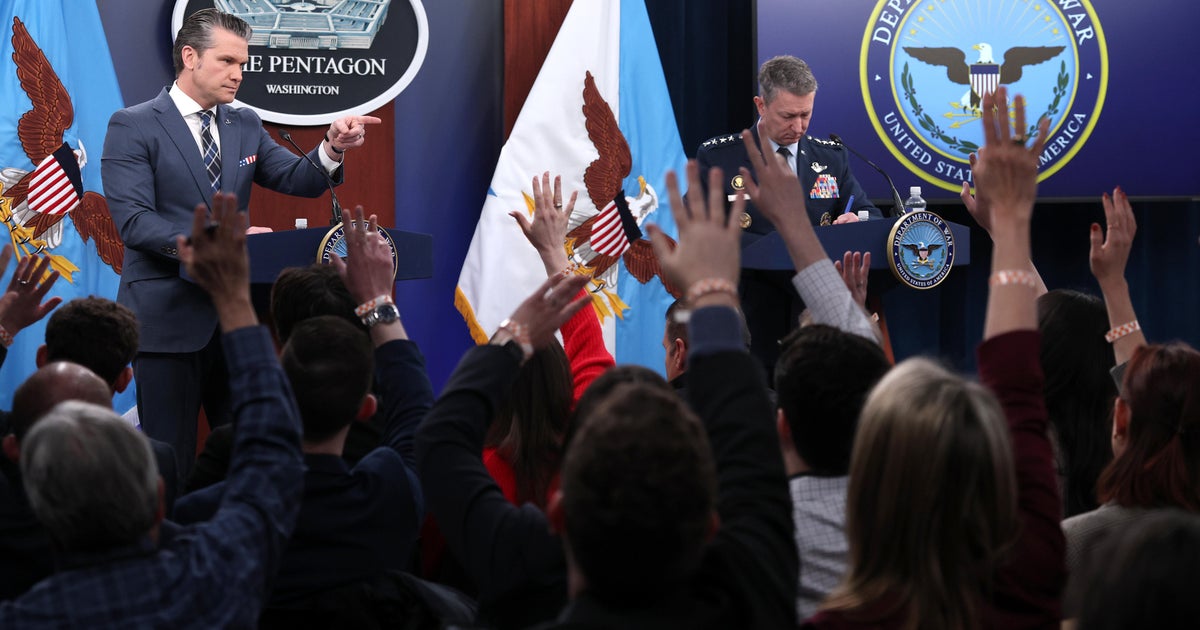
In a significant development highlighting the escalating tensions in the Middle East, Defense Secretary Pete Hegseth and General Dan Caine, Chairman of the Joint Chiefs of Staff, convened a critical press conference on Tuesday to address the ongoing military confrontation with Iran. The briefing came at a moment of acute crisis, as news broke of an Iranian drone strike against a Kuwaiti oil tanker positioned near Dubai, sending shockwaves through global energy markets. Secretary Hegseth opened the proceedings by reflecting on his recent weekend visit with American troops engaged in what has been designated Operation Epic Fury, describing the experience as deeply moving and calling it “an honor” to spend time with the servicemen and women on the front lines of this conflict. The timing of this briefing underscored the gravity of the situation, as Americans back home were confronting a harsh economic reality: gasoline prices had climbed to $4 per gallon for the first time since the summer of 2022, marking a painful milestone that directly connects military operations thousands of miles away to the daily lives of ordinary citizens filling up their tanks at local gas stations.
Drone Attack Disrupts Critical Maritime Routes
The catalyst for Tuesday’s emergency briefing was a brazen attack on a massive oil tanker in one of the world’s most strategically important waterways. According to Kuwait’s official state news agency KUNA, which cited information from the nation’s state-owned oil company, the incident represented “a direct and malicious Iranian attack” targeting the Al-Salmi, a Very Large Crude Oil Carrier (VLCC) belonging to Kuwait. The vessel was struck while anchored in the designated anchorage area of Dubai Port in the United Arab Emirates, a location typically considered secure and under the protection of international maritime law. This attack represents a dangerous escalation in the conflict, as it directly threatens the flow of oil through the Persian Gulf region, which remains vital to global energy supplies despite shifts toward renewable energy. The strike on the Al-Salmi sends a clear message about Iran’s willingness to disrupt international commerce and target the energy infrastructure of neighboring countries, even those not directly involved in the current hostilities. Maritime security experts have long warned that the narrow waterways of the Persian Gulf represent potential chokepoints for global oil supplies, and this attack demonstrates the vulnerability of even the largest vessels to modern drone warfare technology.
Presidential Commentary Stirs International Response
In characteristic fashion, President Trump took to social media early Tuesday morning with provocative commentary directed at America’s traditional allies, particularly the United Kingdom. His message struck a notably confrontational tone regarding the Strait of Hormuz, the narrow passage between the Persian Gulf and the Gulf of Oman through which approximately one-fifth of the world’s petroleum passes. The President’s social media post presented what he framed as practical advice for allied nations: “I have a suggestion for you: Number 1, buy from the U.S., we have plenty, and Number 2, build up some delayed courage, go to the Strait, and just TAKE IT.” His message continued with pointed criticism of what he characterized as insufficient support from allies, stating: “You’ll have to start learning how to fight for yourself, the U.S.A. won’t be there to help you anymore, just like you weren’t there for us.” This rhetoric represents a significant departure from traditional American diplomatic language and signals a potential shift in long-standing security arrangements that have defined Western alliances since World War II. The President’s comments raise fundamental questions about America’s role in securing global energy supplies and protecting international shipping lanes, responsibilities the United States has largely shouldered since establishing itself as the guarantor of the post-war international order.
Economic Impact Hits American Households
The conflict’s impact on ordinary Americans became impossible to ignore this week as gasoline prices crossed the psychologically significant threshold of $4 per gallon nationwide. This price point, last seen in August 2022 during the energy market disruptions following Russia’s invasion of Ukraine, represents a substantial burden for families already struggling with inflation in other areas of household expenses. Data compiled by AAA, the nation’s largest motoring organization, reveals the stunning velocity of the price increase: gasoline has jumped by more than a dollar per gallon in just the last month alone. This rapid escalation directly correlates with the timeline of military operations in the Middle East, specifically since the United States and Israel launched their initial strikes against Iranian targets on February 28. The economic ripple effects extend far beyond the pump, as transportation costs factor into virtually every product Americans purchase, from groceries to manufactured goods. CBS News sought comment from the White House regarding the administration’s response to rising fuel costs, though officials have yet to provide substantive policy proposals to address the pain felt by consumers. Meanwhile, President Trump on Monday intensified his rhetoric regarding potential military targets, explicitly renewing his controversial calls to strike Iranian civilian infrastructure, including energy facilities and water systems, should diplomatic efforts fail to produce an agreement ending the hostilities.
Military Coordination with International Partners
Behind the scenes of public briefings and social media commentary, military planners continue intensive coordination efforts with key allied forces in the region. U.S. Central Command, the unified combatant command responsible for military operations across the Middle East, issued a statement early Tuesday detailing high-level meetings between American and Israeli military leadership. Commander Admiral Brad Cooper, a senior CENTCOM official, spent Sunday and Monday in Israel engaged in strategic discussions with Lieutenant General Eyal Zamir, Chief of the General Staff of the Israel Defense Forces. According to the official CENTCOM statement, these consultations focused on “progress made during ongoing operations to eliminate Iran’s ability to project power in meaningful ways outside its borders,” language that suggests a comprehensive military strategy aimed at degrading Iranian capabilities across multiple domains. The two commanders “reaffirmed the strength of the U.S.-Israel defense partnership and emphasized the importance of continued coordination,” underscoring the central role that Israeli intelligence and military capabilities play in American strategic planning for the region. Before departing the area, Admiral Cooper made a point of visiting with U.S. troops deployed to multiple forward locations in support of Operation Epic Fury, the operational designation for current military activities. These visits serve both practical purposes—allowing senior leadership to assess conditions and morale—and symbolic functions, demonstrating to servicemembers that their sacrifices and efforts receive attention from the highest levels of military command.
Strategic Implications and Uncertain Future
As this conflict continues to evolve, the interconnection between military operations, energy markets, diplomatic relationships, and domestic American politics becomes increasingly apparent. The attack on the Kuwaiti tanker demonstrates that Iran retains both the capability and willingness to strike at regional energy infrastructure, despite whatever degradation American and Israeli military operations may have achieved against Iranian command and control systems. The dramatic rise in gasoline prices illustrates how quickly distant military conflicts translate into economic pain for American consumers, potentially affecting public support for continued operations. President Trump’s confrontational messaging toward traditional allies signals a potential reorganization of long-standing security arrangements, though the practical implications remain unclear. Would European nations actually attempt to secure Middle Eastern oil routes independently? Do they possess the military capabilities to do so effectively? These questions lack clear answers but may soon require concrete responses. The ongoing military coordination between American and Israeli forces suggests a sustained campaign rather than a brief punitive strike, implying that Operation Epic Fury may continue for weeks or months rather than days. As defense officials, military commanders, political leaders, and ordinary citizens all grapple with this evolving crisis, the ultimate trajectory remains uncertain, dependent on decisions made in Washington, Tehran, Jerusalem, and capitals across the globe. What seems certain is that the consequences—military, economic, and political—will reverberate far beyond the immediate combat zone.