


King Charles III and Queen Camilla Make Historic Visit to America Amid Strained Relations
A Royal Visit at a Critical Moment
King Charles III and Queen Camilla touched down in the United States on Monday for what marks their first official visit as reigning monarchs. The timing of this royal journey carries special significance, as it commemorates the 250th anniversary of the signing of the Declaration of Independence—a document that once severed the political ties between Britain and its American colonies. However, this celebration of shared history comes at a particularly delicate moment for the relationship between these two longstanding allies. The visit nearly faced disruption following a security incident at the White House Correspondents’ Dinner over the weekend, where an attempted shooting put the president, vice president, and Cabinet members at risk. Despite these concerns, Buckingham Palace issued a statement confirming that the visit would proceed as scheduled, with the King and Queen expressing gratitude to all those who worked quickly to ensure the trip could continue safely. The palace emphasized that this visit represents “an opportunity to recognise the shared history of our two nations; the breadth of the economic, security and cultural relationship that has developed since then; and the deep people-to-people connections which unite communities.”
The Royal Itinerary: Ceremony and Symbolism
The visit encompasses all the traditional elements expected when British royalty comes calling on American soil. King Charles and Queen Camilla’s schedule includes the full spectrum of diplomatic pageantry: formal meetings at the White House, a historic address to Congress, and an elegant state dinner hosted by President Trump. The couple arrived in Washington on Monday afternoon, where they were welcomed with a formal ceremony featuring a ceremonial military review—the kind of grand display that symbolizes the respect and importance both nations place on their relationship. The King will hold bilateral discussions with President Trump while Queen Camilla meets separately with the First Lady, allowing both couples to engage in their own spheres of influence. On Tuesday, Charles is scheduled to address a joint meeting of Congress, a privilege reserved for the most significant visiting dignitaries. Following the Congressional address, the visit will culminate in a traditional state dinner at the White House. Beyond Washington, the royal couple plans to travel to New York City on Tuesday to pay their respects to the victims of the September 11th attacks, acknowledging America’s darkest moment in recent history, before making an additional stop in Virginia.
Walking a Diplomatic Tightrope
King Charles faces an extraordinarily challenging balancing act during this visit. Max Bergmann, who directs the Europe, Russia and Eurasia program at the Center for Strategic and International Studies, notes that everyone will be watching carefully to hear what the King says in his Congressional address. Bergmann anticipates that the speech will likely take a historical approach, acknowledging the irony that the United States was born from a revolution against Charles’s own country, while highlighting how the two nations have overcome that contentious beginning to forge one of the world’s most important alliances. The real question, according to Bergmann, is whether Charles will subtly reference the shared values of human rights and freedoms that the United States and United Kingdom have championed together since World War II, and whether he might lean into these principles in ways that could be interpreted as gently critical of current American policies. As Bergmann colorfully puts it, “He’s got some fine thread and he has to thread it through a very very fine needle.” The King must honor the historical friendship between the nations while remaining sensitive to current political tensions, all while maintaining the constitutional requirement that British monarchs remain above partisan politics.
Troubled Waters in the Special Relationship
The visit comes at a time when the vaunted “special relationship” between the United States and the United Kingdom—a bond treasured by both nations since World War II—is showing serious signs of strain. President Trump has been openly critical of British Prime Minister Keir Starmer’s reluctance to fully join American military efforts, particularly regarding the U.S.-Israeli war and operations around the Strait of Hormuz. Even though the United Kingdom has allowed the United States to use British bases for defensive operations, Trump has mocked the U.K.’s aircraft carriers as “toys” and told the BBC that his relationship with Starmer would only “recover” if the Prime Minister changes his stance on what Trump perceives as overly permissive immigration policies. More broadly, Trump has expressed deep frustration with NATO for the alliance’s refusal to join American efforts against Iran, which began with U.S. and Israeli strikes in late February. The President has even floated the possibility of withdrawing from NATO altogether—a move that would be seismic given that both the United States and United Kingdom are founding members of the alliance. Liana Fix, a senior fellow for Europe at the Council on Foreign Relations, observes that the U.S.-U.K. relationship “has significantly deteriorated since the early days when Starmer was considered a ‘Trump whisperer.'” The United Kingdom’s initial hesitation about allowing base usage for the Iran conflict has strained not just relations with Trump supporters in Washington but with NATO more broadly, undermining what remained of belief in the special relationship. This political backdrop makes King Charles’s diplomatic mission all the more crucial—and complicated.
Public Opinion and Political Pressure
The British public’s view of this royal visit reflects their own anxieties about their country’s relationship with Trump’s America. According to a YouGov survey conducted in late March, nearly half of Britons—49%—believe the visit should be canceled, compared to just 33% who support it going forward. This skepticism reveals a wider European concern about how Trump is conducting his presidency. Many Britons, like other Europeans, worry about their leaders appearing as “supplicants” to an American administration whose policies they find troubling. Simon Tisdall, a foreign affairs commentator for The Guardian, went so far as to write a piece titled “Protocol be damned,” arguing that King Charles should speak plainly about Trump in his Congressional address. Tisdall criticized what he called Prime Minister Starmer’s “appeasement policy” as having “miserably failed” and expressed concern that “Trump will undoubtedly portray Charles’s attendance at a separate White House state banquet as a royal endorsement of his person and policies.” This concern—that the visit will be exploited for presidential propaganda—is precisely what has led most Britons to oppose it, according to Tisdall. Prime Minister Starmer, on the other hand, hopes the visit will help reset the “badly soiled ‘special relationship'” and put it back on more positive footing.
A Personal History Between King and President
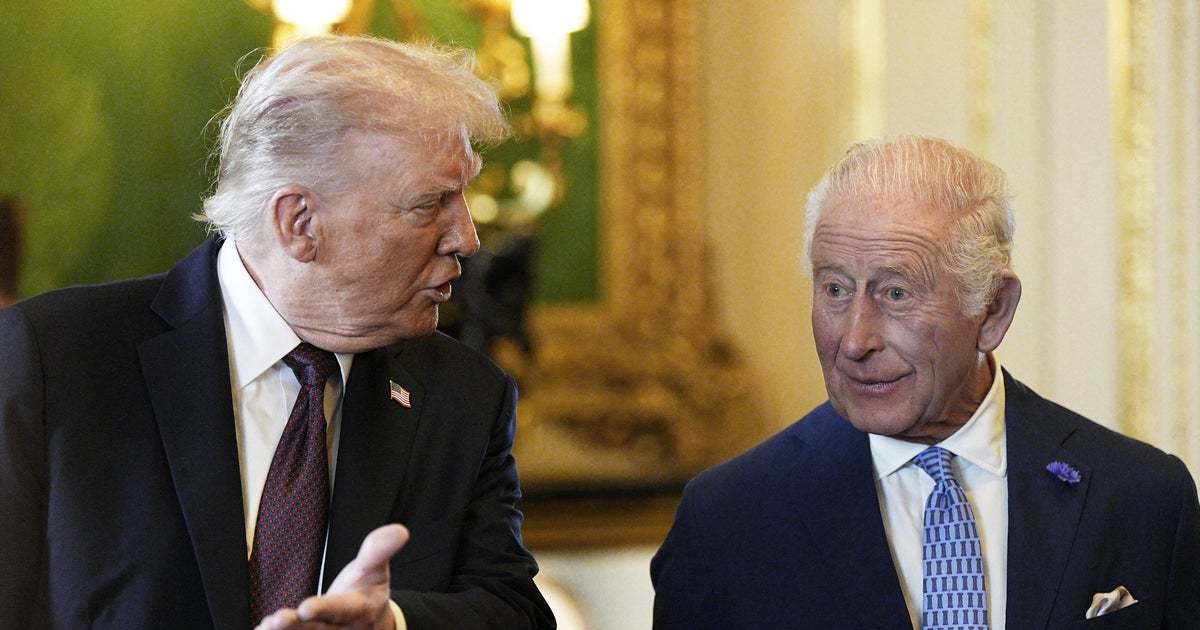
Despite the political turbulence swirling around the visit, King Charles and President Trump share a personal relationship that spans more than two decades. Trump has publicly called Charles a “friend” and told the BBC he believes the King’s visit could genuinely help repair U.S.-U.K. relations, saying “Absolutely. He’s fantastic. He’s a fantastic man.” Trump added, “I know him well, I’ve known him for years. He’s a brave man, and he’s a great man. They would absolutely be a positive.” Their relationship dates back to Trump’s days as a New York businessman, with photographs from 2005 showing Donald and Melania Trump chatting with the then-Prince Charles at an event at the Museum of Modern Art in New York City. More formally, the Trumps visited the United Kingdom in 2019 when Charles was still Prince of Wales, and again in September 2025, when they attended an elaborate state dinner hosted by the newly crowned King and Queen at Windsor Castle. Charles’s mother, Queen Elizabeth II, was particularly skilled at maintaining diplomatic peace with Trump during his first term, using the considerable diplomatic expertise she developed over her long reign. Charles himself has had decades of practice in the diplomatic arts, which should serve him well during this delicate mission. King Charles’s last official visit to Washington was in 2015, while he was still Prince of Wales, when he and Camilla met with President and Mrs. Obama. Now, as monarch, Charles carries not just the weight of ceremony but the responsibility of helping to bridge a widening gap between two nations whose friendship has been fundamental to the world order for nearly eighty years. Whether this visit can accomplish that ambitious goal remains to be seen, but both sides are clearly hoping that the pageantry, shared history, and personal connections can provide a foundation for renewed cooperation.