


The Environmental and Health Catastrophe of Tehran’s “Black Rain”
A City Shrouded in Toxic Darkness
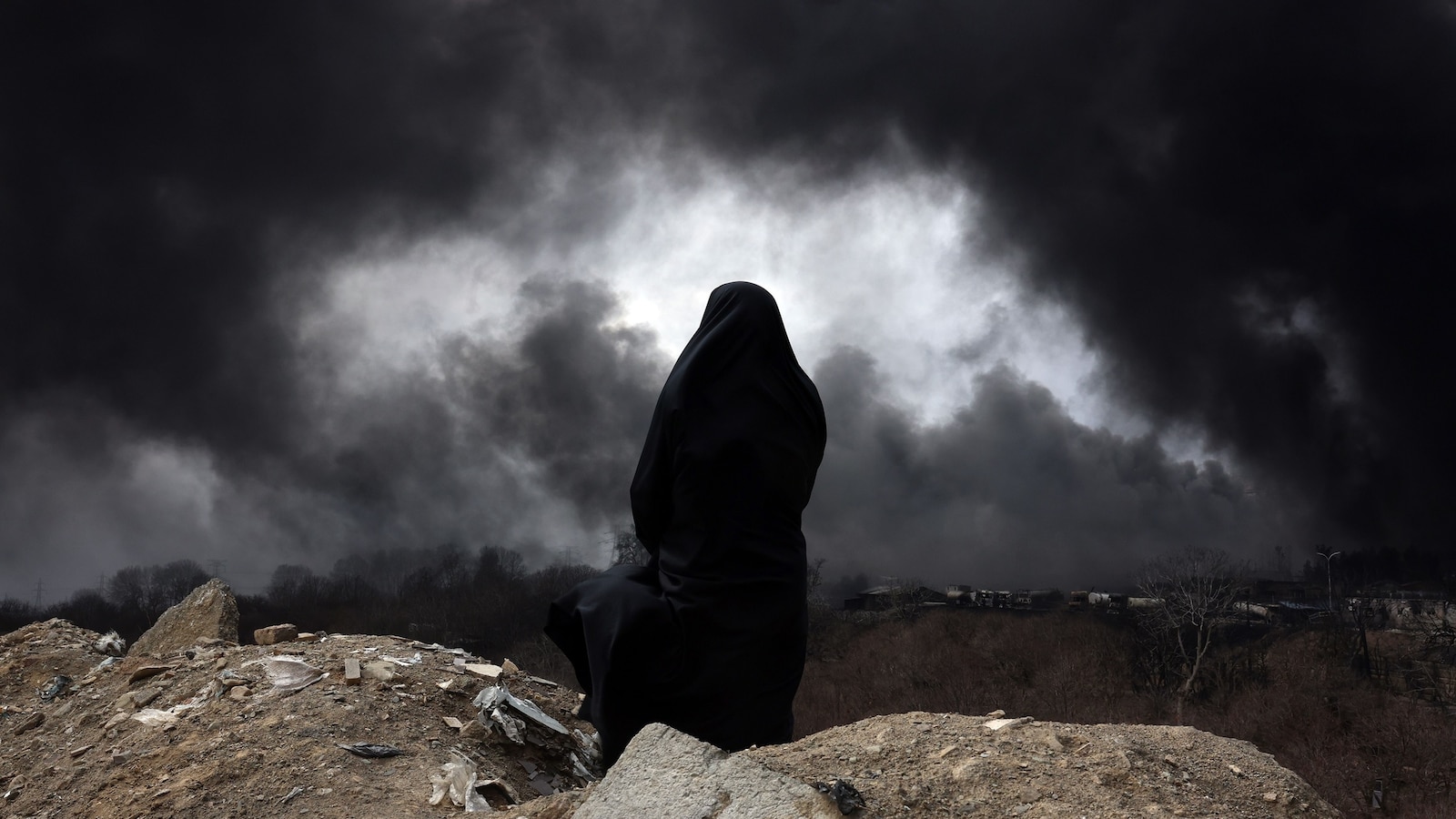
The streets of Tehran transformed into something resembling a dystopian nightmare when Israeli airstrikes targeted major Iranian oil facilities on a Saturday in March 2026. What followed was days of uncontrolled burning that sent massive plumes of thick black smoke billowing across Iran’s capital city, home to nearly 10 million people. The fires weren’t just a visual horror—they created what scientists and environmental experts are calling a “major environmental incident” with potentially devastating long-term consequences. When a weekend storm system moved through the region, it brought with it something far worse than ordinary rain. The precipitation that fell on Tehran was laden with toxic pollutants, creating what Iranian officials described as “black rain”—a dark, oily substance that coated everything it touched. Residents awoke to find their cars, rooftops, and streets covered in a thick, greasy film. The scene was so disturbing that people on the ground described it as “apocalyptic.” This wasn’t hyperbole—it was an accurate description of an environmental catastrophe unfolding in real-time over one of the world’s major cities.
Understanding the Science Behind the Disaster
The four targeted facilities—oil depots in Karaj, Shehran, and Aghdasiyeh, along with the main Tehran refinery—represented massive repositories of fossil fuels. The Tehran refinery alone processes approximately 225,000 barrels of oil daily, giving some sense of the scale involved. When these facilities were struck and began burning, they initiated a chemical process that released an enormous cocktail of dangerous substances into the atmosphere. Professor Charles Driscoll from Syracuse University explained that when fossil fuels like oil burn, the combustion releases a frightening array of toxic compounds: hydrocarbons, nitrogen oxides, sulfur dioxide, heavy metals, and particulate matter. All of these substances were released simultaneously in enormous quantities, creating a toxic cloud that hung over Tehran like a death shroud. For black rain to actually form, Driscoll noted, the concentration of pollutants must be “extremely high”—a statement that underscores just how saturated the air over Tehran became with these dangerous chemicals.
The normal atmospheric processes that might disperse such pollution were overwhelmed by the sheer volume of contaminants. Instead of dissipating, the pollutants hovered in the air that millions of Iranians were breathing. When the rain arrived, it essentially pulled all of these toxic substances out of the sky and deposited them on the city below. The World Health Organization issued warnings about the “massive release” of toxic hydrocarbons, sulfur oxides, and nitrogen compounds, cautioning that both the immediate exposure and the black rain itself posed serious dangers to the Iranian population. The organization specifically highlighted concerns about long-term health effects, suggesting that this wasn’t just an immediate crisis but one that would echo through the years to come.
The Immediate Human Health Crisis
The Red Crescent Society, Iran’s equivalent of the Red Cross, moved quickly to warn residents about the dangers they faced. Their advisories urged people to stay indoors to avoid exposure to both the acid rain and the toxic gases filling the air. The risks were stark and terrifying: chemical burns to exposed skin and serious damage to the lungs and respiratory system. For anyone unfortunate enough to come into contact with the toxic rain, the Red Crescent provided specific instructions—don’t rub the affected area, wash only with a continuous stream of cold water, and immediately change clothes and seal them in a bag to prevent further contamination. These instructions read like something from a chemical disaster manual, because that’s essentially what Tehran had become—a city experiencing an ongoing chemical emergency.
Rachel Cleetus, policy director for the Climate and Energy Program at the Union of Concerned Scientists, emphasized that the most vulnerable populations faced especially acute risks. People with existing respiratory illnesses found themselves in a nightmare scenario, as the very air around them became a threat. The elderly, with their generally compromised immune systems and reduced physical resilience, faced heightened dangers. Perhaps most heartbreaking, children—whose narrower airways make them particularly susceptible to respiratory harm—were placed in serious jeopardy. As Cleetus poignantly observed, “It isn’t easy to just stay safe when the whole air around is filled with these kinds of toxins.” This wasn’t a localized spill that could be avoided or a contaminated area that could be evacuated. This was a city-wide catastrophe affecting millions of people who had nowhere else to go.
Professor Driscoll’s assessment was blunt and disturbing: “It has to be a horrendous situation. I just cannot even imagine how bad.” Coming from a scientist who studies environmental disasters professionally, this statement carries particular weight. Cleetus was equally direct in her characterization: “It’s a huge human health catastrophe. It’s obviously an ecological catastrophe as well.” The pollutants didn’t respect boundaries either—depending on wind patterns, these toxic compounds could travel long distances, potentially affecting populations far beyond Tehran’s borders and turning a local disaster into a regional crisis.
Long-Term Environmental Devastation
Beyond the immediate health emergency, scientists warn that the environmental impacts will persist for years, possibly decades. Bryan Berger, a professor of chemical engineering at the University of Virginia, explained that the toxins and chemicals released would pose long-term environmental threats to Tehran and surrounding areas. The contamination isn’t limited to what people could see and smell in the immediate aftermath. Hidden within the smoke and rain were so-called “forever chemicals”—persistent compounds that don’t break down naturally and can remain in the environment indefinitely. These chemicals, likely present in materials like flame retardants built into the oil facilities, can contaminate groundwater supplies, potentially poisoning the water that millions depend on for drinking, cooking, and bathing.
Tehran already struggled with air quality issues before this disaster, lacking the regulatory framework needed to ensure healthy environmental conditions for its residents. The acid rain will only compound these existing problems. Depending on its concentration, acid rain is corrosive and can accelerate the deterioration of buildings and infrastructure. In a city already facing challenges from poor air quality, this additional corrosive force threatens to damage the physical fabric of the urban environment. The human-made materials burning in the facilities also produced a variety of organic compounds, many of which could be highly toxic. Building materials often contain trace metals that, when burned and released, can poison soil and water systems, creating contamination that persists long after the fires are extinguished and the smoke clears.
Professor Driscoll pointed out that there’s no real precedent for this type of disaster in a populated area. When former Iraqi president Saddam Hussein ordered the bombing of hundreds of Kuwaiti oil wells in 1991, it created massive fires and environmental damage, but the surrounding areas were largely uninhabited desert. The impact on human populations was therefore limited compared to what Tehran faces. As Driscoll noted, “Given the prominence of oil resources [in the Middle East], this has got to be close to a worst-case scenario.” A worst-case scenario playing out in real-time for millions of people.
The Chemical Warfare Controversy
The targeting of these oil facilities has raised serious questions about international law and the rules of armed conflict. Rachel Cleetus suggested that the attack could be construed as chemical warfare—a violation of international law—because those who ordered the strikes likely knew the hazards that civilians in Tehran would face as a result. The deliberate targeting of facilities that would release toxic substances over a major population center crosses a line that the international community has long sought to maintain. Iranian Foreign Ministry Spokesperson Esmaeil Baghaei was explicit in this characterization, writing on social media that the United States and Israel had taken the conflict into “a dangerous new phase.” His statement was unequivocal: “These attacks on fuel storage facilities amount to nothing less than intentional chemical warfare against the Iranian citizens.”
The Israeli Defense Forces offered a different perspective in their statement following the attack. They acknowledged striking “several fuel storage depots in Tehran with precise guidance” from military intelligence, describing the operation as “significant.” The IDF defended the strikes by claiming that Iranian military forces use these fuel tanks “directly and frequently to operate military infrastructure,” and that the facilities help transfer fuel to “various military entities in Iran.” The statement emphasized that the IDF would continue to “act forcefully” to remove threats to Israel. This justification frames the attack as targeting military assets rather than deliberately creating an environmental catastrophe, though the distinction may be cold comfort to the millions of Iranians suffering the consequences.
The National Iranian Oil Refining and Distribution Company stated that measures had been taken to minimize product storage before the strike and that fuel supply to Tehran and surrounding areas was being maintained through alternative sources. However, these reassurances do little to address the immediate health emergency or the long-term environmental damage. The debate over whether this constitutes chemical warfare will likely continue in international forums, but for the residents of Tehran living through the crisis, such legal distinctions matter less than the very real toxic rain falling on their city and the poisoned air they’re forced to breathe.
Moving Forward from an Unprecedented Disaster
What happens next for Tehran and its residents remains uncertain. The immediate priority is clearly protecting human health—keeping people indoors when possible, providing medical care for those affected by exposure, and monitoring the situation as it continues to evolve. The Conflict and Environment Observatory, the U.K.-based nonprofit that has been tracking this disaster, will likely continue documenting the impacts for years to come. Environmental remediation efforts will eventually be necessary, though the scale of contamination may make complete cleanup impossible. Groundwater monitoring will be essential to detect forever chemicals and other persistent pollutants before they work their way further into the water supply.
This disaster serves as a stark reminder of how modern warfare increasingly disregards the well-being of civilian populations and the environments they depend on. When critical infrastructure like oil facilities becomes a military target, the consequences extend far beyond the immediate tactical objectives. Millions of people who have no involvement in military decision-making find themselves victims of environmental warfare, breathing poisoned air and watching toxic rain fall from the sky. The long-term health studies that will inevitably follow this event may reveal increases in respiratory diseases, cancers, and other conditions linked to toxic exposure—a legacy that will affect generations.
For now, Tehran endures, its residents adapting as best they can to an environment transformed into something hazardous. The images of black smoke covering the city and oily films coating every surface will remain powerful symbols of this moment. Scientists like Professors Driscoll and Berger, along with advocates like Rachel Cleetus, continue sounding the alarm about both the immediate dangers and the long-term consequences. Their expertise helps translate technical environmental data into terms that convey the human cost of this catastrophe. Whether the international community will take meaningful action in response—whether through humanitarian aid, environmental assistance, or legal accountability—remains to be seen. What’s certain is that Tehran has experienced an environmental disaster of historic proportions, one whose full impacts won’t be understood for years but whose immediate effects are already painfully clear to anyone forced to shelter from the toxic black rain falling from the sky.