
South Africa Deploys Military to Combat Rising Gang Violence and Organized Crime
A Bold Step in the Fight Against Lawlessness
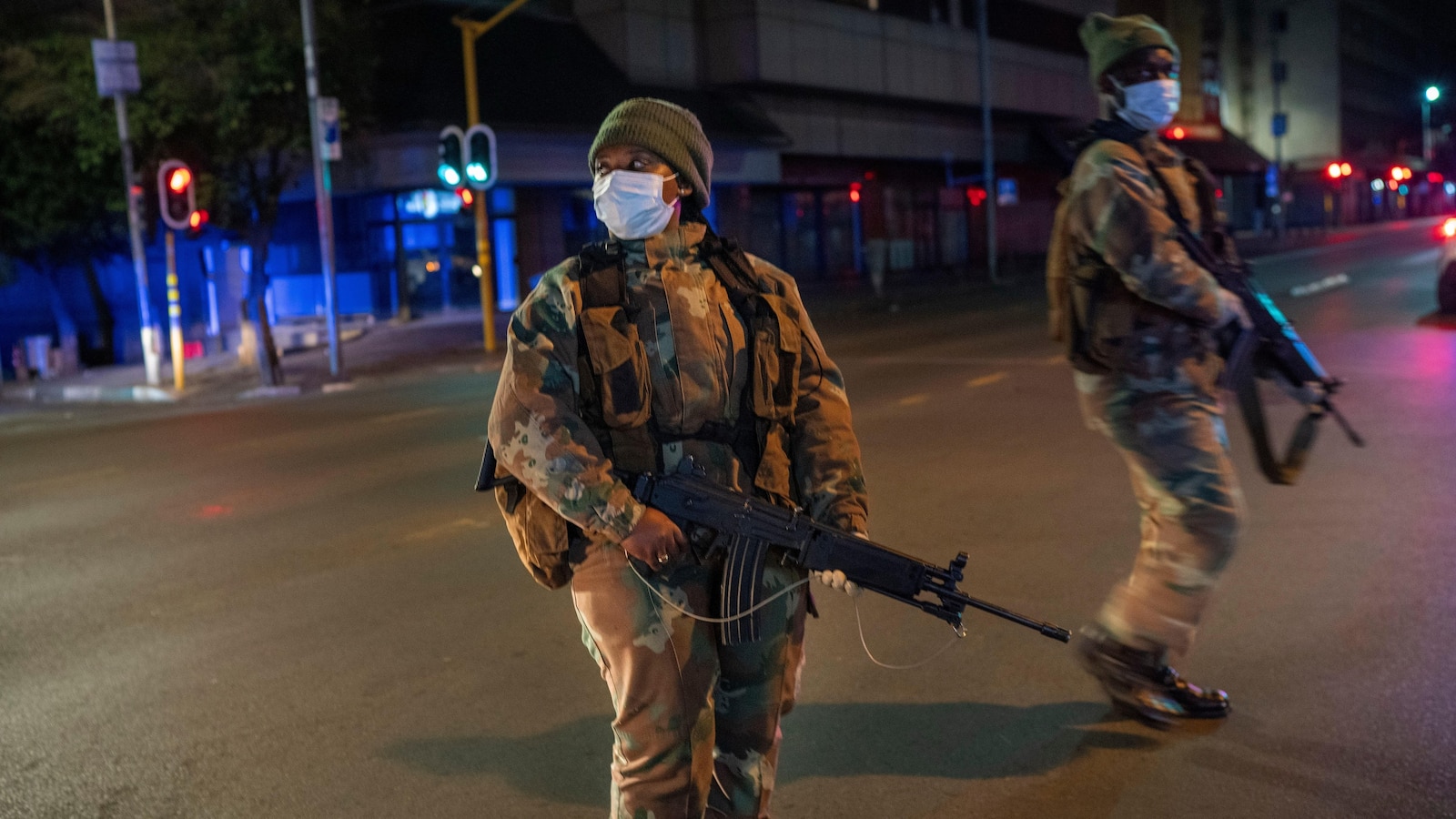
In an unprecedented move that has sparked both hope and controversy across South Africa, President Cyril Ramaphosa recently announced plans to deploy military forces to some of the country’s most dangerous areas. The decision comes as the nation grapples with escalating organized crime, violent gang warfare, and rampant illegal mining operations that threaten not only public safety but the very foundations of the country’s democracy and economic stability. Ramaphosa has characterized these criminal activities as the “most immediate threat” facing South Africa today, justifying what many see as an extraordinary measure for Africa’s leading democracy. The deployment will focus on three of the country’s nine provinces, though specific timelines remain unclear. For a nation that emerged from the brutal apartheid regime just three decades ago—a time when military presence in civilian areas was associated with oppression rather than protection—this announcement carries significant historical weight and has understandably generated mixed reactions among South Africans.
Cape Town’s Dark Shadow: The Cape Flats Gang Crisis
Behind Cape Town’s postcard-perfect scenery and its reputation as one of the world’s most beautiful cities lies a stark and violent reality. While the city of 3.8 million people attracts tourists from around the globe, its outlying neighborhoods, collectively known as the Cape Flats, tell a dramatically different story. These areas have become synonymous with some of the deadliest gang violence on the planet, where street gangs with ominous names like the Americans, the Hard Livings, and the Terrible Josters wage brutal wars over drug territory and criminal enterprises. These gangs control lucrative illegal drug networks while also running extortion schemes, prostitution rings, and contract killing operations. The human cost is staggering and heartbreaking—innocent bystanders, including young children, regularly fall victim to gang-related shootings, caught in crossfire that has become disturbingly routine. The statistics paint a grim picture: three of South Africa’s most crime-ridden police precincts are located in and around Cape Town. The Western Cape province, where Cape Town is situated, accounts for approximately 90% of all gang-related killings in the entire country. This concentration of violence has transformed what should be thriving communities into war zones where families live in constant fear. President Ramaphosa has designated the Western Cape as one of the three provinces that will see military deployment, acknowledging that ordinary law enforcement has struggled to contain the violence that has claimed countless lives and destroyed the social fabric of these communities.
The Zama Zama Problem: Illegal Mining’s Deadly Grip
In Gauteng province, home to Johannesburg—South Africa’s largest city and economic powerhouse—authorities face a different but equally dangerous threat: illegal gold mining operations known locally as “zama zamas.” The landscape surrounding Johannesburg is scarred with thousands of abandoned mine shafts, remnants of the country’s rich mining history that have now become centers of organized criminal activity. These illegal mining operations are far from small-scale endeavors; they’re controlled by heavily armed crime syndicates that operate with military-like precision and ruthlessness to protect their interests. The criminal organizations behind these operations prey on South Africa’s most vulnerable populations, recruiting desperate men from impoverished communities to descend into dangerous, abandoned mine shafts in search of leftover gold deposits. These informal miners work in conditions that can only be described as hellish, risking their lives daily in unstable, unregulated underground environments for the benefit of criminal bosses.
The violence associated with illegal mining extends far beyond the mine shafts themselves. In 2022, South Africa was shocked by a horrific incident where approximately 80 alleged illegal miners were accused of gang-raping eight women who were filming a music video at an abandoned mine site. This brutal attack brought international attention to the lawlessness surrounding these operations. Even more tragically, a 2023 standoff between police and illegal miners resulted in at least 87 deaths when authorities adopted a hard-line strategy, cutting off food supplies to force miners out of an abandoned shaft. The approach backfired catastrophically, highlighting the complex challenges law enforcement faces in dealing with these operations. Beyond the mines, these criminal gangs terrorize nearby communities, engaging in turf wars that have displaced residents from their homes and created zones of fear and instability. With an estimated 30,000 illegal miners operating across South Africa’s approximately 6,000 abandoned mine shafts, and the illicit trade valued at more than $4 billion annually in lost gold, the scale of the problem is enormous. Adding another layer of complexity, the operations are believed to be predominantly controlled by migrants from neighboring countries like Lesotho, Zimbabwe, and Mozambique, fueling xenophobic tensions within South African communities already struggling with economic hardship.
Historical Shadows and Democratic Concerns
President Ramaphosa’s decision to deploy military forces carries profound historical significance that isn’t lost on older South Africans. For those who lived through the apartheid era, which only ended in 1994, the sight of soldiers in the streets evokes painful memories of state-sanctioned oppression and violence. During that dark period, military deployments were used to suppress pro-democracy protests and maintain the brutal system of racial segregation that denied basic human rights to the country’s Black majority. Aware of these sensitivities and the potential for his decision to be misinterpreted or abused, Ramaphosa has taken pains to frame the deployment carefully. He emphasized that such a step should never be taken “without a good reason,” but insisted that the current surge in violent organized crime has reached a level where it genuinely threatens both public safety and the state’s authority. To address concerns about potential overreach or abuse, the president has specified that military forces will operate under police command, maintaining civilian oversight of the operation.
This isn’t South Africa’s first recent experience with military deployments in civilian contexts. In 2023, soldiers were dispatched to respond to a series of truck burnings that raised fears of broader public disorder. Even more significantly, approximately 25,000 troops were deployed in 2021 to restore order during violent riots triggered by the imprisonment of former President Jacob Zuma. Additionally, South African forces were used to enforce strict COVID-19 lockdown measures during the early months of the pandemic in 2020. However, critics argue that this latest deployment represents something different—a tacit admission that the government is losing control of the security situation in key parts of the country. For some observers, relying on military intervention to address what are fundamentally policing and socioeconomic challenges suggests a failure of civilian law enforcement and a lack of comprehensive strategy to address the root causes of crime.
Expert Concerns and Official Justifications
Crime experts and civil society organizations have voiced significant reservations about the planned military deployment, raising questions that go beyond immediate tactical concerns to fundamental issues about the role of armed forces in a democratic society. Their primary argument centers on the reality that soldiers are trained for warfare, not domestic law enforcement, and the skills required for each are fundamentally different. Policing requires community engagement, investigative work, evidence gathering for prosecution, and restraint calibrated to civilian contexts—competencies that military training doesn’t prioritize. Critics warn that using the army as a crime-fighting tool is, at best, a short-term band-aid that doesn’t address the underlying social, economic, and systemic issues that fuel gang violence and organized crime. At worst, they fear it could lead to human rights violations, excessive use of force, and further erosion of community trust in state institutions.
Despite these concerns, Police Minister Firoz Cachalia has strongly defended the president’s decision, emphasizing that military forces will serve in a support capacity to police operations rather than replacing civilian law enforcement. He has characterized the deployment as time-limited and targeted to specific locations “where people are losing their lives” on a daily basis, with the goal of stabilizing these crisis areas long enough for more sustainable interventions to take effect. The government’s position is that the current security situation has deteriorated to a point where extraordinary measures are necessary to prevent complete social breakdown in the affected communities. Officials argue that once stability is restored through military presence, police and civilian authorities can implement longer-term strategies addressing the socioeconomic factors—poverty, unemployment, lack of educational opportunity, and weak governance—that create the conditions in which organized crime thrives. Whether this approach will prove effective, or whether it represents a worrying sign that South Africa’s democratic institutions are struggling to maintain order, remains to be seen. What’s certain is that millions of South Africans in Cape Town’s gang-controlled neighborhoods, Johannesburg’s mining communities, and the Eastern Cape are desperate for any intervention that might bring safety back to their streets and hope back to their lives.