

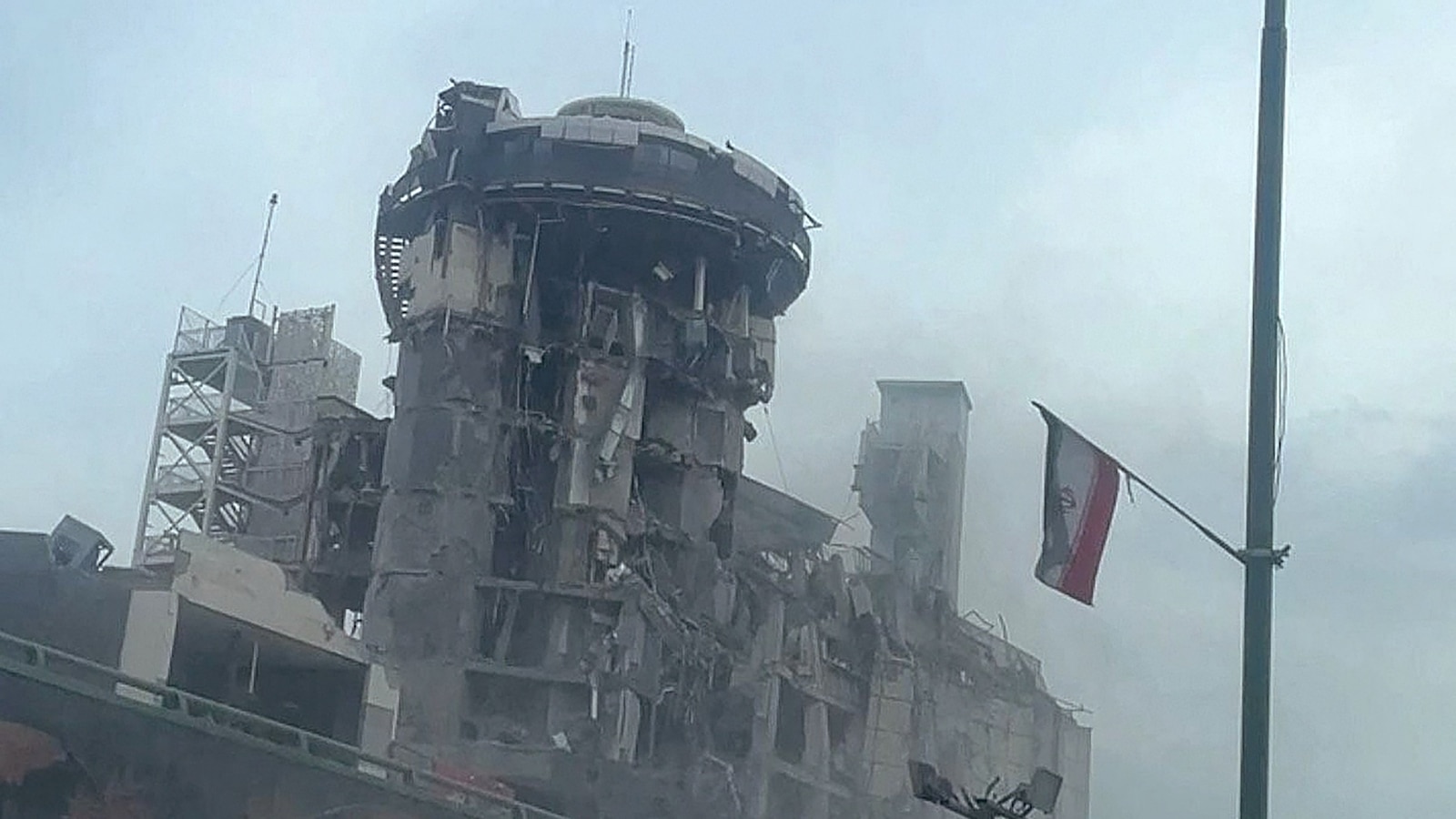

The U.S.-Iran Conflict: A Month of Escalation and Uncertainty
How a Military Operation Spiraled Into Regional War
What President Donald Trump predicted would be a swift four-week military operation has evolved into a complex regional conflict that continues to claim lives and destabilize the Middle East. On February 28, the United States and Israel launched what they called Operation Epic Fury—a coordinated assault on Iranian military and government installations. Now, more than a month later, American forces remain deeply engaged in combat operations that have expanded far beyond their initial scope, drawing in neighboring countries and threatening global energy markets. As the Pentagon prepares to deploy thousands of additional troops to the region, questions mount about how this conflict began, what it has accomplished, and most importantly, how it will end. The human cost continues to rise with each passing day, while diplomatic efforts struggle to gain traction against a backdrop of ongoing military strikes and retaliatory attacks.
The Road to War: Failed Diplomacy and Military Action
The path to Operation Epic Fury was paved with failed negotiations and escalating tensions. In the months leading up to the February strikes, the United States and Israel had already conducted attacks on Iranian nuclear weapons facilities, with Trump claiming at the time that Iran’s nuclear capabilities had been completely destroyed. Despite this show of force, the administration attempted to engage Tehran in negotiations for a comprehensive nuclear deal. These talks, however, never gained momentum. Just one day before launching the massive strike operation, President Trump expressed his dissatisfaction with how the negotiations were progressing, essentially signaling that military action was imminent. The decision to proceed with Operation Epic Fury came without Congressional approval, with Trump justifying the strikes as necessary “to defend the American people by eliminating imminent threats from the Iranian regime.” He also made a direct appeal to the Iranian people, calling on them to overthrow their government—a message that revealed regime change as at least one of the administration’s objectives, whether officially acknowledged or not.
The Devastating Human Toll and Expanding Battlefield
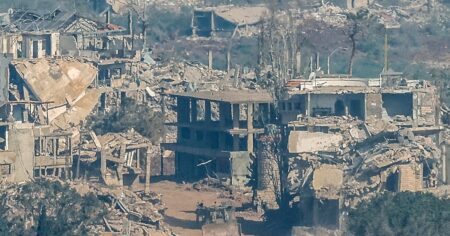
The initial strikes killed Iran’s Supreme Leader, Ayatollah Ali Khamenei, among many others in Tehran, creating a leadership vacuum quickly filled by his son Mojtaba Khamenei. But beyond the targeted elimination of regime leaders, the conflict has exacted a horrific price on civilian populations throughout the region. According to reports compiled by several human rights organizations, more than 1,440 Iranian civilians have been killed by U.S. and Israeli strikes as of late March, including at least 217 children. Among the most devastating incidents was a missile strike on an Iranian elementary school that claimed nearly 170 lives—an attack that Iranian officials blame on the United States, though the Trump administration says it is investigating what happened. The war’s impact has spread far beyond Iran’s borders. Israel has intensified its campaign against the Iran-backed Hezbollah militia in Lebanon, expanding ground operations in the southern part of that country and killing more than 1,000 people while injuring thousands more. American servicemembers have paid a price as well, with thirteen killed since the war began—seven from Iranian retaliatory strikes in Kuwait and Saudi Arabia, and six from an aircraft crash in Iraq. More than 300 U.S. troops have been injured, according to military officials.
Economic Warfare and the Strait of Hormuz Crisis
Iran’s response to the U.S.-Israeli attacks has included a strategic move with potentially catastrophic economic implications: effectively closing the Strait of Hormuz, one of the world’s most critical maritime passages for oil shipping. This narrow waterway, through which a significant portion of global oil supplies normally passes, has become a flashpoint in the conflict. Iran has attacked several oil tankers since late February, bringing shipping traffic through the strait to a virtual standstill. The supply shock has sent oil prices soaring, threatening to trigger a global energy crisis that would impact economies far removed from the Middle East battlefield. Iran has also launched retaliatory strikes against energy infrastructure in several Gulf states, particularly after Israel struck Iran’s largest gas field—an attack that one Qatari official described as a “dangerous escalation.” The resulting fires and damage to oil facilities in countries like the United Arab Emirates have created dramatic images of the conflict’s economic dimension. President Trump has threatened to attack Iran’s power plants if the strait isn’t fully reopened, though he has extended his deadline for this ultimatum to April 6, suggesting either flexibility in negotiations or uncertainty about how to proceed.
Shifting Goals and Military Objectives
As the conflict has dragged on beyond Trump’s initial four-week timeline, the administration’s stated objectives have shifted and expanded in ways that raise concerns about mission creep. What began with talk of eliminating nuclear threats has evolved to include regime change, ensuring peace throughout the Middle East, and reopening the Strait of Hormuz. The U.S. military reports that its airstrikes have successfully degraded Iran’s navy, ballistic missile stockpiles, and production capabilities. Preventing Iran from obtaining a nuclear weapon remains a central justification for the war, with Trump having suggested that Americans might even go into Iran to physically seize enriched uranium—an operation that experts say would require a substantial ground force and carry enormous risks. During a recent Cabinet meeting, Vice President JD Vance emphasized the importance of the nuclear objective while ominously warning that “further military options” remain on the table. This expansive and evolving set of goals has made it difficult to define what victory would look like or when the operation might reasonably be considered complete.
The Uncertain Path Forward: Negotiations and Military Buildup
The current situation presents a contradictory picture of simultaneous military escalation and diplomatic engagement. The White House claims that “productive” negotiations are ongoing between the U.S. and Iran, though Iranian officials in Tehran have publicly denied that any such talks are taking place. Through Pakistani intermediaries, the U.S. has reportedly presented Iran with a 15-point framework for a peace deal addressing ballistic missiles, nuclear programs, and maritime routes, but as of late March, Secretary of State Marco Rubio acknowledged that no response had been received from Tehran. Meanwhile, the Pentagon is preparing to surge as many as 5,000 additional troops to the Middle East and has requested $200 billion in supplemental funding for the war—a request that has been met with bipartisan skepticism from lawmakers concerned about costs and commitment. Secretary Rubio has declined to answer directly whether the U.S. plans to deploy ground troops inside Iran, though he insists the administration can achieve its goals without putting boots on the ground. President Trump, who initially predicted the war would last four weeks, now says the operation is “ahead of schedule” and should end soon, with Rubio estimating completion in “a matter of weeks, not months.” Israeli defense officials, however, say they need “a few more weeks” to fully degrade Iranian military capabilities. As the conflict enters its second month with no clear end in sight, the gap between official optimism and the reality on the ground continues to widen, leaving thousands of families throughout the region to wonder when the violence will finally stop.