



UConn Claims Top Seed in Women’s NCAA Tournament: The Road to History Begins
The Huskies Edge Out UCLA for the Premier Position
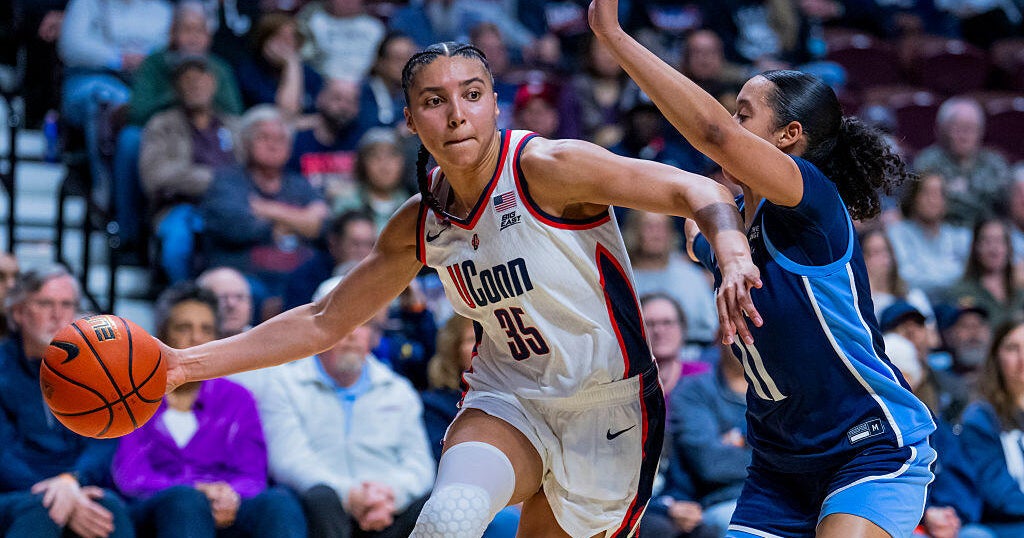
When the women’s NCAA Tournament bracket was unveiled on Sunday night, the University of Connecticut found itself at the pinnacle, narrowly securing the coveted No. 1 overall seed ahead of UCLA. For most programs, this designation would be cause for significant celebration and fanfare. However, for UConn’s legendary coach Geno Auriemma, the distinction carries a more measured significance. With his team sitting at a perfect 34-0 record and chasing the school’s 13th national championship, Auriemma maintained his characteristic pragmatism about the seeding. “We have been in that situation before, not that much different than being a No. 2 seed or a No. 1 seed somewhere else,” he explained with the wisdom of someone who has navigated these waters countless times. The veteran coach emphasized that regardless of seeding, tournament success ultimately comes down to defeating the best teams when it matters most. This marks the 23rd time UConn has earned a No. 1 seed and the first since 2021, testament to the program’s enduring excellence under Auriemma’s leadership. The Huskies now stand just six victories away from completing the seventh undefeated season in school history and becoming the first team to repeat as champions since their own remarkable run of four consecutive titles from 2013 to 2016.
The Selection Committee’s Difficult Decision
The choice between UConn and UCLA for the top overall seed wasn’t made lightly. According to Amanda Braun, the NCAA selection committee chair, the debate remained exceptionally close throughout the deliberation process. Both powerhouse programs presented compelling cases for the premier position, making the committee’s job particularly challenging. UCLA entered the discussion with an impressive 31-1 record, their only blemish coming against Texas on a neutral court. Following that defeat, the Bruins had reeled off 25 consecutive victories in dominant fashion, establishing themselves as one of the most formidable forces in women’s college basketball. The committee spent considerable time reviewing game footage from both programs, analyzing not just the wins but how those victories were achieved. Ultimately, what separated these two elite teams came down to what Braun described as “the observable component”—the way UConn won throughout the season. The committee felt that the manner in which the Huskies dispatched their opponents gave them a slight edge in this incredibly tight race. A committee vote was required to break the deadlock, and when the ballots were counted, UConn emerged with the top position, though UCLA’s placement as the second overall seed reflected just how marginal the difference truly was between these two championship-caliber programs.
UCLA’s Quest for Historic Glory
While missing out on the top overall seed by the slimmest of margins might disappoint some programs, UCLA has plenty of reasons for optimism as they pursue their first-ever NCAA women’s basketball championship. Under head coach Cori Close’s guidance, the Bruins have assembled an experienced and talented roster led by center Lauren Betts, and they’re determined to bring home the school’s inaugural title in the sport. Last year’s tournament run saw UCLA reach the Final Four before falling to UConn, providing valuable experience that the team hopes to build upon this season. The Bruins also carry the hopes of their entire conference, as they attempt to secure the first women’s national championship for the Big Ten Conference since 1999. The Big Ten has shown remarkable depth this season, placing a record-tying 12 teams in the tournament field, matching their own mark from last season. This conference strength could provide UCLA with additional motivation, knowing they have the opportunity to break a championship drought that has lasted more than two decades. Other top-seeded teams in UCLA’s region include No. 2 LSU, No. 3 Duke, and No. 4 Minnesota, setting up what promises to be a challenging path to the Final Four. However, with their experience, talent, and the dominant fashion in which they’ve won 25 straight games, the Bruins have every reason to believe this could finally be their year to cut down the nets.
Texas and South Carolina Round Out the Top Seeds
The Texas Longhorns claimed the third No. 1 seed after a stellar season that included winning the SEC Tournament title and posting a 31-3 record. Perhaps most impressively, Texas defeated South Carolina in two of their three meetings this season, demonstrating their ability to compete with and defeat the nation’s elite programs. The Longhorns will compete in the Fort Worth Regional, where they’ll face competition from No. 2 Michigan, No. 3 Louisville, and No. 4 West Virginia. South Carolina, despite those losses to Texas, secured the fourth No. 1 seed and will play in the Sacramento Regional. The Gamecocks’ 31-3 record and the fact that they’ve earned a No. 1 seed for six consecutive seasons speaks to the program’s sustained excellence under their leadership. They’ll be joined in their region by No. 2 Iowa, No. 3 TCU, and No. 4 Oklahoma. The distribution of top seeds reflects the competitive balance in women’s college basketball this season, with programs from different conferences—UConn from the Big East, UCLA from the Big Ten, Texas from the SEC, and South Carolina also from the SEC—all earning premier positions. This diversity among the top seeds suggests an open tournament where multiple programs have legitimate championship aspirations.
Tournament Storylines and Notable Selections
Beyond the top seeds, this year’s tournament features several compelling storylines. The College of Charleston made history by winning the Colonial Athletic Association and qualifying for the NCAA Tournament for the first time in school history. As a 14-seed, the Cougars represent the lone first-time entrant in the field, a notable decrease from last season when six newcomers made their tournament debuts. Tennessee managed to extend their remarkable streak of appearing in every NCAA Tournament since the inaugural event in 1982, but the circumstances surrounding their inclusion sparked considerable discussion. The Lady Vols, seeded 10th, have lost seven consecutive games entering the tournament and finished with just 16 wins—the fewest for an at-large team since Oklahoma also had 16 in 2018. This represents the lowest seed for the storied Tennessee program since they were an 11-seed in 2019, reflecting how far the once-dominant program has fallen from its glory days. The selection process also left some quality teams on the outside looking in, with BYU, North Dakota State, Utah, and Texas A&M identified as the first four teams excluded from the field. The conference distribution shows the depth across women’s college basketball, with the Big Ten and SEC combining for 22 teams in the 68-team field, while the ACC contributed nine teams and the Big 12 added eight.
Financial Compensation and Tournament Format
The NCAA continues to evolve its approach to the women’s tournament, implementing changes designed to increase equity and enhance the overall experience. For the second consecutive year, teams participating in the women’s tournament will receive financial compensation similar to the men’s field for each round they play. The NCAA uses what it calls “units”—a tally of wins, automatic qualifiers, and at-large bids that determines conference payouts. This year, the organization added extra units for teams reaching the championship game and the team that ultimately wins the title, with this additional compensation coming from an expanded overall pool rather than decreasing the value of existing units. The tournament format maintains recent innovations, with the top 16 seeds hosting first- and second-round games at their home venues. The regional rounds will take place at two neutral sites for the fourth consecutive year, with Fort Worth, Texas, and Sacramento, California, each hosting eight Sweet 16 teams. The Final Four is scheduled for Phoenix on April 3, with the championship game following two days later on April 5. In a new wrinkle designed to benefit all stakeholders, the NCAA revealed the 16 host schools a day early this year. This advance notice gives schools additional time to sell tickets, allows broadcast partner ESPN a head start on moving equipment to various locations, and provides the NCAA more time to distribute marketing materials to host sites. As the tournament prepares to tip off, the stage is set for another thrilling celebration of women’s college basketball, with UConn attempting to defend its title and complete an undefeated season while challengers like UCLA, Texas, and South Carolina look to end the Huskies’ reign.