


The Weight of Uncertainty: Life in the Shadow of American-Iranian Tensions
A Nation Caught Between Hope and Fear
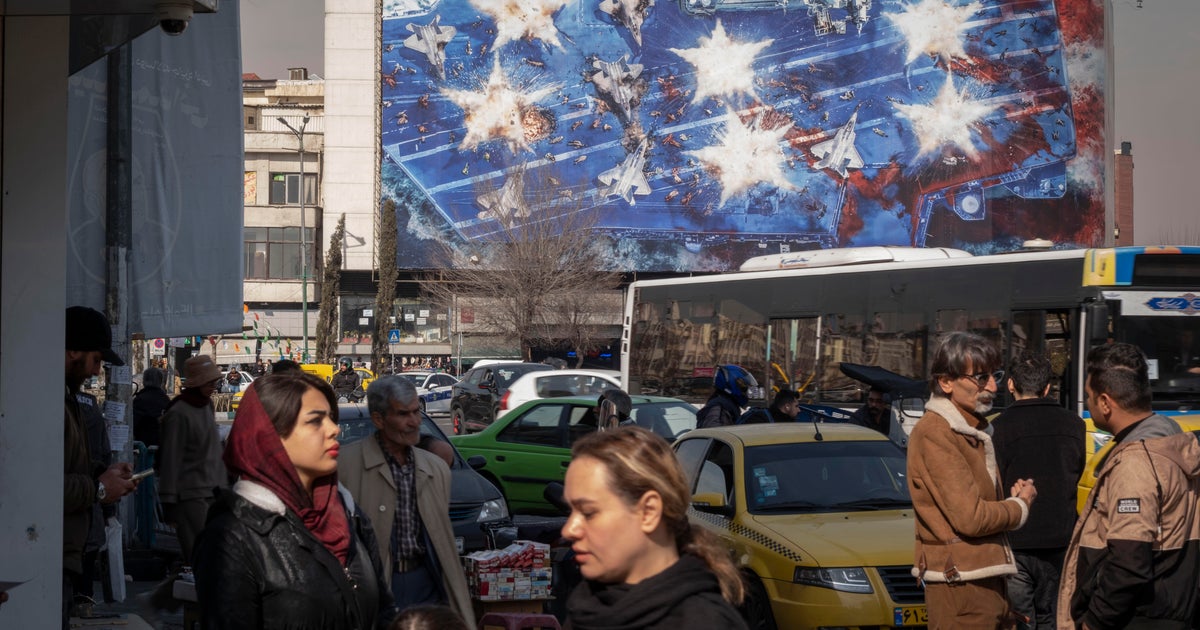
As American warships cut through international waters toward Iran’s coastline, millions of ordinary Iranians find themselves trapped in a familiar yet terrifying limbo. At least ten U.S. naval vessels, including a massive aircraft carrier and five destroyers, are making their way toward Iranian waters, creating ripples of anxiety that extend far beyond military strategists and government officials. President Trump’s escalating rhetoric toward Iran’s leadership has left everyday Iranians in a state of nervous anticipation, wondering whether their lives are about to be upended by military conflict or potentially transformed by the political change Trump has promised to help deliver. These aren’t abstract geopolitical concerns for the people living in Tehran and other Iranian cities—they’re deeply personal fears about survival, safety, and the future of their country. While diplomatic channels remain cautiously open through intermediaries like Switzerland, Oman, Qatar, Saudi Arabia, and Turkey, the gap between American demands and Iranian red lines appears as wide as ever, leaving millions to simply wait and wonder what comes next.
The situation is particularly complex because many Iranians harbor mixed feelings about American intervention. While they certainly don’t want their country bombed, many are desperate for change after living under severe economic pressure and political repression for decades. President Trump has made two primary demands clear in his recent communications with Iran: no nuclear weapons development and an immediate end to the killing of protesters. For Iranians who took to the streets in early January only to face violent crackdowns from government security forces, Trump’s words offer a glimmer of hope that the international community—particularly the world’s most powerful nation—might actually stand with them against their own government. Yet this hope is tempered by deep uncertainty about what American “help” might actually look like and whether it would ultimately improve or worsen their already difficult circumstances.
Surviving Under Sanctions and Silence
Life in Iran today means navigating multiple crises simultaneously. Since the government brutally suppressed protests in early January, authorities have severely restricted internet and phone connections, making it nearly impossible for Iranians to communicate with the outside world or even coordinate with fellow citizens. This digital blackout compounds the isolation people feel as military tensions escalate, cutting them off from reliable information about what’s actually happening and what might come next. Meanwhile, the crushing weight of international sanctions—recently intensified by the Trump administration—has plunged Iran into an economic catastrophe that affects every aspect of daily life. Inflation has reached record highs, and the local currency has depreciated so dramatically that even Iranians with stable employment struggle to afford basic necessities. The government, desperately seeking revenue, has steadily increased the cost of public services and utilities, adding yet another burden to families already stretched impossibly thin.
For young Iranians like Nahid, a 25-year-old college graduate working at a Tehran coffee shop, the economic reality is particularly disheartening. Despite her education, she earns so little that living independently is impossible, forcing her to remain in her parents’ home. She watches her father stockpiling food and supplies, preparing the family for what he fears will be “much more difficult days” ahead. This scene is playing out in households across Iran—families trying to prepare for potential war or further economic collapse while already struggling to meet their current needs. Store shelves may be fully stocked, but prices have soared beyond what most people can afford, making the prospect of stockpiling supplies a luxury that exists only in theory. The cruel irony is that Iranians are being told to prepare for crisis while already living in one, expected to save resources they don’t have for an uncertain future that feels increasingly threatening.
Taxi driver Mohammed, 35, represents another facet of Iran’s economic suffering. With a wife and two young children depending on him, he’s watched his income drop by half as the combination of economic crisis and recent street unrest has devastated his business. The streets of Tehran that should be filled with potential customers are instead marked by tension, military presence, and the lingering fear from January’s violent crackdowns. For Mohammed and millions like him, Trump’s promises to support the Iranian people carry real significance. He specifically recalls Trump telling protesters to “keep up, as help is on the way,” and he desperately wants the American president to make good on that commitment. Having witnessed peaceful protesters shot down by police and paramilitary Basij forces, Mohammed sees American pressure on Iran’s government not as an external threat but as potential salvation from a regime that has shown itself willing to kill its own people to maintain power.
Defiance Amid the Threats
Not all Iranians welcome American intervention, however. In Tehran’s sprawling central bazaar, merchant Hai Morteza Armani, a 67-year-old who describes himself as a devout Muslim and government supporter, expresses the defiant attitude that Iran’s leadership has cultivated among loyalists. He dismisses Trump’s threats as “nonsense” and “baseless,” insisting that “the U.S. cannot do any damn thing.” His confidence stems partly from Iran’s demonstrated missile capabilities and the vulnerability of American military forces stationed throughout the region. Armani’s warning is chilling in its directness: if the Americans harm Iran’s leadership, supporters like him vow to “kill as many American soldiers as possible.” This sentiment reflects the genuine support that Iran’s government retains among certain segments of the population, particularly those whose religious convictions and economic interests align with the current system.
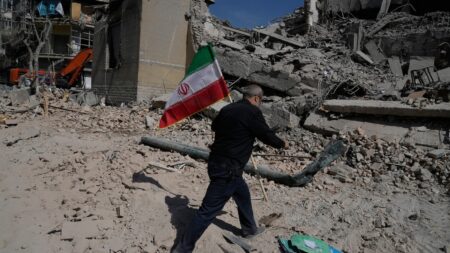
This defiant stance, however, must contend with recent history. Just seven months ago, President Trump did indeed order military action against Iran, joining Israel in a 12-day war that included strikes on three of Iran’s most sensitive nuclear facilities. That conflict demonstrated that Trump’s threats aren’t always empty rhetoric—sometimes they translate into actual missiles and bombs. The effectiveness of coordinated American-Israeli military action against Iranian targets is a fresh memory that complicates the government’s public posture of fearlessness. Yet the regime continues to refuse American preconditions for negotiations, particularly demands to cease uranium enrichment entirely and accept constraints on ballistic missile development. For Iran’s leadership, these programs represent both national security necessities and matters of sovereign right that cannot be bargained away, even under threat of military action.
Israel Watches and Waits
Across the region in Israel, the escalating tensions between Washington and Tehran have rekindled anxieties that were only recently eased. The memories of last year’s 12-day war remain vivid in Israeli minds—the countless air raid sirens, the rushes to bomb shelters, the uncertainty of whether each Iranian missile would be intercepted by Israel’s highly effective but not infallible air defense systems. Israeli media has been dominated for weeks by speculation about an imminent American attack on Iran and the near-certainty that Israel, as America’s closest regional ally, would bear the brunt of Iranian retaliation. This isn’t mere speculation; it’s based on established patterns of Iranian response and the regime’s frequent threats to target Israel in retaliation for actions by the United States or other adversaries.
The Israeli response to these tensions reveals a society trying to balance preparedness with normalcy. Several municipalities have announced the reopening of public bomb shelters that had been closed after the previous conflict. Airlines have canceled flights to Israeli airports, and hotels report waves of tourist cancellations as visitors decide that now might not be the best time to visit the Holy Land. Israelis have begun stockpiling food and bottled water, preparing their homes for the possibility of extended periods in shelters. Yet without specific instructions from the government or the Home Front Command—the agency responsible for civilian protection during security events—people are left in an uncomfortable state of partial preparedness. Should they cancel upcoming vacations? Postpone weddings and other celebrations? Change business plans? Without clear guidance, these personal decisions become sources of additional stress.
The information vacuum has created fertile ground for rumors to flourish. In the absence of reliable official information, Israelis trade secondhand claims about the timing of American strikes—some insist it will happen within hours, others say days, still others believe it’s all bluff and bluster. Everyone seems to know someone who claims to have inside information, though the contradictory nature of these rumors reveals their unreliability. Daily conversations revolve around these speculations, creating a background hum of anxiety that affects everything from business decisions to family planning. Meanwhile, the Israeli government has expressed considerable support for Trump’s stated goals—protecting Iranian protesters and pressuring the regime—reflecting the widespread sympathy Israelis feel for ordinary Iranians suffering under their government’s rule. There’s a recognition that the Iranian people and the Iranian regime are distinct entities, and that many Iranians want the same thing Israelis want: a different government in Tehran.
The Human Cost of Geopolitical Brinkmanship
What emerges from these voices—Iranian and Israeli, hopeful and fearful, defiant and desperate—is a portrait of ordinary people trapped in circumstances far beyond their control. Nahid doesn’t want America to invade her country, but she does want Trump to keep his promise to intervene if the regime continues killing protesters. Mohammed wants help for his people but also just wants to earn enough driving his taxi to feed his children. Armani is prepared to defend his country and leaders against American aggression, even as his neighbors in Tehran might welcome that very intervention. In Israel, families are trying to decide whether to open their mail-order packages of emergency supplies or hold off a bit longer, whether to let their children attend summer camps or keep them closer to home, whether this threat is real or just another round of Middle Eastern posturing that will eventually blow over.
The tragedy is that none of these people—not the struggling coffee shop worker, not the taxi driver, not the devout merchant, not the anxious Israeli parents—will have any meaningful say in what happens next. Their fates rest in the hands of leaders in Washington, Tehran, and other capitals, leaders who may or may not fully appreciate the human consequences of their decisions. The diplomatic efforts by regional mediators continue, but progress appears minimal at best. Neither side shows any willingness to offer the concessions that might create an off-ramp from this confrontation. Iran won’t surrender its nuclear program or ballistic missiles, which it views as essential to national security and sovereign rights. America won’t lift the pressure while Iran continues these programs and suppresses its own people. And so the warships continue their journey, the rhetoric continues to escalate, and millions of ordinary people on multiple sides of this conflict continue to wait, worry, and wonder whether their lives are about to change forever—and whether that change will bring the liberation some hope for or simply more suffering that nobody wants.