
Voices from Tehran: Iranians Navigate Hope and Fear After Supreme Leader’s Death
A Decades-Long Fight for Freedom
For over fifteen years, Leila has been a familiar presence on the streets of Tehran, her voice rising in defiance against the Islamic Republic that has governed Iran since 1979. Her activism began during her university years, where she joined other students in chanting “death to the dictator,” a rallying cry that has echoed through Iranian protest movements for decades. Since those early days, she has committed herself to every movement challenging the regime’s authority. Her participation in protests against Iran’s mandatory hijab laws intensified following the tragic death of Mahsa Amini in 2022—a 22-year-old woman who died in police custody after being arrested by the country’s morality police for allegedly wearing her hijab improperly. Amini’s death sparked international outrage and ignited one of the largest protest movements in Iran’s recent history, with women across the country removing their headscarves in public acts of resistance. For security reasons, ABC News has chosen to protect Leila’s full identity, as activists in Iran face serious risks including arrest, torture, and execution. Throughout her years of activism, Leila has witnessed the brutal response of the state: friends beaten with batons by riot police, others permanently blinded by rubber bullets, and countless injuries among peaceful protesters. She herself sustained an arm injury while fleeing through a panicked crowd to escape pursuing security forces. Time and again, her hopes for meaningful change were crushed as protests eventually faded and life returned to what she describes as a grim routine under the watchful eye of the Islamic Republic.
A Moment of Unprecedented Change
However, Leila firmly believes that this time represents something fundamentally different. On February 28th, Ayatollah Ali Khamenei, Iran’s Supreme Leader since 1989, was killed in a large-scale air attack on the country conducted jointly by the United States and Israel. Khamenei had presided over Iran’s complex theocratic system for over three decades, wielding ultimate authority over all aspects of Iranian political, military, and religious life. His death marks the end of an era and has created a power vacuum that both excites and terrifies Iranians across the political spectrum. For Leila and many like-minded activists, the news brought an overwhelming mix of emotions. “It’s a very good feeling,” she told ABC News, describing celebrations that took place in private homes across the country. “We celebrate it. We drink! And we have parties in our houses. We call each other and congratulate each other. We cry a lot. We think about the evil that has ruined our lives. He’s gone. It’s a very, very strange feeling.” These clandestine celebrations reflect the deep resentment many Iranians harbor toward the regime, feelings that must typically remain hidden in a society where public dissent can be deadly. The mixture of joy, relief, disbelief, and tears that Leila describes captures the complicated emotions of a population that has suffered under authoritarian rule for generations.
Conflicting Perspectives on Foreign Intervention
Not all Iranians share Leila’s optimism about recent events. Omid, a 26-year-old university student whose identity has also been concealed for safety reasons, offers a starkly different perspective on the situation. He views the assassination of Khamenei and the accompanying military strikes as fundamentally misguided strategies that will ultimately harm rather than help the cause of democracy in Iran. “The most remarkable thing in my opinion is that the assassination of the ayatollah was the wrong decision,” Omid explained. “Bombing a country will not bring democracy to it. Bombing our country resulted in strengthening the power of the Islamic Regime and what I see is not a ground for democracy, but they are making the scene worse and worse by these attacks.” His viewpoint reflects a common concern among many Iranians who oppose the regime but also reject foreign military intervention as a path to change, believing instead that democracy must come from within Iranian society itself. This perspective is rooted in Iran’s complex history with foreign interference, particularly the American and British-backed coup in 1953 that overthrew the democratically elected Prime Minister Mohammad Mossadegh, an event that continues to shape Iranian attitudes toward Western involvement. Omid’s concerns about the strengthening of hardline elements within the regime appear well-founded based on Leila’s observations of the current security situation in Tehran. She reports that Revolutionary Guard forces have emerged from their bases and are gathering at mosques and schools throughout the city, while police stations have been shut down with armed officers now stationed on street corners. “It’s very scary because they all have guns, and they are very furious now because they have lost the supreme leader,” Leila said, describing an atmosphere of tension and potential violence.
The Question of Future Leadership
The question of who might lead Iran after the fall of the Islamic Republic has become a central point of debate and division. Leila and a portion of Iran’s activist community have rallied behind Crown Prince Reza Pahlavi, the U.S.-based son of Shah Mohammad Reza Pahlavi, who was overthrown in the 1979 Islamic Revolution. The younger Pahlavi has positioned himself as a potential interim leader who could guide the country through a transitional period until democratic elections could be organized. In recent protests, demonstrators including Leila have been chanting Pahlavi’s name in the streets, seeing him as a symbol of a pre-revolutionary Iran and a potential bridge to a democratic future. “We are extremely united,” Leila insisted. “If the IRGC goes down, we are all united about the principles that Mr. Pahlavi has established and we will take control.” However, this vision of unity around Pahlavi’s leadership is far from universal among Iranians seeking change. Omid strongly disputes the idea that Pahlavi could successfully return to power, pointing to significant opposition both from regime supporters and from many reform-minded Iranians who reject monarchist restoration. “What I see is that Pahlavi has no chance of taking back the government,” Omid stated. “People, specifically the huge supporters of the regime, are not allowing Pahlavi to take control of the country.” Polling data on Pahlavi’s support is limited and unreliable due to the difficulties of conducting independent surveys in Iran, but research from GAMAAN, a European-based independent research foundation, found that the exiled crown prince had a favorability rating of approximately 30% of the population in 2024. This suggests significant but far from majority support for a Pahlavi restoration, reflecting the deep divisions within Iranian society about the country’s future direction.
Daily Life in a City Under Siege
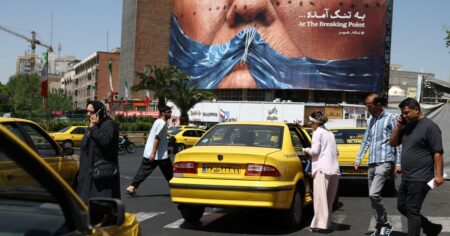
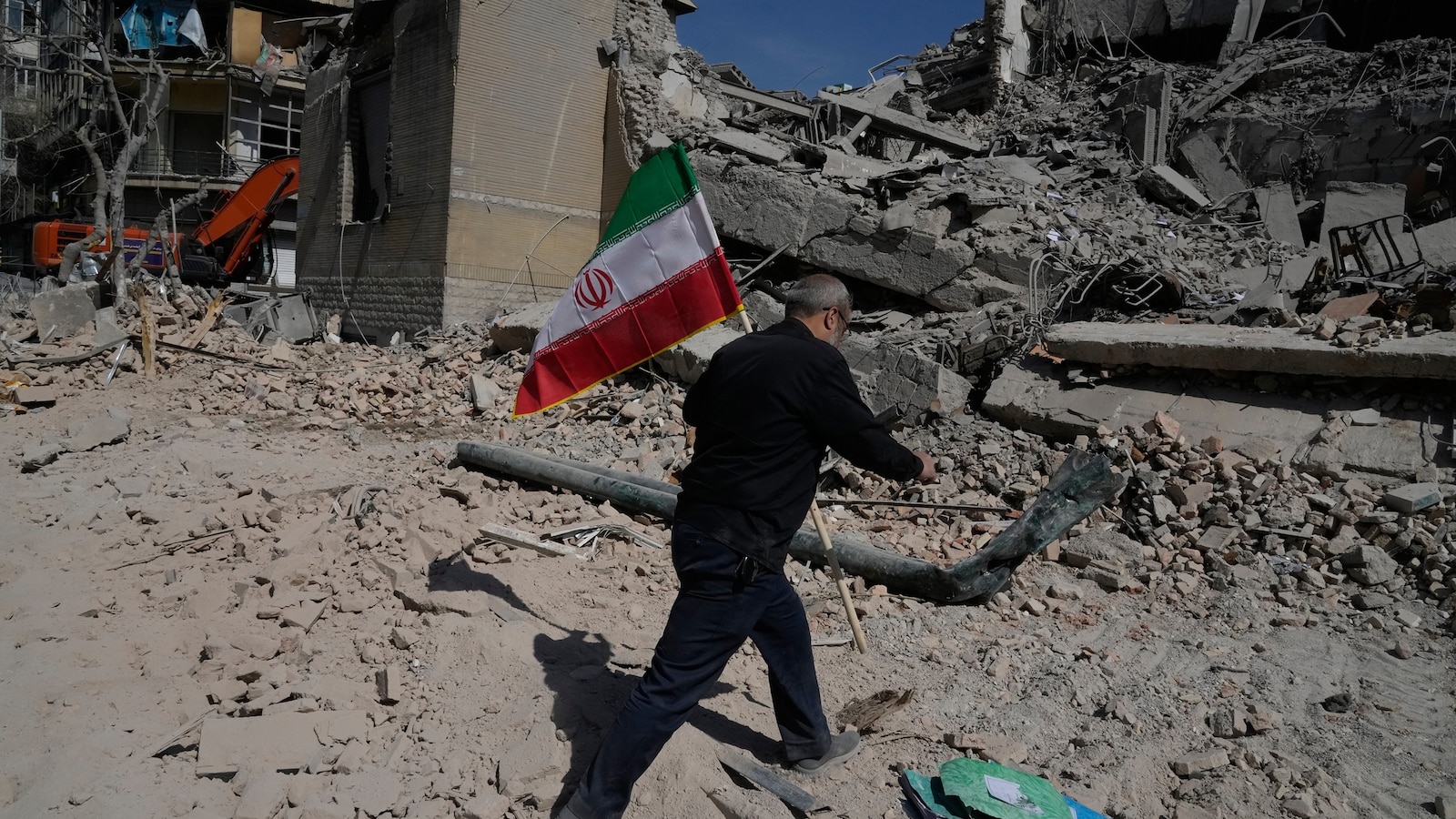
Ali, a 39-year-old Tehran resident whose identity has also been protected by ABC News, provides insight into the practical realities of daily life in the Iranian capital during this period of crisis and uncertainty. His description captures the psychological toll of living in a city that has become a conflict zone, where the sounds of explosions have become part of the background noise of everyday life. “Life these days is both full of excitement and joy, and at the same time extremely difficult and anxiety-inducing,” Ali explained. The duality he describes—simultaneous hope for change and fear for personal safety—characterizes the experience of many Iranians caught between aspirations for freedom and the dangers of violent conflict. “Every sound that comes is automatically perceived as a potential danger. That alone brings a huge amount of stress,” Ali continued, describing how the constant threat of airstrikes has created a state of hypervigilance that wears on residents’ mental health. The information vacuum created by internet shutdowns and unreliable state media has made this anxiety worse. “There is no way to receive reliable news. The internet is completely cut off, and no one watches Iranian television,” Ali said. This lack of trustworthy information forces residents to rely on informal networks and personal observation. “After every explosion, people usually call each other to share what they have seen and to check on one another,” he explained, describing how Iranians have developed grassroots communication systems to compensate for the absence of reliable media.
Hope Amid Uncertainty
Despite the fear and stress, Ali reports seeing signs of hope on the faces of his fellow Iranians when he ventures out for essential shopping and errands. “In wartime, their hope is for salvation. People keep telling each other that these are the final days—that we just need to endure,” he said. This sentiment reflects a widespread belief among many Iranians that the current crisis, despite its dangers and hardships, might finally bring about the end of the Islamic Republic and open the door to a different future. However, the path from the current chaos to any kind of stable democratic governance remains unclear and deeply contested. The competing visions represented by Leila, Omid, and Ali—ranging from enthusiastic support for regime change and potential monarchist restoration to concerns about foreign intervention and fears about increased hardline repression—illustrate the complexity of Iran’s current situation. What unites these different perspectives is a shared recognition that Iran stands at a pivotal moment in its history, with the death of Khamenei creating both opportunities and dangers that will shape the country for generations to come. As Iranians navigate this period of profound uncertainty, they must balance their hopes for freedom and democracy against the very real risks of civil conflict, foreign military intervention, and potential hardline crackdown. The coming weeks and months will determine whether this moment of crisis becomes a catalyst for the democratic transformation that activists like Leila have fought for over decades, or whether it leads to renewed authoritarianism, fragmentation, or prolonged conflict. What remains clear is that ordinary Iranians, despite their different political perspectives and visions for the future, will continue to endure, adapt, and work toward a better tomorrow for themselves and their country.