


NATO’s Arctic Watch: Defending the High North Against Russian Threats
Patrolling Europe’s Gateway to the Arctic
In the icy, unforgiving waters off Norway’s coast, a critical mission unfolds daily that most people never hear about. American and European naval forces are engaged in a high-stakes game of cat-and-mouse with Russian submarines in what has become one of the world’s most strategically important maritime corridors. This stretch of ocean represents far more than just frigid water and fishing grounds—it’s the gateway to the Arctic, where Europe’s northern frontier meets Russia’s military powerhouse. The Russian Northern Fleet, based on the frozen Kola Peninsula, regularly dispatches nuclear-armed submarines into these depths, slipping silently beneath the waves as they navigate toward the North Atlantic and potentially onward to America’s eastern seaboard.
CBS News recently joined the crew of a NATO warship participating in exercises designed to detect, track, and if war were to break out, neutralize these submarine threats before they can pass through the strategic gap between Greenland, Iceland, and the United Kingdom. This narrow passage, known among military strategists as a potential chokepoint, would become critically important in any conflict between Russia and the Western alliance. The waters that seem so remote and desolate are actually a frontline in a modern military competition that echoes the tense submarine warfare of the Cold War, but with 21st-century technology and even higher stakes.
Operation Arctic Dolphin: Alliance Unity in Action
The multinational exercise known as Operation Arctic Dolphin demonstrates the NATO alliance’s commitment to collective security in the far north. This massive undertaking brings together ships, submarines, and aircraft from Spain, Germany, France, the United Kingdom, and numerous other member nations in a coordinated effort to maintain military readiness in one of the world’s most challenging operational environments. Commodore Kyrre Haugen, commander of the Norwegian Fleet overseeing Arctic Dolphin, emphasized the mutual benefits that come from being part of such a powerful military coalition. “Norway has the great advantage of being a part of such a huge alliance,” he explained, “but every nation is taking advantage of being a part of something that is bigger than themselves.”
Norway’s position gives it unique insight into Arctic operations, having maintained a presence in the region since the Cold War era. According to Haugen, the renewed “special focus” on the Arctic highlights just how crucial this region has become to the security of both Europe and the United States. The threat isn’t theoretical—Russian submarines armed with missiles capable of striking targets across Europe and America regularly patrol these waters, seeking the deep ocean where they can operate undetected. The ability of these vessels to launch devastating attacks from positions far out in the Atlantic makes tracking and monitoring them an essential component of Western defense strategy.
The Arctic as a New Strategic Battlefield
U.S. Air Force General Alexus Grynkewich, NATO’s Supreme Allied Commander in Europe, has characterized the Arctic as a “front line for strategic competition” in the modern era. This isn’t mere military rhetoric—Russia has been actively using the Arctic as a testing ground for its new generation of hypersonic missiles, weapons specifically designed to evade American air defense systems. These technological developments have transformed the Arctic from a remote, largely overlooked region into a critical theater where the balance of military power could shift dramatically. The race to secure dominance in this harsh environment has accelerated in recent years, driven by both military considerations and the reality that climate change is making previously inaccessible Arctic regions more navigable.
However, threats to regional stability haven’t come solely from Russian military activities. The NATO alliance itself has faced internal tensions over Arctic strategy, particularly following President Trump’s repeated insistence that the United States needed to take ownership of Greenland. His threats to impose tariffs on allies who didn’t comply with this demand created diplomatic friction within the alliance, though he eventually backed away from the tariff threat and announced what he described as an “ultimate long-term deal” with NATO partners regarding Greenland. Trump has also consistently criticized European allies for not spending enough on their own defense, accusations that have strained relationships even as the alliance faces growing external challenges.
NATO’s Arctic Disadvantage and Member Contributions
The reality is that NATO is playing catch-up in the Arctic, a situation that becomes clear when comparing the alliance’s regional presence to Russia’s. While seven of the eight Arctic states are NATO members, Russia controls more than half of the Arctic coastline and has built an infrastructure to match that geographical advantage. The Kremlin maintains almost as many permanently-manned bases in the region as all NATO members combined, giving Russia a significant head start in establishing military dominance in the high north. This imbalance has created urgency around improving NATO’s Arctic capabilities and coordination.
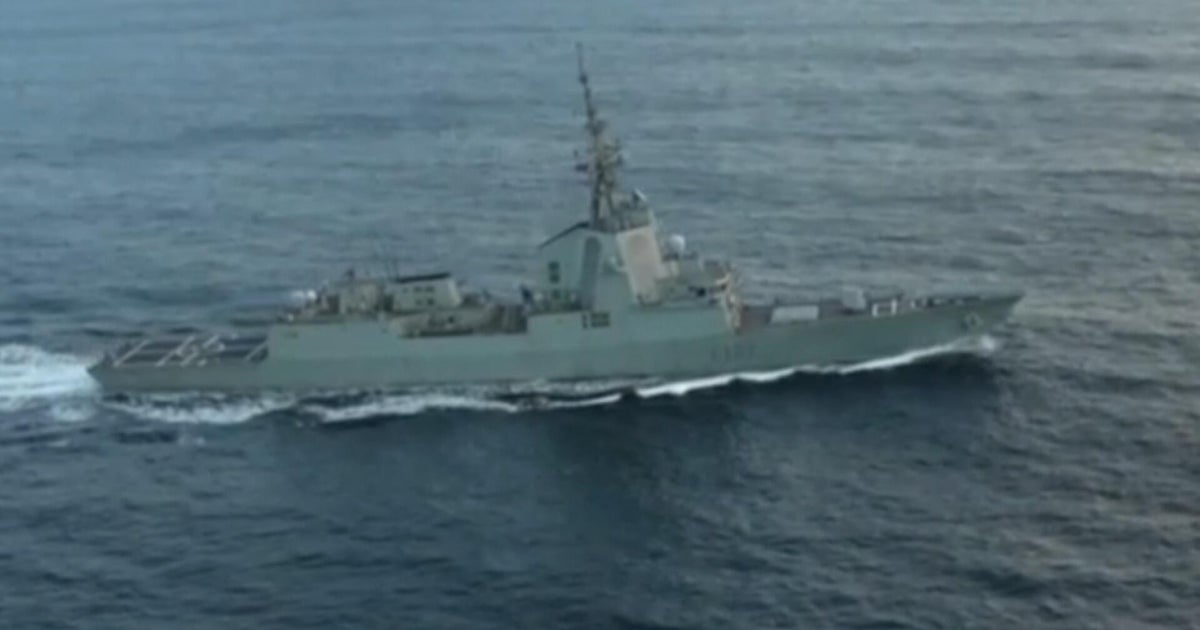
Aboard the Spanish frigate ESPS Almirante Juan de Borbon, Rear Admiral Joaquín Ruiz Escagedo defended his country’s contributions to NATO when asked about President Trump’s recent accusation that Spain wasn’t being “loyal” to the alliance. While diplomatically stating he wouldn’t “dig into political dynamics,” Escagedo gestured to the young naval officers working at maps and radar screens around him as evidence of Spain’s commitment. “The contribution of Spain, you can see here,” he said, emphasizing that his country brings significant capabilities to the table and remains fully committed to NATO’s principle of collective defense. “We cannot be isolated,” he insisted. “The power of NATO is the unity. That’s the success of NATO for decades.”
Arctic Sentry: A New Mission Takes Shape
That unity is about to face a new test as NATO moves forward with plans for an ambitious new operation called Arctic Sentry. A spokesperson for General Grynkewich confirmed to CBS News that planning is currently underway for this mission, which will serve as an “enhanced vigilance activity to even further strengthen NATO’s posture in the Arctic and High North.” While the spokesperson acknowledged that planning has “only just begun” and that details would be released later, the very existence of Arctic Sentry signals NATO’s recognition that the region requires sustained, coordinated attention from the alliance.
The concept of Arctic Sentry first emerged publicly when British Foreign Secretary Yvette Cooper mentioned it during negotiations that helped resolve President Trump’s confrontation with European allies over Greenland. Cooper explained that the United Kingdom had proposed working “through NATO on a new Arctic sentry, which is similar to what we already have through NATO—a Baltic Sentry and an Eastern Sentry,” referring to existing regional security partnerships among NATO members operating in other strategically sensitive areas. She told the BBC in January that Arctic security “is now going to be a focus of work through NATO, with different Arctic countries coming together and supported by other NATO countries on how we do that shared security.” This approach reflects NATO’s strategy of creating focused, regional missions that allow member nations with specific geographic interests and capabilities to take the lead while benefiting from the support and resources of the entire alliance. As the Arctic continues to grow in strategic importance—driven by Russian military activity, emerging navigation routes, and competition for natural resources—Arctic Sentry represents NATO’s commitment to ensuring that the alliance can effectively monitor, defend, and if necessary, control this crucial region for decades to come.