

The Fall from Grace: Prince Andrew’s Relocation Amid Mounting Epstein Scandal
A Quiet Departure from Royal Lodge
In a move that speaks volumes about the ongoing turmoil surrounding the British Royal Family, Andrew Mountbatten-Windsor—formerly known as Prince Andrew, Duke of York—has quietly relocated from his grand Royal Lodge residence in Windsor to a property on the Sandringham estate in Norfolk, eastern England. While Buckingham Palace had announced this transition back in October 2025, anticipating it would occur in early 2026, the actual move happened without fanfare or official royal announcement this week. The timing is particularly significant, coming just days after the U.S. Department of Justice released a staggering three million additional documents and photographs related to the late convicted sex offender Jeffrey Epstein. These materials have cast an even darker shadow over Mountbatten-Windsor’s already tarnished reputation, revealing previously unknown contacts between King Charles III’s younger brother and the disgraced financier who operated a sophisticated sex trafficking network before his death in prison in 2019.
The move to Sandringham—King Charles’s sprawling 31-square-mile private estate featuring numerous separate residences—represents yet another step in Andrew’s fall from royal prominence. No longer bearing his princely titles, which were stripped by his brother the King last year, Mountbatten-Windsor now occupies what many see as a form of internal exile within the royal properties. Sources indicate he may still make trips back to Windsor in the coming weeks to complete the relocation process, but the symbolism of this departure is unmistakable. The man who once held a position of privilege and public prominence within one of the world’s most famous families now finds himself relegated to the relative obscurity of the Norfolk countryside, far from the center of royal life and public scrutiny.
Disturbing New Evidence Emerges
The recently released trove of Epstein-related documents contains deeply troubling allegations that add significant weight to the existing concerns about Mountbatten-Windsor’s relationship with the convicted pedophile. Among the most disturbing revelations is a 2011 letter from a lawyer representing a woman who has since passed away. The letter claims that Mountbatten-Windsor and Epstein solicited this woman—described as an “exotic dancer”—to participate in various sexual acts during a party attended by other young women, some of whom appeared to be as young as fourteen years old. According to the lawyer’s account, the two men then propositioned the woman for a threesome, and after the encounter, invited her to travel with them to the Virgin Islands, an invitation she declined. The woman was reportedly promised payment that she never fully received, eventually agreeing to keep silent about her interactions with both men in exchange for $250,000.
Beyond these allegations, the documents also include what appear to be email exchanges between Mountbatten-Windsor and Epstein from 2010, painting a picture of a relationship that went far beyond casual acquaintance. In one exchange, the former prince allegedly invites Epstein to dinner at Buckingham Palace itself—the official residence of the British monarch and symbol of the institution’s gravitas and respectability. When Epstein mentions he is with several women and offers to “bring them all” to “add some life,” Mountbatten-Windsor’s response is equally casual: “Yes, plenty of space here for chat. Bring them.” Another email from the same period shows Mountbatten-Windsor writing to Epstein with startling familiarity: “God it’s cold and dank here! Wish I was still a pet in your family!” These communications suggest not only a close friendship but one characterized by the kind of casual facilitation of Epstein’s activities that investigators have long suspected involved numerous powerful individuals.
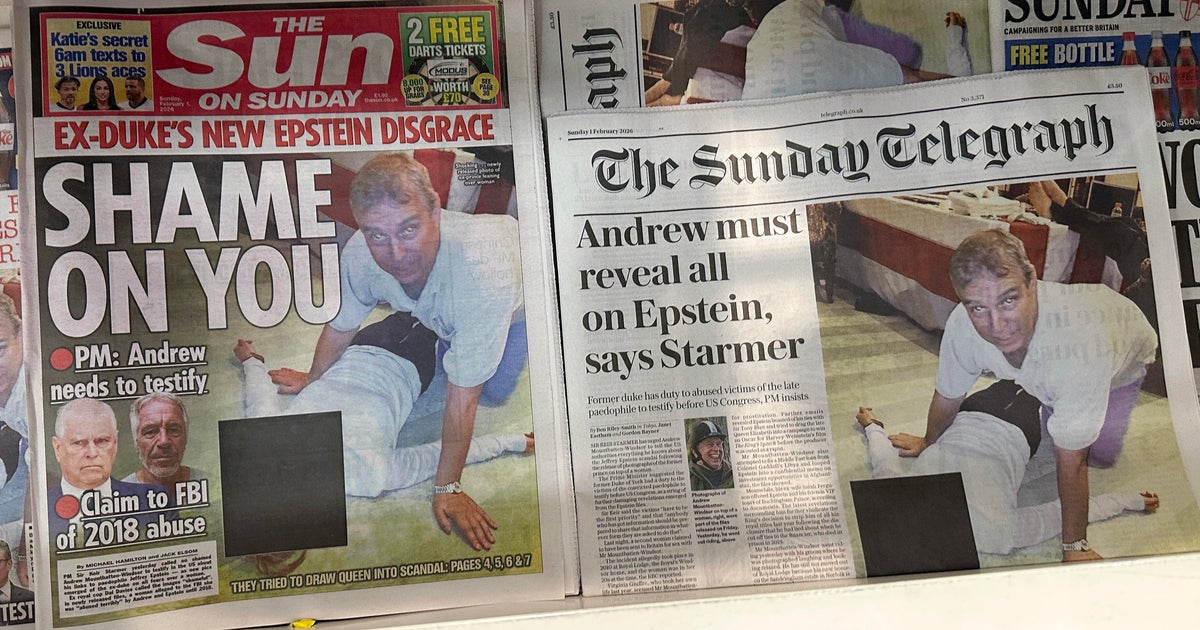
Perhaps most damaging are the photographs released by the Justice Department. These images show Mountbatten-Windsor in various poses with an unidentified woman whose face has been obscured—in one, he appears to be positioned on all fours over her as she lies on the floor; in another, he touches her waist while looking down at her; in a third, his hand rests on her stomach. While the woman’s identity, the location, and the date of these photographs remain unknown, their very existence—and their presence in Epstein’s files—raises profound questions about the nature of Mountbatten-Windsor’s involvement in the disgraced financier’s world.
Mounting Calls for Accountability
The pressure on Mountbatten-Windsor to provide testimony and cooperate with ongoing investigations has intensified dramatically in recent days. British Prime Minister Keir Starmer weighed in over the weekend, stating unequivocally that anyone with information relevant to Epstein investigations should be prepared to share it “in whatever form they’re asked to do that.” Starmer’s comments reflect growing public sentiment in Britain that the former prince’s silence and refusal to fully cooperate with authorities is untenable, particularly given his family’s symbolic role in British society. “You can’t be victim-centered if you’re not prepared to do that,” Starmer added, highlighting the responsibility those with knowledge have toward the survivors of Epstein’s trafficking operation.
This sentiment was echoed powerfully by Lisa Phillips, a survivor of Epstein’s abuse, who told BBC News that Mountbatten-Windsor testifying “would be everything.” For the many women who suffered at Epstein’s hands and in his network, accountability from those who associated with him represents not just legal justice but a form of acknowledgment that their trauma was real and that those in positions of power cannot simply retreat behind privilege and silence. Despite these calls, Mountbatten-Windsor has not responded to a request from U.S. House Oversight Committee members to participate in a “transcribed interview” about his “long-standing friendship” with Epstein. His representatives have been contacted for comment but have not issued any response, maintaining the wall of silence that has characterized the former prince’s approach since the scandal first erupted years ago.
It’s worth noting that Mountbatten-Windsor has consistently denied any wrongdoing throughout this saga. However, actions often speak louder than denials—in 2022, he reached a settlement with Virginia Giuffre, one of Epstein’s most prominent accusers, who alleged she was trafficked to engage in sexual activity with him when she was underage. According to British media reports, that settlement cost Mountbatten-Windsor approximately $16 million. Giuffre tragically died by suicide last year, removing one of the most credible and vocal witnesses to Epstein’s operations and the involvement of powerful men in his network. The settlement, while avoiding a public trial, did nothing to answer the many questions surrounding the former prince’s relationship with Epstein and the activities that occurred within that relationship.
New Allegations of Encounters at Royal Residences
This week brought yet another troubling development when Thames Valley Police announced they were assessing new allegations reported by the BBC. According to these reports, Epstein sent a second woman—separate from Virginia Giuffre—to the United Kingdom for a sexual encounter with Mountbatten-Windsor. This alleged encounter reportedly took place at the Royal Lodge in Windsor, the very residence from which the former prince just departed, and occurred in 2010. The woman’s lawyer, Brad Edwards, told the BBC that his client was in her twenties at the time of the alleged incident. Following the encounter at Royal Lodge, she was reportedly given tea and a tour of Buckingham Palace—a detail that, if true, demonstrates how royal access and privilege were allegedly used in conjunction with Epstein’s trafficking activities.
This allegation represents a significant escalation because, according to the BBC, it marks the first time an alleged Epstein survivor has claimed to have had a sexual encounter at an actual royal residence. The implications are profound—not just for Mountbatten-Windsor personally, but for the institution of the monarchy itself. The idea that royal properties, maintained by taxpayer funding and representing centuries of British history and tradition, might have been used as settings for sexual encounters arranged by a convicted sex trafficker is deeply disturbing to many Britons. It transforms the scandal from something happening in Epstein’s private spaces—his island, his various residences—to something that allegedly occurred within the very heart of British royal life.
Edwards’s statement to the BBC that “we’re talking about at least one woman” beyond Giuffre suggests there may be additional victims whose stories have yet to come to light. Each new allegation, each additional document, each photograph adds another layer to what increasingly appears to have been a sustained relationship between Mountbatten-Windsor and Epstein that went well beyond what the former prince has previously acknowledged. The assessment by Thames Valley Police indicates that British authorities are taking these new allegations seriously, though whether any criminal charges could result remains unclear given the complexity of jurisdiction, the passage of time, and the legal protections that may apply.
The Royal Family’s Difficult Position
The situation has placed King Charles III in an extraordinarily difficult position, forcing him to balance familial loyalty with institutional responsibility and public accountability. Last year, the King took the significant step of stripping his younger brother of his royal titles—a decision that effectively removed him from official royal life and signaled that the family could no longer stand behind him publicly as allegations mounted. The decision to end Mountbatten-Windsor’s lease on the Royal Lodge and move him to the more secluded Sandringham estate represents a continuation of this distancing strategy. By relocating his brother to a property far from London and Windsor—the centers of royal activity and public attention—Charles is attempting to manage both the optics and the reality of a situation that threatens to damage the monarchy’s reputation.
In its statement last October announcing the removal of royal titles and the termination of the Royal Lodge lease, Buckingham Palace acknowledged that these measures were “deemed necessary, notwithstanding the fact that [Mountbatten-Windsor] continues to deny the allegations against him.” This careful language attempts to thread an impossible needle—taking action that suggests the Palace takes the allegations seriously while not explicitly declaring the King’s brother guilty of wrongdoing. The statement also included a message from King Charles and Queen Camilla making clear that “their thoughts and utmost sympathies have been, and will remain with, the victims and survivors of any and all forms of abuse.” This victim-focused language represents an attempt to align the institution with those who suffered rather than with the accused, a significant shift for an institution historically oriented toward protecting its own.
The monarchy now faces a long-term challenge: how to manage a situation where a senior member of the family—the King’s own brother—remains at the center of a scandal involving allegations of sexual abuse and trafficking. Unlike in previous royal scandals, where distance could be maintained or the accused could simply fade from public life, the ongoing U.S. investigations and continued document releases mean this story will likely remain in the headlines for years to come. Each new revelation brings fresh scrutiny not just on Mountbatten-Windsor himself but on the institution that elevated him, provided him with resources and access, and, critics would argue, helped shield him from accountability for far too long. The image of moving trucks leaving the gates of Royal Lodge, captured by photographers this week, symbolizes a broader reckoning—the removal of a disgraced figure from the trappings of royal privilege, a process that many believe should have happened much sooner and should extend further than it has.